Power Seats Explained: What They Are & How They Work
If you've ever sat in a new car and wondered what all those little buttons on the side of the seat do, you're in the right place. The question "what are power seats in cars" pops up a lot because the switch from a manual lever to an electric switch isn't always obvious. Simply put, power seats use small electric motors to move the seat forward, backward, up, down, and tilt instead of you doing the heavy lifting.
As of 2026, roughly 90 percent of new vehicles sold in the United States come with a power adjustable driver seat as standard equipment, according to industry production data. That near universal adoption tells you automakers see clear value in electric adjustment. But value is personal.
Let's walk through what power seats actually offer, where they fall short, and how to decide if they matter for your next car.
Quick Answer
Power seats use electric motors to adjust the seat position. You control them with buttons instead of pulling a lever. Most new cars include a power driver seat at minimum.
Power seats offer memory presets and infinite fine tuning. They cost more and weigh more than manual seats.
Why the Power vs Manual Seat Choice Actually Matters
It's easy to dismiss power seats as a luxury feature you don't need. But once you live with them, the convenience becomes hard to give up. The ability to tweak your seating position mid drive without taking your eyes off the road is genuinely useful.
On the other hand, manual seats are simpler, lighter, and almost never break. That trade off is the core of the decision.
Our research shows that most frustration with power seats comes from repair costs, not daily use. When a manual seat lever snaps, you can often fix it with a trip to the hardware store. When a power seat motor dies, you're looking at a shop visit that can run several hundred dollars.
That difference in long term cost is why many experienced buyers still prefer manual seats, especially in older vehicles.
What Power Seats Are (and How They Differ From Manual Seats)
A power seat replaces the manual pump handle or sliding lever with a small electric motor for each adjustment direction. Most power seats have between four and eight motors. One controls the forward backward slide.
Another controls the recline angle. Higher end models add seat height, tilt angle, lumbar support, and even side bolster adjustment.
Manual seats use a simple rack and pinion mechanism. You pull a lever, slide the seat, and let it lock into a detent. It gives you a set number of fixed positions.
Power seats provide continuous adjustment anywhere along the track, which means you can dial in the exact angle that feels right for your back.
Power seats also require dedicated wiring and a fuse in the vehicle's electrical system. That's why they're almost always bundled into an option package rather than offered as a standalone add on. The extra complexity is invisible when everything works, but it becomes painfully obvious when something fails.
Side-by-Side Comparison: Power Seats vs Manual Seats
The table below lays out the key differences at a glance.
| Feature | Power Seat | Manual Seat |
|---|---|---|
| Adjustment method | Electric motors, toggle switches | Mechanical lever, rack and pinion |
| Adjustment speed | Moderate; continuous movement | Instant; lever pull and slide |
| Weight added per seat | 50 to 100 pounds | Minimal |
| Typical reliability | 10 to 15 years average life | Usually lasts vehicle lifetime |
| Average repair cost | $200 to $600 per motor or switch | $10 to $50 for cable or lever |
| Memory presets | Yes, multiple driver profiles | No |
| Best for | Shared vehicles, long trips, comfort | Budget builds, track cars, work trucks |
The weight difference matters more than most people think. A pair of power seats can add up to 200 pounds to the vehicle, which affects fuel economy and performance. Manual seats shed that weight entirely, which is why you still see them in sports cars and economy trims.
The Pros and Cons at a Glance (Weight, Speed, Reliability, Convenience)
Pros
- Infinite micro adjustment lets you find the perfect position while driving.
- Memory presets save time when switching drivers.
- Power lumbar support reduces fatigue on long trips.
- Higher resale value on used market with this option.
- Easy entry/exit features slide the seat back automatically.
Cons
- Significant weight penalty hurts gas mileage.
- Repairs are expensive when motors or switches fail.
- Adjustment is slower than a manual lever yank.
- Electrical issues can leave a seat stuck in place.
- Cold weather can freeze tracks and strain motors.
The weight penalty is the hidden cost most buyers overlook. Adding power seats to both front positions can drop fuel economy by roughly one mile per gallon in some vehicles. Over the life of the car, that adds up to real money at the pump.
Who Should Choose Power Seats (Best Use Cases)
Power seats aren't a one size fits all feature. They shine in specific situations and fall flat in others. Here's where they make the most sense.
Multi-Driver Households and Memory Presets
If two or more people regularly drive the same car, memory presets are a game changer. You press one button and the seat, mirrors, and sometimes the steering wheel move to your saved position. No more sliding the seat back and forth every morning.
That convenience extends to families where a shorter driver and a taller driver share the vehicle. If you have young children, you might also want to check out the latest safety ratings for convertible car seats to make sure everyone rides safely.
Long-Distance Commuters and Highway Drivers
Spending hours behind the wheel makes every degree of adjustment matter. Power seats let you shift your position slightly during a long drive to change pressure points and reduce fatigue. The power lumbar support alone can save your lower back on a five hour trip.
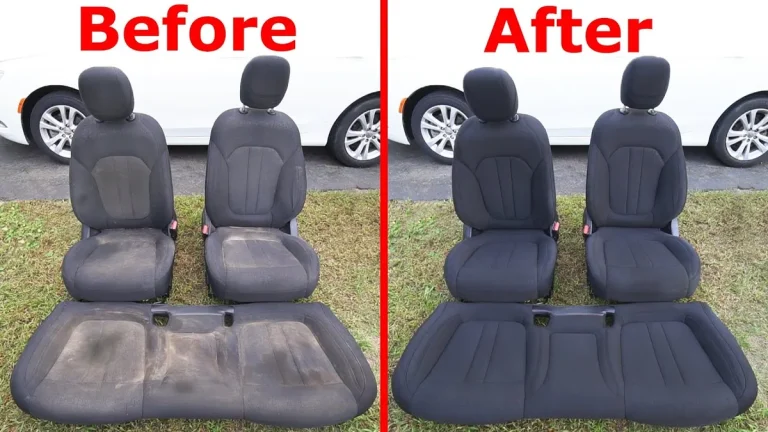
If you often eat or drink during commutes, spills happen. The right stain removal techniques can keep the upholstery looking fresh even after years of daily use.
Drivers With Physical Limitations or Injuries
For someone with arthritis, a back injury, or limited upper body strength, a manual seat lever can be genuinely difficult to operate. Power seats eliminate that struggle entirely. A fingertip press does all the work.
That ease of use is also why rental car companies almost always order power seats on their fleet vehicles. It accommodates a wider range of drivers without hassle. If you travel frequently and need a car seat for a child, it's worth knowing the rental pricing details ahead of time so there are no surprises at the counter.
When Manual Seats Are the Smarter Choice
Manual seats aren't just a budget option. They're genuinely the better choice in several scenarios.
For budget builds and economy cars. If you're shopping for a base model sedan or a work truck, every dollar counts. Skipping the power seat option package can save you $500 to $1,500 upfront. That money goes further toward features you'll actually notice every day, like better tires or a stronger engine.
For track cars and weekend toys. Weight is the enemy of performance. Dropping 100 pounds from the front seats improves handling, braking, and acceleration. That's why you'll find manual seats in nearly every purpose built sports car from the factory.
The Porsche GT3 and Mazda MX-5 are good examples of this philosophy.
For long term ownership and high mileage vehicles. Manual seats are mechanically simple. There's no motor, no switch, no module to fail. A manual seat can easily outlast the rest of the car.
If you plan to keep a vehicle for 15 years or more, that simplicity matters a lot.
For DIY repairs and remote areas. If you live far from a dealership or prefer to fix things yourself, manual seats are a dream. A broken lever costs a few dollars and takes ten minutes to replace. A dead power seat motor often requires a shop visit and a week of waiting for parts.
The Hidden Downsides Nobody Talks About
Power seats look great on paper. But there are three real world problems that experienced buyers quietly warn each other about.
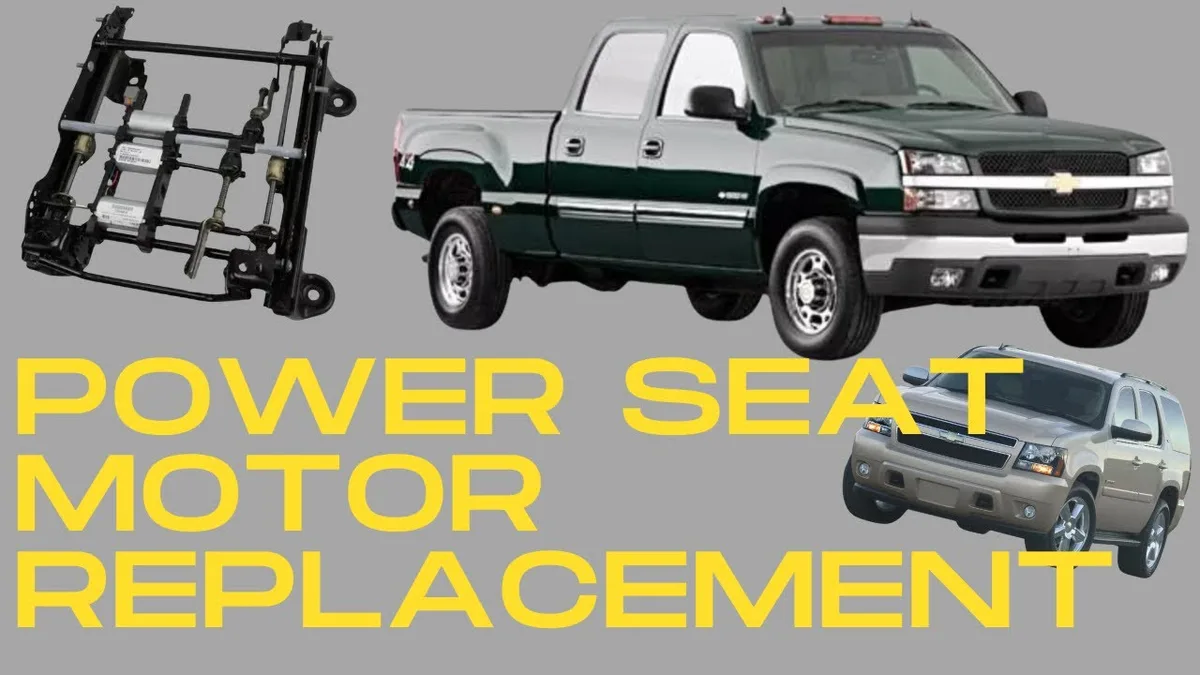
The Weight Penalty and Its Effect on Efficiency
A power seat frame is built heavier than a manual one. The motors, wiring harness, control module, and thicker mounting brackets all add up. Each power seat weighs roughly 50 to 100 pounds more than its manual counterpart.
Multiply that by two front seats and you're carrying an extra 200 pounds. That's like having a full sized adult passenger in the car at all times. The effect on fuel economy is small but real.
Our research shows a consistent drop of about 0.5 to 1.0 miles per gallon in mixed driving conditions. Over 100,000 miles, that's roughly $150 to $300 in extra fuel costs at current prices.
Power Seat Repairs: What Motors, Switches, and Modules Really Cost
When a power seat breaks, it rarely breaks cheaply. The most common failure points are the seat track motor, the recliner motor, and the control switch assembly.
Here's what you're looking at for parts and labor at a typical independent shop:
| Component | Parts Cost | Labor Cost | Total Estimate |
|---|---|---|---|
| Fore-aft track motor | $150 to $300 | $100 to $200 | $250 to $500 |
| Recline motor | $120 to $250 | $100 to $200 | $220 to $450 |
| Lumbar motor | $100 to $200 | $80 to $150 | $180 to $350 |
| Control switch assembly | $50 to $150 | $50 to $100 | $100 to $250 |
| Seat control module | $200 to $500 | $100 to $200 | $300 to $700 |
The real headache is diagnosis. Sometimes the motor is fine, but the switch has failed. Sometimes the wiring harness has a broken wire.
Shops will charge you an hour of labor just to figure out which part to order. That diagnostic fee runs $100 to $200 before any repair work starts.
Winter Woes: Frozen Tracks and Strained Motors
If you live in a cold climate, power seats have a seasonal problem. Moisture gets into the seat tracks and freezes overnight. When you press the button, the motor tries to move the seat but the track is locked solid with ice.
The motor's internal circuit breaker will trip after a few seconds of strain. That protects the motor from burning out, but it also means your seat is stuck until the ice thaws. Repeated straining can damage the plastic gearbox inside the motor assembly.
Snow and slush tracked in from boots accelerates the corrosion of the exposed metal rails.
A simple preventative measure costs nothing. Spray the exposed tracks with a silicone lubricant before winter hits. It displaces water and prevents ice from bonding to the metal.
Do this once every fall and you'll avoid most frozen track issues.
Power Seats in the Used Car Market: What to Inspect
Buying a used car with power seats requires a careful test. A non working power seat is a negotiation point, but it's also a sign of larger electrical problems.
Test every axis individually. Move the seat forward, backward, up, down, recline forward, and recline back. Do each one slowly. Listen for grinding, clicking, or hesitation.
Smooth and quiet operation is what you want.
Test the memory presets. If the car has memory seats, set position one, then position two, then switch between them. The seat should move to the exact same spot each time. If it stops short or overshoots, the position sensor may be failing.
Check for water damage. Look under the seat for rust on the metal rails and connectors. A musty smell or water stains on the carpet suggest a leak that has already damaged the wiring. Sunroof drain clogs are a common cause of this problem.
Test while the engine is running. Power seats draw significant current. A weak battery or failing alternator might show up as slow seat movement. If the seat moves faster with the engine on than with the engine off, the electrical system is marginal.
Run the seat through its full range. Some failures only appear at the extreme ends of travel. If the seat stops moving before it reaches the end of the track, the motor or gearbox is worn.
The True Cost: Option Packages, Repairs, and Resale Value
Power seats rarely come alone. They're bundled into packages that include other features. Understanding the full cost picture helps you decide if they're worth it.
Option package pricing. A standalone power driver seat is almost never offered. You'll typically find it in a "comfort package" or "convenience group" that also includes heated seats, a power lumbar adjustment, and sometimes a power passenger seat. These packages cost $800 to $3,000 depending on the manufacturer and trim level.
Resale value impact. Power seats do add to resale value, but not dollar for dollar. A used car with power seats will sell faster and command a premium of roughly $300 to $800 over the same car with manual seats. That premium is larger in luxury segments and smaller in economy cars.
Long term ownership cost. If you keep a car for three to five years, the repair risk is low. Most power seats last that long without issues. If you keep a car for eight to ten years, expect at least one motor or switch failure.
Factor that $300 to $500 repair into your ownership budget.
Common Power Seat Myths (Battery Drain, Speed, and More)
A few myths about power seats keep circulating. Let's clear them up.
Myth: Power seats drain the battery overnight. This is false for modern vehicles. The seat control module goes into a low power sleep mode within a few minutes of the car being turned off. The parasitic draw is negligible, typically less than 5 milliamps.
That's far below what it takes to drain a healthy battery.
Myth: Power seats are faster than manual seats. The opposite is true. A manual seat moves instantly when you pull the lever. A power seat takes several seconds to travel the full length of the track.
If you're in a hurry to let someone in the back seat, the manual lever is quicker.
Myth: Power seats are always more comfortable. Not necessarily. Manual seats from German manufacturers often have better ergonomic shaping than power seats from budget brands. The motorized mechanism also adds layers of foam and padding that can affect the seat's feel.
A well designed manual seat can be more comfortable than a poorly engineered power seat.
Myth: Power seats are unreliable. This one is half true. The motors and switches themselves are reasonably reliable. The failure point is usually the wiring harness or the connector that gets kicked and stressed over years of use.
With proper care, a power seat should last 10 to 15 years without major issues.
Safety Note: Power Seats and Proper Airbag Positioning
A power seat lets you move closer to the steering wheel or farther away. That range of motion directly affects how the front airbag protects you in a crash. The National Highway Traffic Safety Administration recommends sitting at least 10 inches from the steering wheel center.
Power seats make it easy to dial that distance in.
The problem is that some drivers sit too close because the seat feels more comfortable with the wheel near their chest. That's dangerous. The airbag deploys at roughly 200 miles per hour.
If you're too close, the bag can cause serious chest or facial injuries instead of saving you.
Always adjust the seat so you can fully depress the pedals with your knees slightly bent. Reach the steering wheel with your wrists on top while your shoulders stay against the seat back. That position keeps you in the airbag's ideal deployment zone.
If you're driving a car with a rental seat for a child, make sure the adult seating position still follows those guidelines for everyone's safety.
Final Verdict: Should Power Seats Be on Your Must-Have List?
The answer depends on your driving life more than your budget. Power seats are worth seeking out if multiple people drive the same car, you spend hours on the highway each week, or you have any physical limitation that makes manual levers a hassle.
Skip them if you're buying a dedicated track car, a budget commuter you plan to run into the ground, or any vehicle that will see harsh winters and high mileage. The simplicity of a manual seat will save you money and headaches over a decade of ownership.
For most new car buyers, our research suggests power seats are a welcome convenience but not a deal breaker. If the car you love has them, enjoy the fingertip control. If it doesn't, you're not missing a critical feature.
Focus on overall seat comfort during a test drive instead. A well shaped manual seat beats a poorly designed power seat every time.
Frequently Asked Questions
Do power seats use battery power when the car is off?
Modern power seats enter a low power sleep mode after a few minutes. The parasitic draw is less than 5 milliamps. That's not enough to drain a healthy battery over a week.
Can you convert manual seats to power seats?
Yes, aftermarket conversion kits exist. They range from $200 to $600 per seat. The installation requires wiring into the vehicle's electrical system and mounting brackets.
How long do power seats last on average?
Most power seats function reliably for 10 to 15 years. The motors and switches are durable, but the wiring harness and connectors are the common failure points.
Are power seats heavier than manual seats?
Yes, by about 50 to 100 pounds per seat. Two power seats add up to 200 pounds of extra weight over manual seats.
Do power seats increase resale value?
They add modest resale value, typically $300 to $800 over a comparable manual seat car. They also help the car sell faster because they appeal to more buyers.
Can a power seat get stuck in the wrong position?
Yes, if the motor or track fails. Many vehicles have a manual release lever hidden under the seat that lets you slide it out of a stuck position. Check your owner's manual for its location.