Forward Facing Car Seat Requirements: What to Know
A forward-facing car seat requires your child to be at least 1 year old, 20 pounds, and able to walk unassisted in most states. The harness straps must be at or above shoulder level. You must always use the top tether.
The seat must be installed with either LATCH or the vehicle seat belt, but not both.
Here is the breakdown.
Why Getting Forward-Facing Car Seat Requirements Right Is Non-Negotiable
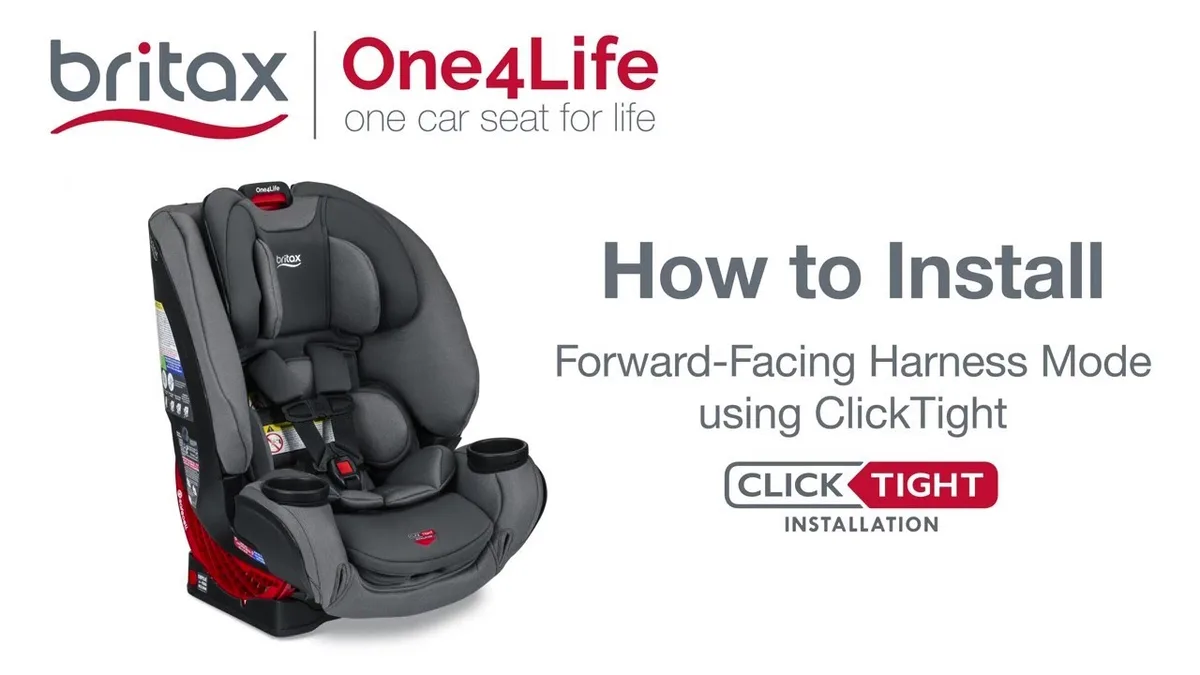
Image source: YouTube / Britax Child Safety, Inc (YouTube thumbnail (fair-use with source credit))
Turning your child forward‑facing is a big milestone. It also introduces a whole new set of risks. Rear‑facing seats distribute crash forces across the child’s entire back, head, and neck.
Forward‑facing seats rely on the harness and tether to manage those forces. The margin for error gets much smaller.
Get the installation wrong and your child’s head can move up to 6 inches forward in a crash before any restraint engages. That extra slack can cause serious neck and spinal injuries. That is why every requirement exists: to minimize the distance the body travels before the seat does its job.
Our research across FMVSS 213 testing data and Child Passenger Safety Technician (CPST) training materials confirms one thing. The requirements are not trivial checkboxes. They are a precise safety protocol that depends on the seat model, the vehicle, and the child’s own size and development.
The Minimums: Age, Weight, and Height to Turn Your Child Forward
The legal minimum in the United States is simple. A child must be at least 1 year old and weigh at least 20 pounds. But that is the legal floor, not the safety ceiling.
The American Academy of Pediatrics (AAP) recommends you keep your child rear‑facing until they hit the maximum height or weight allowed by the convertible seat. For many seats that means 40, 50 pounds and a height that leaves at least 1 inch of shell above the head. That is far beyond the 20‑pound minimum.
State laws vary. Some states mandate age 1 and 20 pounds. Others require the child to be at least 2 years old.
You need to check your local law, but you should follow best practice instead. The safest approach is to max out the rear‑facing limits before turning around.
Here is a quick look at the numbers.
| Requirement | Legal Minimum | Best Practice |
|---|---|---|
| Age | 1 year | 2 years or longer (max out seat) |
| Weight | 20–22 lbs | Up to 40–65 lbs depending on seat |
| Height | N/A (varies) | Top of head within 1 inch of shell top |
| Walking | Must walk unassisted (many states) | N/A |
The height requirement is often overlooked. The child’s ears must be below the top of the seat shell when forward‑facing. If they reach that point before the weight limit, the seat is outgrown.
So the first requirement is: do not rush. Wait until your child truly needs the extra legroom.
The Non-Negotiable Rule: Why the Top Tether Is Not Optional
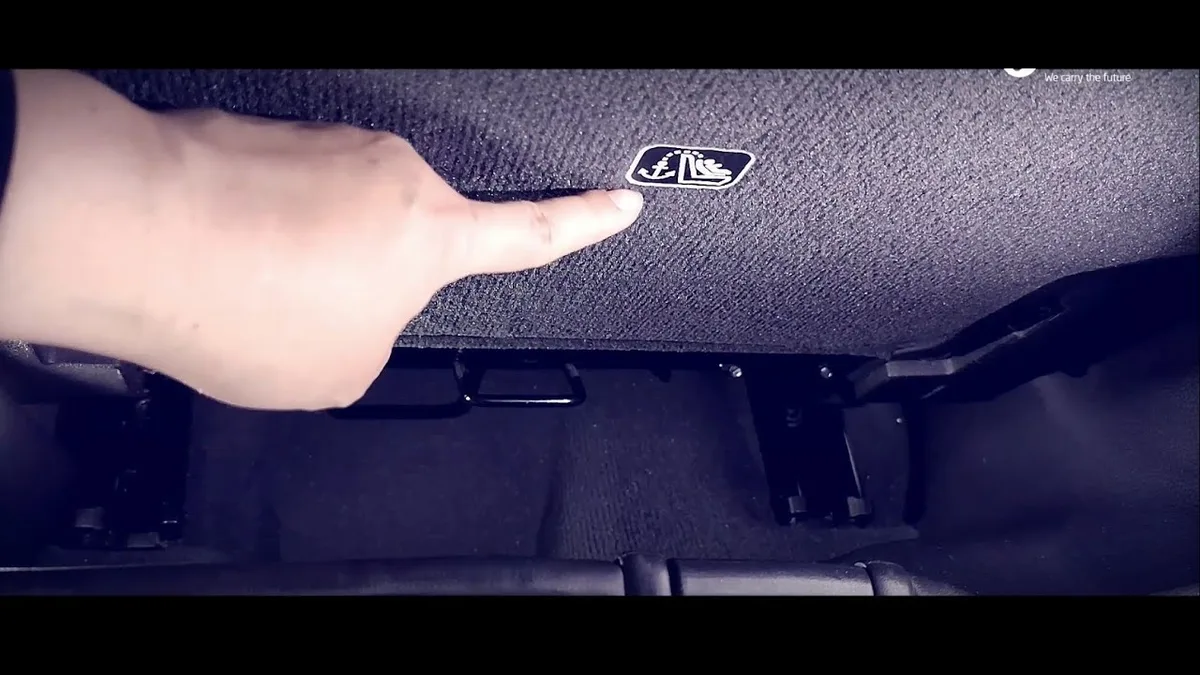
Image source: YouTube / Maxi-Cosi UAE (YouTube thumbnail (fair-use with source credit))
Every forward‑facing car seat in the US has a top tether strap. It clips to an anchor point in your vehicle, usually behind the seat or on the ceiling. This strap is not optional.
It is a critical safety component.
Without the top tether, the seat can rotate forward in a crash. The child’s head can strike the vehicle seat in front of them. With the tether tight, the top of the seat stays anchored.
The chest clip and harness keep the child’s body from pitching forward.
The National Highway Traffic Safety Administration (NHTSA) and every car seat manufacturer make this clear: the top tether must always be used for forward‑facing seats.
Install it properly. Route the strap over the top of the seat back (never under). Attach it to the correct anchor.
Pull all the slack out so the strap is tight. Check the vehicle owner’s manual to verify the anchor location. Some vehicles have anchors in unexpected spots.
A common mistake is leaving the tether loose. It must be snug, with no sagging. If you can press the strap and feel slack, it is too loose.
Harness Fit: Why Shoulder Slot Position and the Pinch Test Matter Most

Image source: YouTube / Safe in the Seat (YouTube thumbnail (fair-use with source credit))
The harness is what holds your child in the seat. But it only works if it fits correctly.
The rule for shoulder slot height changes when you go forward‑facing. In rear‑facing mode, straps come from below the shoulders. In forward‑facing mode, they must be at or above the shoulders.
Why? Because forward‑facing forces push the child forward. Straps below the shoulders can let the torso slump, which strains the spine.
Check the seat labels for the exact allowed harness positions. On most convertible seats, there are three or four height settings. Choose the slot that is level with or a little above your child’s shoulders.
The pinch test is your second check. After you tighten the harness, try to pinch the strap at the collarbone. If you can grasp any webbing between your thumb and finger, it is too loose.
The harness should be snug enough that you cannot pinch any slack.
Keep in mind that bulky clothing interferes with harness fit. Coats, snowsuits, and thick sweaters compress in a crash, creating dangerous slack. In colder months, dress your child in thin layers and place a blanket over the harness after strapping them in.
The chest clip belongs at armpit level. Too low can cause internal injuries in a crash. Too high can risk neck injury.
Check it every time.
LATCH vs. Seat Belt Installation: What Each Method Requires
You have two ways to install a forward‑facing car seat. Both are safe when done correctly. The right choice depends on your child’s weight and your vehicle.
LATCH (Lower Anchors and Tethers for Children). This system uses lower anchors in the vehicle seat bight and the top tether anchor. It is convenient. But it has a combined weight limit.
In most US vehicles, the LATCH system cannot be used when the child plus the seat weigh more than 65 pounds. That limit is stamped on the car seat and in the vehicle manual.
Vehicle seat belt. This method uses the car’s seat belt routed through the seat’s belt path. It works with no upper weight limit (except the seat’s own maximum). The seat belt must lock.
Most modern belts lock when pulled all the way out and then retracted. If your belt does not lock, you need a locking clip (usually provided with the seat).
| Method | Best Used When | Maximum Weight |
|---|---|---|
| LATCH | Child + seat under 65 lbs | Usually 65 lbs total |
| Seat belt | Child + seat over 65 lbs | No upper limit (except seat) |
The key rule: never use both LATCH and the seat belt together. Pick one. The top tether is always required regardless of which method you use.
We see many parents switch to the seat belt once their child hits about 40 pounds. That is usually before the LATCH weight limit kicks in, but it simplifies things. Our advice: read the car seat manual and the vehicle manual together.
Some cars have specific LATCH restrictions (e.g., only use in certain seating positions or with forward‑facing only).
For vehicles with no LATCH in the middle seat, the seat belt is your only choice. That is fine. A seat belt installation can be even tighter than LATCH when done right.
If you are unsure about your seat belt locking mechanism, check the vehicle owner’s manual. You can also test it by pulling the belt all the way out. If it clicks and stays tight when you let it retract a little, it is an automatic locking retractor (ALR).
If it does not lock, you will need a locking clip or a seat with built‑in lockoffs.
In our next sections we will cover the LATCH weight limit trap, the recline angle change, state laws versus best practice, and the common mistakes that ruin a safe setup.
The LATCH Weight Limit Trap (and How to Avoid It)
Many parents assume LATCH is always safer. It is not. LATCH has a hidden upper limit that, once exceeded, can make the system dangerous.
The rule is simple. The combined weight of your child plus the car seat must stay below the vehicle’s LATCH limit. In the United States, that limit is almost always 65 pounds.
Some newer vehicles allow higher limits, but 65 pounds is the standard.
Check the sticker on your car seat. It will list the maximum child weight for LATCH use. Then add the weight of the seat itself (most convertible seats weigh between 15 and 25 pounds).
If your child is 45 pounds and the seat is 20 pounds, that is 65 pounds exactly. At that point you must switch to the seat belt method.
Here is a quick look at typical LATCH limits for popular convertible seat categories:
| Seat Type | Typical Seat Weight (empty) | Combined Child + Seat Limit |
|---|---|---|
| Budget convertible (under $150) | 15–18 lbs | 65 lbs total |
| Mid-range convertible ($150–$250) | 18–22 lbs | 65 lbs total |
| Premium convertible ($250+) | 20–25 lbs | 65 lbs total |
Ignore the LATCH weight limit and you risk anchor failure in a crash. The lower anchors are not designed to hold more than that combined load.
What should you do? Use LATCH for convenience until your child hits about 40 pounds (depending on seat weight). Then switch to the seat belt.
The top tether stays connected regardless of which method you choose.
If your vehicle has a higher LATCH limit (some newer minivans and SUVs allow 75 or 90 pounds), check the owner’s manual. The rule changes by model year and manufacturer.
One more trap. Some parents use both LATCH and the seat belt together for extra security. Do not do that.
The forces can overload the belt path and actually reduce performance. Pick one.
Recline Angle in Forward-Facing Mode: Why It’s Different from Rear-Facing
The recline angle changes when you switch from rear-facing to forward-facing. In rear-facing mode the seat sits more reclined, usually around 30, 45 degrees. In forward-facing mode it must be more upright.
Why the difference? In a forward-facing crash the child’s body is thrown forward into the harness. An overly reclined seat lets the child’s head slump forward, increasing the risk of neck injury.
An upright angle keeps the spine aligned and the head closer to the seat back.
Most convertible seats have a recline foot or an adjustable base plate. You move it to the forward-facing position, which usually removes the recline wedge or flips the foot to a different setting. Check the manual for the exact process.
If your seat does not have a built-in recline adjustment, you can use a tightly rolled towel or a pool noodle under the seat base. But only if the manual allows it. Every seat manufacturer lists approved recline aids in the instruction booklet.
A common mistake is leaving the seat too reclined. You can spot it by the child’s head. If their chin touches their chest while they sleep, the seat is too far back.
Adjust it until their head sits naturally, not slumped.
The correct recline angle for forward-facing is usually around 10, 20 degrees from vertical. That is noticeably upright compared to rear-facing. If you are unsure, look for the built-in angle indicator on the seat.
Most seats have a bubble level or a line that shows the forward-facing range.
State Law vs. Best Practice: What’s Legal vs. What’s Actually Safe
State laws set the floor. They tell you the minimum you must do to avoid a ticket. They do not tell you what is safest.
Almost every state requires a child to be at least 1 year old and 20 pounds to ride forward-facing. That is the legal minimum. But the AAP’s updated policy (as of 2026) recommends keeping children rear-facing until they reach the maximum height or weight allowed by their convertible seat.
That is often 40, 50 pounds and several inches taller.
Here is the real-world gap. A 1-year-old at 20 pounds is legally forward-facing in most states. But that same child’s bones are still developing.
The spine is mostly cartilage, not fully ossified. The neck muscles are weak. In a forward-facing crash the head can snap forward, causing internal decapitation.
That risk drops significantly when rear-facing.
A 2015 study published in Traffic Injury Prevention found that children under 2 are 76% less likely to be seriously injured when rear-facing versus forward-facing. That is a huge margin.
So what should you do? Follow the law, but aim higher. The safest approach is to max out the rear-facing limits of the seat.
That means keeping your child rear-facing until they hit the weight limit or until the top of their head is within 1 inch of the top of the seat shell.
Some states (like California, New Jersey, and Pennsylvania) have updated their laws to require rear-facing until age 2. Check your local law. But even if your state only requires age 1, do not use that as your target.
Use the seat’s limits instead.
The table below shows how the two compare:
| Aspect | Legal Minimum | Best Practice |
|---|---|---|
| Age | 1 year | 2 years or until seat limits are reached |
| Weight | 20 lbs | 40–65 lbs (depending on seat) |
| Height | Not specified | Ears must be below top of seat shell |
| Spinal development | Not considered | Fully ossified spine (around age 3–4) |
Critical Mistakes That Compromise a Forward-Facing Seat
Even a top-rated seat can fail if it is misused. The most common errors are simple but dangerous.
Harness too loose. The pinch test is the only reliable check. If you can pinch any fabric at the collarbone, it is too loose. A loose harness lets the child slide forward in a crash, risking head injury.
Harness slots too low. In forward-facing mode the straps must be at or above the shoulders. Straps below the shoulders can cause the child to submarine under the harness in a crash. That puts force on the abdomen instead of the pelvis.
Missing top tether. This is the most frequent and most dangerous mistake. Without the tether, the seat rotates forward in a crash. The child’s head can strike the front seat or the vehicle interior.
Always attach and tighten the tether.
Using both LATCH and seat belt. Some parents double up for extra security. That can overload the belt path and misdirect crash forces. Use one or the other, never both.
Over-tightening the seat. You want the seat tight, but not so tight that it deforms the car seat or the vehicle seat. The 1-inch rule is the standard. If the seat moves more than 1 inch side to side at the belt path, it is too loose.
If it moves less than 1 inch but the base is bent, it is too tight.
Using an expired seat. Car seats expire. The plastic degrades over time and can crack in a crash. Check the expiration date stamped on the seat.
Most seats last 6 to 10 years from the manufacture date.
Bulky clothing under the harness. Coats and snowsuits compress in a crash, creating slack. Dress your child in thin layers and put the coat over the harness straps after buckling.
Here is a quick checklist of what to inspect every time you buckle your child in:
- Harness is at or above shoulders.
- Harness is snug (no pinch test slack).
- Chest clip is at armpit level.
- Top tether is attached and tight.
- Seat base moves less than 1 inch at the belt path.
- No twisted straps.
- Seat is not expired.
When Your Child Has Outgrown the Forward-Facing Harness (Next Step)
Every forward-facing harnessed seat has a limit. Once your child exceeds it, the seat is no longer safe. The next step is a high-back booster seat.
Three signs tell you the seat is outgrown.
Shoulders rise above the top harness slot. The straps must be at or above the shoulders. If they are below, the slot is too low. If there is no higher slot, the seat is too small.
Ears go above the top of the seat shell. In forward-facing mode the shell acts as a head support. If the crown of the head is higher than the shell, there is no protection in a rear-end crash.
Weight exceeds the maximum harness limit. The seat label will list a maximum weight for harnessed use. Usually 40, 50, or 65 pounds. Once your child passes that, the harness is no longer rated to hold them.
When any of these occur, it is time to move to a high-back booster. The booster positions the vehicle seat belt correctly across the child’s chest and lap.
Before you make the switch, know this. Booster seats rely entirely on the vehicle belt. The child must be mature enough to sit properly: no slouching, no leaning, no playing with the belt.
Most children are not ready until age 5 or 6. Some not until age 7.
If your child is not ready for a booster, consider a combination seat. These convert from a forward-facing harnessed seat to a high-back booster. You keep the harness until your child is booster-ready.
That is a cleaner transition than buying a separate booster later.
For a deeper look at what to look for when choosing a forward-facing harness seat, check out our guide on convertible car seat safety ratings. It breaks down the weight limits and harness heights for the most popular models.
Planning a trip and need a seat for a rental car? Our guide on car seat rentals explains what is available and how to verify the seat fits your child.
If you are cleaning up after a messy toddler, our step-by-step vomit cleanup guide will save you time without damaging the seat.
Quick Checklist: 9 Things to Verify Before Every Ride
- Harness straps are at or above the child’s shoulders.
- Harness is snug (no slack when pinched at the collarbone).
- Chest clip is level with the armpits.
- Top tether is attached and tight.
- Seat base moves less than 1 inch at the belt path.
- No bulky clothing under the harness.
- Seat belt or LATCH is routed correctly (not both).
- Seat is not expired (check the stamp).
- Recline angle is in the forward-facing range (bubble level or line).
Run through this list every time. It takes 30 seconds. It catches the most common mistakes before they become risks.
Still Unsure? Where to Find a Certified Technician
If you have any doubt about your installation, find a Child Passenger Safety Technician (CPST). These are trained professionals who inspect seats for free or at a low cost.
Search for a technician near you at cert.safekids.org. Many fire stations, police departments, and hospitals host checkup events. Bring your car seat, the vehicle manual, and the seat manual.
The technician will walk through every step with you.
Our guide on how to hold a car seat safely covers positioning for travel. And for deep cleaning tips after spills, our leather cleaning guide helps keep the seat in good condition.
Frequently Asked Questions
Can my child ride forward-facing if they are 1 year old but still under 20 pounds?
Legally, most states require both age 1 and 20 pounds. If your child is below either, keep them rear-facing. The seat manual lists the minimum forward-facing weight.
Some seats require 22 pounds.
Do I need to use the top tether with LATCH?
Yes. The top tether is required for every forward-facing installation, regardless of whether you use LATCH or the seat belt. Never skip it.
What happens if the LATCH weight limit is exceeded?
The lower anchors can fail in a crash. Switch to the seat belt method once the combined weight of the child and seat approaches 65 pounds. The top tether stays connected.
Is it safe to use a forward-facing seat in the middle seat?
Yes, if the vehicle has a seat belt or LATCH anchors for that position. The center seat is often the safest spot because it is farther from side impacts.
My child’s ears are above the seat shell. Is it outgrown?
Yes. Once the tops of the ears are above the highest point of the seat shell, the seat no longer provides head protection. Move to a high-back booster or a combination seat.
Can I recline the seat more so my child sleeps better?
No. Over-reclining a forward-facing seat lets the head slump forward, which can cause breathing problems in sleep and increases neck injury risk in a crash. Use the seat’s approved forward-facing angle only.