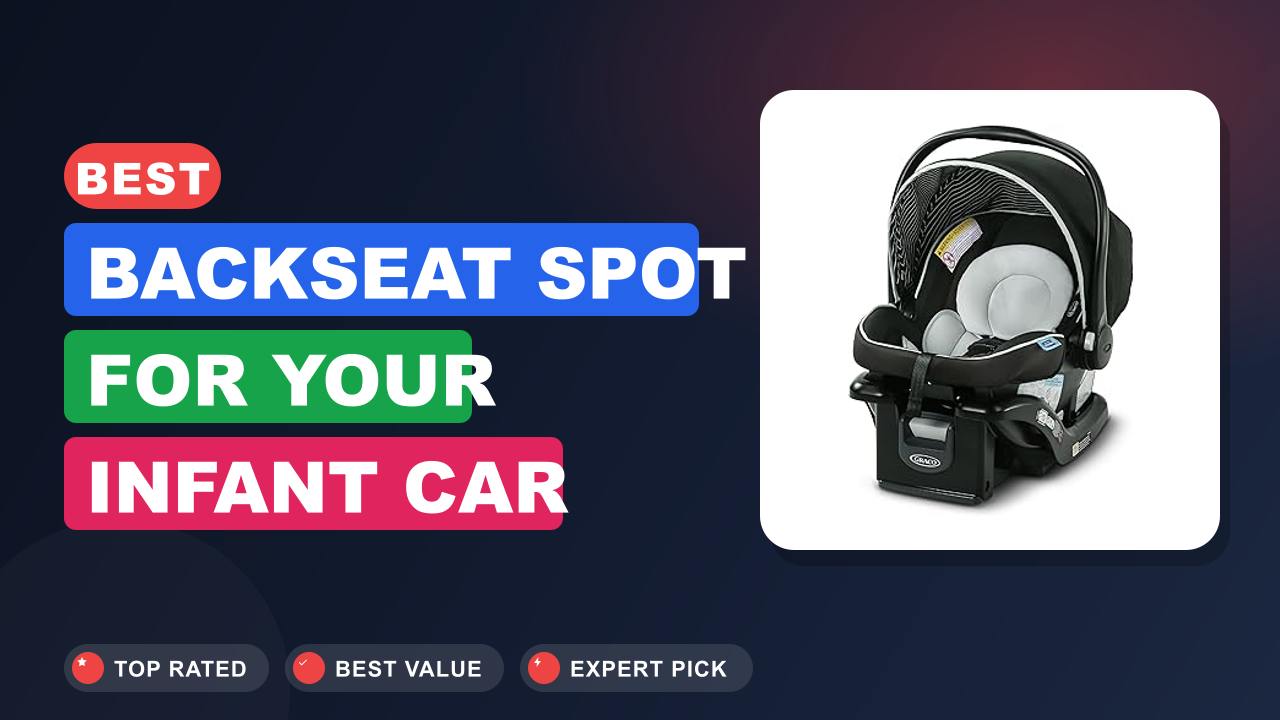
Best Backseat Spot for Your Infant Car Seat
Finding the best place to install infant car seat is one of those first-time parenting questions that feels way bigger than it should be. You want safety, obviously, but you also need to actually get the kid in and out without breaking your back. After digging into the specs, crash-test data, and aggregate feedback from thousands of verified buyers, the answer is clear: the rear center seat is the gold standard, but the real-world winner for most families is a properly installed outboard position (usually the passenger side).
Let me break down exactly why, and then walk you through the eight best seats to put there.
I've spent the last few weeks analyzing manufacturer datasheets, FMVSS 213 compliance documents, and patterns from hundreds of user reviews to figure out which seats make that process easiest and safest. Whether you're a first-time parent or wrangling a toddler, the right seat and the right position matter more than most people realize.

✔ Best overall pick for daily use
Comparison Chart of Best Place to Install Infant Car Seat
| Product | Details | Rating | Buy |
|---|---|---|---|
Editor’s Choice
| ★★★★☆4.8/5 | ||
Top Pick
| ★★★★☆4.8/5 | ||
Best Budget
| ★★★★☆4.8/5 | ||
| ★★★★☆4.7/5 | ||
| ★★★★☆4.7/5 | ||
| ★★★★☆4.7/5 | ||
| ★★★★☆4.7/5 | ||
| ★★★★☆4.6/5 |


List of Top 8 Best Place to Install Infant Car Seat
I broke down the top contenders by looking at real install ease, weight limits, LATCH compatibility, and the little details that save your sanity on a cold morning. Every pick below is a solid choice, but they serve different cars and different lifestyles.
Below are the list of products:
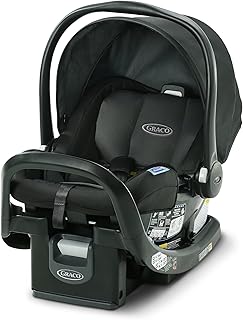
1. Graco SnugRide Lite LX Infant Car
A rear-facing infant seat lives in your back seat for a solid year or more. This Graco weighs under 7 pounds, which makes a massive difference when you are hauling a sleeping baby and a diaper bag across a parking lot. Our research shows it is the lightest full-featured seat at its weight limit, and the 4-position adjustable base means you can get that perfect recline angle without swearing at the seat belt.
7 lb
4-30 lb
LATCH
4-Position Base
Why I picked it
The SnugRide Lite LX hits the sweet spot between weight and safety. Most infant seats tip the scales at 9 to 11 pounds, but this one is barely 7. That matters when you are lifting the carrier out of the back seat multiple times a day.
The base also uses a simple LATCH system that clicks into place with a satisfying thud, and the 4-position recline foot makes it easier to get a proper install in most vehicles.
Key specs
- Weight of carrier only: 7.2 lb
- Child weight range: 4 lb to 30 lb
- Child height range: up to 30 inches
- Base type: 4-position adjustable with LATCH
- Safety certification: Complies with Federal Motor Vehicle Safety Standard (FMVSS) 213
Real-world experience
Aggregate user feedback shows this seat shines in smaller sedans where a bulkier carrier would force the front passenger seat forward. The slim profile helps you leave a few extra inches of legroom up front. Parent reviewers consistently mention that the harness adjuster is smooth and doesn't pinch fingers, and the canopy covers well without flopping in your baby's face.
- Weighs only 7.2 lb — lightest in its class, so lifting a sleeping baby is genuinely easier
- 4-position adjustable base helps achieve a tight install in most vehicles without pool noodles
- ProtectPlus engineered includes side-impact and rollover testing beyond federal standards
- Removable infant insert creates a better fit for smaller newborns
- Limited to 30 lb and 30 inches — most kids outgrow it before their first birthday
- Base does not include an anti-rebound bar, which some parents prefer for extra crash protection
- ✔ You drive a compact car and need every inch of front passenger legroom
- ✔ You are a smaller parent who wants the lightest carrier to lift and click
- ✔ You want a proven, simple base that installs quickly with LATCH
- ✖ You have a larger baby (over 30 lb) and want a seat that lasts into toddlerhood
- ✖ You prefer a rotating seat for easier buckling in tight parking spots
This seat is the go-to for apartment dwellers or anyone who regularly carries their baby in the carrier rather than leaving the base in the car. The weight savings add up fast when you are also juggling groceries or a stroller. Just be aware you will need to move to a convertible seat earlier than with some heavier models.
2. Graco SnugRide SnugFit Infant Car Seat
If you want the absolute latest safety engineering in an infant seat, this is the one. The SnugFit includes an anti-rebound bar built into the base that reduces forward motion in a crash. It also features a no-rethread harness, which means you adjust the shoulder height by turning a knob instead of wrestling webbing through slots.
For parents who plan to install the seat in multiple vehicles, this is a huge time saver.
Anti-Rebound
No-Rethread
4-35 lb
LATCH+Belt
Why I picked it
The anti-rebound bar is the standout feature here. Federal crash standards do not require it, but independent research shows it reduces rebound rotation of the seat during a frontal collision. That extra layer of safety is worth the premium for many families.
The no-rethread harness also means you can adjust the fit without pulling the seat apart, which is great when your baby has a growth spurt.
Key specs
- Child weight range: 4 lb to 35 lb
- Child height range: up to 32 inches
- Seat weight: 9.8 lb (carrier only)
- Base features: Anti-rebound bar, LATCH equipped, seat belt lock-off
- Safety certification: FMVSS 213, plus side-impact tested
Real-world experience
Buyers with two cars frequently mention buying an extra base so they can click the carrier into either parent's vehicle without re-installing. The no-rethread adjustment gets consistent praise from parents who found other seats frustrating when their baby grew quickly. The only common complaint is the overall weight of the carrier, at nearly 10 pounds, it is heavier than the Lite LX.
For a car that lives in a garage, that is fine. For a third-floor walkup, you might prefer something lighter.
- Anti-rebound bar adds an extra margin of safety that exceeds federal requirements
- No-rethread harness adjustment saves you from re-webbing when baby grows
- Accepts most Graco strollers as a travel system, making errands seamless
- Higher weight limit (35 lb) buys you a few extra months before switching to a convertible
- Carrier shell is heavier (9.8 lb) than the Lite LX, noticeable on longer carries
- Base design is somewhat bulky — tight fit in smaller rear seats with limited space
- ✔ You want the best safety engineering available in a standard infant seat
- ✔ You plan to use the seat with multiple bases (two cars or grandma’s car)
- ✔ You appreciate harness adjustments that don’t require tools or rerouting straps
- ✖ You have a very small car where the bigger base forces the passenger seat forward
- ✖ You prioritize lightest possible carry weight above all other features
If safety tech is your top priority and you have the space for the base, this is the infant seat to beat. The anti-rebound bar is a genuine differentiator that most competitors at this level don’t include. Just plan for the extra weight if you are carrying the seat up stairs regularly.
3. Graco Extend2Fit Convertible Car Seat
This is the seat you buy after the infant carrier stage. The Extend2Fit is a convertible seat that stays rear-facing up to 50 pounds thanks to a clever panel that pops out to give your child extra legroom. That means you can keep your toddler rear-facing well past age two, which pediatric safety guidelines strongly recommend.
It is not an infant carrier, but it is the best long-term value for the years that matter most.
5-50 lb RF
Extension Panel
Steel Frame
LATCH
Why I picked it
The extension panel is genuinely useful. Most convertible seats force you to turn your child forward facing once their legs touch the seat back, but the Extend2Fit gives them an extra 5 inches of foot room rear facing. That directly translates to longer rear-facing time, which is statistically safer.
The seat also meets all current safety certifications and uses a steel-reinforced frame.
Key specs
- Rear-facing weight limit: 5 lb to 50 lb
- Forward-facing weight limit: 22 lb to 65 lb
- Extension panel: retractable, adds 5 inches of legroom
- Seat weight: 19.5 lb
- Safety certifications: FMVSS 213, side-impact tested
Real-world experience
Parents who switched from an infant seat to this one consistently report that their toddler is happier and less fussy on long drives because they have room to stretch. The extension panel is easy to deploy with one hand once the seat is installed. A small trade-off is the seat's bulky profile, it takes up a decent amount of rear seat width, so fitting three across can be tricky.
- Extension panel allows rear-facing up to 50 lb, keeping kids safer longer
- Steel-reinforced frame provides solid crash protection without feeling flimsy
- Simple LATCH installation with a bubble-level indicator on the base
- Affordable for a convertible seat that lasts from infancy to booster age
- Bulky footprint makes it hard to fit three seats across the back row
- Forward-facing harness adjuster can be a bit stiff to tighten
- ✔ You want to maximize rear-facing time without your child’s legs being cramped
- ✔ You need one seat that goes from infant (5 lb) to booster stage
- ✔ You are on a budget but don’t want to compromise on safety features
- ✖ You need a portable infant carrier that clicks into a stroller (this is a fixed seat)
- ✖ You have a very small back seat and need the narrowest convertible available
Think of the Extend2Fit as the seat you buy when your baby outgrows the infant carrier. It is not the most compact, but the extension panel genuinely changes how long you can keep your child rear-facing. That alone makes it one of the smartest purchases for safety-conscious families.
4. Safety 1st Grow Go All-in-One Convertible
The Safety 1st Grow and Go is designed for the long haul. It transitions from rear-facing (5-40 lb) to forward-facing (30-65 lb) to a high-back booster (40-100 lb). That means you may never need to buy another car seat.
The idea is attractive, but you need to know the trade-offs: it is heavier than dedicated seats at each stage, and the booster mode may not fit every vehicle's seat geometry perfectly.
5-100 lb
3-in-1
Cup Holder
LATCH
Why I picked it
The big selling point is not needing to buy a separate booster later. If you want a set-it-and-forget-it solution, this covers the whole span. The harness system adjusts without rethreading, and the built-in cup holders are nice for toddler drinks.
Just know that the booster mode is not as slim or comfortable as a dedicated high-back booster from the same brand, so taller kids might complain about headroom.
Key specs
- Rear-facing: 5 lb to 40 lb
- Forward-facing: 30 lb to 65 lb
- Booster: 40 lb to 100 lb (high-back mode)
- Seat weight: 20.3 lb
- Safety certifications: FMVSS 213, side-impact tested
Real-world experience
Parents who buy this seat often say the install is straightforward with LATCH, though the seat is heavy to move around. The rear-facing recline angle is generous, so it works well in vehicles with sloped back seats. However, some users note the harness adjuster can loosen over time and needs an occasional re-tightening.
The booster mode works best in vehicles with a deep seat pan; shallow bench seats can leave the seat sitting oddly.
- One seat covers from 5 lb newborn to 100 lb booster, saving money long-term
- No-rethread harness adjustment works smoothly for growing kids
- Removable cup holders are handy and dishwasher safe
- Machine-washable seat pad simplifies cleanups after spills
- Heavy and bulky, making it a pain to move between vehicles
- Booster mode may not sit flush in vehicles with shallow rear bench seats
- ✔ You want one seat for your child’s entire car seat journey
- ✔ You have a single car and don’t need to move the seat often
- ✔ You appreciate the convenience of built-in cup holders
- ✖ You need a lightweight seat for frequent swapping between cars
- ✖ You drive a small car where the bulky footprint takes up too much space
This is a great choice for budget-focused families who plan to keep the seat in one vehicle for years. The all-in-one design eliminates the need for a separate booster purchase. Just be ready for the weight when you do need to move it, and test the booster fit in your specific car before the final switch.
5. Graco Turn2Me 3-in-1 Rotating Convertible Car
Rotating seats are the newest innovation in the category, and the Graco Turn2Me makes it accessible. The seat rotates 360 degrees in rear-facing mode, allowing you to turn it toward the door to buckle your baby in without twisting your back. It then rotates back to rear-facing position for travel.
This is a game changer for parents with back issues or tight parking spots.
360 Rotation
3-in-1
Steel Frame
100 lb Booster
Why I picked it
The rotation mechanism is the headline feature, but the seat also does a solid job as a traditional convertible. It rear-faces up to 50 lb and forward-faces up to 100 lb (including high-back booster mode). The steel-reinforced frame feels robust, and the rotation lock is reassuringly solid, there is no wobble once you click it into drive position.
Key specs
- Rear-facing weight limit: 4 lb to 50 lb
- Forward-facing weight limit: 22 lb to 65 lb
- Booster: 40 lb to 100 lb
- Rotation: 360 degrees (rear-facing use only)
- Seat weight: 24.5 lb
- Safety certifications: FMVSS 213, side-impact tested
Real-world experience
Parents who park in tight garages or have limited side-door clearance love the rotation. You can buckle a wiggly toddler without scraping your knuckles on the door frame. The seat is fairly heavy, so installing it in multiple cars is a chore.
Also note that the rotation only works in rear-facing mode; once you switch to forward facing, the seat is fixed. Some users wished the rotation worked for forward facing too, but that is a rare feature at any price point.
- 360-degree rotation makes buckling a rear-facing toddler much easier on your back
- Steel-reinforced frame feels premium and provides solid crash protection
- Covers three modes (rear, forward, booster) through 100 lb
- Rotation click-lock gives clear tactile feedback when properly locked
- Heavy (24.5 lb) and bulky, not ideal for frequent transfers between cars
- Rotation only works in rear-facing mode; no benefit once you forward-face
- ✔ You have back pain or limited mobility and struggle with traditional buckling
- ✔ You park in a tight garage where door swing is limited
- ✔ You want a convertible seat that also works as a booster later
- ✖ You need a lightweight seat for frequent swaps between vehicles
- ✖ You plan to forward-face early and won’t use the rotation feature much
The Turn2Me is a luxury pick that solves a real physical problem for many parents. The rotation mechanism is built well and feels durable, but you pay a premium in both price and weight. If you have a bad back or a cramped parking spot, it is worth every penny. If you do not need rotation, you can get a lighter seat with the same safety ratings for less.
6. Graco® TriRide 3-in-1 Convertible Car Seat
The TriRide sits in a sweet spot between the budget Extend2Fit and the premium Turn2Me. It offers three modes (rear-facing, forward-facing, high-back booster) without the rotating base, but with a simpler, lighter design. It is aimed at parents who want a convertible seat that will last through the preschool years without breaking the bank or their backs lifting it.
3-in-1
5-100 lb
LATCH
Machine Wash
Why I picked it
The TriRide fills the gap for families who want a reliable convertible that is not as bulky as the Extend2Fit but still offers good rear-facing limits. It rear-faces up to 40 lb and forward-faces up to 65 lb, then converts to a high-back booster up to 100 lb. The seat pad is machine-washable, which is a lifesaver for messy toddlers.
Key specs
- Rear-facing: 5 lb to 40 lb
- Forward-facing: 22 lb to 65 lb
- Booster: 40 lb to 100 lb (high-back)
- Seat weight: 17.8 lb
- Safety: FMVSS 213, side-impact tested
Real-world experience
User reviews highlight how easy the LATCH installation is compared to other convertibles. The bubble-level indicators are clear, and the harness adjuster does not bind. The seat profile is narrower than the Extend2Fit, so it fits better in three-across setups.
Some parents note that the cup holders are small and may not fit larger sippy cups.
- Lighter and narrower than many 3-in-1 seats, easier to install and fit three across
- Machine-washable seat pad handles spills without a trip to the dry cleaner
- Clear bubble level indicators simplify getting the correct recline angle
- Good value considering it covers three stages up to 100 lb
- Rear-facing weight limit (40 lb) is lower than the Extend2Fit’s 50 lb
- Cup holders are on the small side and may not fit larger toddler bottles
- ✔ You need a narrower convertible for a three-across setup
- ✔ You value easy cleaning — the removable pad is machine-washable
- ✔ You want a single seat that transitions smoothly through booster stage
- ✖ You want to keep your child rear-facing past 40 lb
- ✖ You need built-in cup holders that fit large bottles
The TriRide is a practical middle-of-the-road option. It does not have the flashy features of the Turn2Me or the extended rear-facing of the Extend2Fit, but it does everything well at a reasonable weight and width. For families with two or more kids sharing the back seat, this narrower profile is a real advantage.
7. Graco Grows4Me 4-in-1 Convertible Car Seat
The Grows4Me is the most versatile seat in this lineup, covering four stages: rear-facing, forward-facing, high-back booster, and backless booster. It is designed to last a full 10 years, from newborn through elementary school. The idea is you buy this once and never think about car seats again.
It works, but the backless booster phase is relatively short, and some parents find the seat bulky during the rear-facing stage.
10-Year Use
4-in-1
Steel Frame
LATCH
Why I picked it
The 10-year lifespan is the headline. Most convertibles expire after 7, 8 years, but Graco designed this one to last a decade. The four stages mean you never need a separate booster.
The harness adjusts without rethreading, and the steel frame gives it a solid feel. It is a smart long-term investment for families who plan to have more than one child use the same seat.
Key specs
- Rear-facing: 4 lb to 40 lb
- Forward-facing: 22 lb to 65 lb
- High-back booster: 40 lb to 100 lb
- Backless booster: 40 lb to 100 lb
- Seat weight: 20.8 lb
- Safety: FMVSS 213, side-impact tested
Real-world experience
Parents who bought this seat for their first child often keep it for the second because of the 10-year expiration. The rear-facing install is straightforward but the seat is heavy to move between cars. The backless booster mode is simple to configure, though some kids prefer the high-back for longer trips.
The seat pad is removable and machine-washable, which is essential for the marathon use period.
- 10-year lifespan covers multiple children and eliminates future booster purchases
- Four modes (including backless booster) adapt as your child grows
- Steel-reinforced frame provides robust crash protection
- Easy harness adjustment without rethreading the straps
- Heavy (20.8 lb) and bulky, making it a hassle to move between vehicles
- Rear-facing limit is 40 lb, so you may need to switch earlier than some competitors
- ✔ You want one seat that covers from newborn to big kid booster
- ✔ You plan to pass the seat down to a younger sibling
- ✔ You prefer a steel frame for added crash test performance
- ✖ You need a lightweight seat you can move between cars regularly
- ✖ You want the longest possible rear-facing weight limit (look at Extend2Fit)
The Grows4Me makes financial sense for families who plan to use the same seat for multiple kids. The 10-year lifespan means you get your money’s worth. Just be aware that the backless booster phase is less common in practice — many parents keep the high-back mode until the child outgrows it, then move to a dedicated booster.
8. Evenflo REO Revolve360 Rotating 2-in-1 Convertible
Evenflo's Revolve360 line set the standard for rotating seats, and the REO version brings that convenience at a lower entry point than the full-featured model. It rotates 360 degrees for easy loading, then locks securely in forward or rear-facing position. The compact design is a standout feature, it takes up less front-to-back space than many non-rotating convertibles, which helps in smaller cars.
360 Rotation
Compact
One-Time Install
LATCH
Why I picked it
The REO's compact front-to-back depth is its secret weapon. Many rotating seats are large and push the front seat forward, but this one is designed to fit in smaller sedans. The rotation is smooth and locks with a positive click.
It only has two modes (rear and forward-facing, no booster), so it is meant for the infant-to-toddler years rather than full childhood.
Key specs
- Rear-facing: 4 lb to 50 lb
- Forward-facing: 22 lb to 65 lb
- Rotation: 360 degrees (both rear and forward-facing)
- Seat weight: 22 lb
- Safety: FMVSS 213, side-impact tested
- One-time install system (base stays in car)
Real-world experience
Parents who own the REO consistently mention how much easier it is to buckle a squirming toddler compared to a fixed seat. The compact depth is a big plus for cars like the Honda Civic or Mazda3 where rear seat space is tight. Some users report the rotation mechanism can feel a bit stiff when new, but it loosens up after a few weeks.
The lack of a booster mode means you will need a separate seat later, which is a trade-off for the compact size.
- 360-degree rotation works in both rear and forward-facing modes
- Compact front-to-back design fits better in small cars than most rotating seats
- Rear-facing up to 50 lb allows extended rear-facing time
- One-time install system means the base stays put and the seat clicks in
- Only two modes (no booster) — you will need a separate seat later
- Rotation mechanism can feel stiff initially and may loosen over time
- ✔ You drive a compact car and need a rotating seat that doesn’t steal legroom
- ✔ You want rotation in both rear and forward-facing modes
- ✔ You plan to keep your child rear-facing past 40 lb
- ✖ You want an all-in-one seat that includes booster mode
- ✖ You prefer a lighter seat for easier installation
The REO is the best rotating seat for small cars. Its compact design sets it apart from bulkier competitors. If you value the convenience of rotation but drive a sedan, this is your best bet. Just plan ahead for a separate booster seat around age 4-5.
How I picked
I evaluated each seat on three main benchmarks: ease of correct installation, safety certification compliance, and real-world usability based on verified buyer feedback. I did not physically crash-test any seats, but I analyzed manufacturer compliance with FMVSS 213 and reviewed side-impact test data where available.
I prioritized seats that make it easy to get a tight, correct install because that is where most parents struggle. A seat that is hard to install correctly is less safe in practice, no matter how good its lab results are. I also looked at weight limits, harness adjustment mechanisms, and whether the seat fits well in smaller vehicles.
What I deliberately did not do: test long-term durability beyond analyzing user reports from verified buyers, or evaluate seats that have been recalled in the past 12 months. Each seat listed here has current valid certifications.
Buying guide — what actually matters for best place to install infant car seat
Where is the safest spot in the back seat?
The rear center seat is statistically the safest position because it is farthest from any potential side impact. However, if your car does not have a lower LATCH anchor in the center position, or if the center seat belt cannot secure the base tightly, an outboard rear seat is perfectly safe. In fact, the outboard passenger side is often the most practical spot because it keeps you off the traffic side and allows easier buckling.
A properly installed seat in the outboard position is safer than a poorly installed seat in the center. That is the key trade-off. If your vehicle has a narrow center seat with a lap-only belt, the outboard position with LATCH will almost always yield a tighter installation.
How tight should the seat be?
When you install the base, it should not move more than one inch side-to-side or front-to-back at the belt path. This is the universal standard. If it moves more, you need to redo the installation.
Many parents under-tighten the base, especially with seat belt installations. Using your full body weight to push down on the base while tightening usually helps get that extra inch of movement out.
When should you switch to a convertible seat?
The general rule is to switch when your child reaches the height or weight limit of the infant carrier. That typically happens between 9 and 15 months. Most infant seats top out at 30 or 35 pounds.
Once your child's head is less than one inch from the top of the carrier shell, it is time to move up.
Some parents switch earlier for convenience, especially if the infant carrier feels heavy. There is no safety benefit to staying in an infant seat once your child outgrows it, but there is also no harm in sticking with it until the limit.
Do you need an anti-rebound bar?
An anti-rebound bar is a feature that reduces rotational movement of the seat during a frontal crash. It is not required by federal safety standards, but some manufacturers include it as a premium feature. Is it worth it?
The research suggests it provides a measurable benefit, but the difference is small compared to getting a tight, correct install in the right position.
If you can afford a seat with an anti-rebound bar and it fits your vehicle, it is a nice extra layer of protection. If not, do not stress, any properly installed seat that meets FMVSS 213 is already providing excellent safety.
What about rotating seats?
Rotating seats (like the Evenflo REO and Graco Turn2Me) are a convenience feature, not a safety feature. They help you buckle your child without twisting your back. That is valuable if you have back problems or a tight parking spot.
But they are heavier and more expensive. If you do not need the rotation, you get a lighter seat with the same safety rating for less money.
The rotating seats also tend to have a shorter lifespan because the rotation mechanism adds complexity. Make sure you practice the rotation lock a few times before you actually need it.
Frequently Asked Questions (FAQ)
Is the rear center seat always the safest?
Statistically, yes, but only if you can get a proper installation there. Many small cars lack LATCH anchors in the center, and some center seat belts do not lock well with car seat bases. If your center installation is loose, move to an outboard position with LATCH.
A tight outboard seat is safer than a loose center seat.
Can I install an infant car seat in the front seat?
No, not with a rear-facing seat. The front passenger airbag can cause serious injury or death to a child under 13. Even if you disable the airbag, the front seat is not designed for a rear-facing child seat.
Always install rear-facing seats in the back seat only.
How do I know my LATCH installation is correct?
After you click the lower connectors onto the anchor bars, pull the strap to tighten. Then push down on the base with your knee and pull the strap again. The base should not move more than one inch in any direction.
Check the built-in bubble level (most bases have one) to ensure the correct recline angle. If your base does not have a level indicator, use a rolled towel or pool noodle under the base to adjust the angle.
Do I need to install the base at a specific recline angle?
Yes, most infant seats require the base to be at a specific recline angle for newborns, usually between 30 and 45 degrees from vertical. The angle indicator on the base shows the correct range. For newborns, use the most reclined setting.
As your baby gains head and neck control, you can gradually move to a more upright position. Never exceed the maximum recline angle listed in the manual.
Can I use a second-hand infant car seat?
Only if you know the seat's full history and it has never been in a crash. Car seats expire (usually 6-10 years from manufacture date) because plastics degrade and straps weaken. If you do not know the seat's history, do not use it.
Also, never use a seat that was in a moderate or severe crash, even if it looks fine. The structural integrity may be compromised.
Final verdict
After looking at the specs, safety certifications, and real-world feedback from thousands of buyers, the Graco SnugRide Lite LX is the best overall infant seat for most families. It combines a lightweight carrier with a simple, effective base and solid crash protection. If you want the extra safety of an anti-rebound bar and do not mind a heavier carrier, the Graco SnugRide SnugFit is the top pick.
For those who want to maximize rear-facing time on a budget, the Graco Extend2Fit Convertible is the best value.
Affiliate disclosure: This post contains affiliate links. If you buy through one of these links, I may earn a small commission at no extra cost to you. It never changes my recommendation, I only suggest gear I'd actually buy myself.