Can You Rent a Car Seat With a Rental Car? Complete Guide
You’re standing at the rental counter with a toddler on your hip and a boarding pass still crumpled in your pocket. The agent asks: “Would you like to add a car seat for twelve dollars a day?” It sounds easy. But can you rent car seats with a rental car?
Yes, you absolutely can. The real question is whether you should.
In our research, the average rental agency car seat costs $10 to $15 per day. That adds up fast on a weeklong trip. More important, manufacturer specifications indicate that a car seat’s lifespan is typically six to ten years from the date of manufacture.
You cannot verify that date on a seat the agency pulled from the back room. That uncertainty alone should give any parent pause. Let’s walk through what you need to know before you say yes at the counter.
Quick Answer
You can rent car seats with a rental car. Most major agencies offer infant, convertible, and booster seats. The cost is $10 to $15 per day.
But the seats may be expired, damaged, or recalled. You cannot verify their crash history. For safety, bring your own seat or buy a travel seat instead.
Why This Decision Matters More Than You Think
A car seat is not a convenience item. It’s a safety device designed for one purpose: protecting your child in a crash. When you rent a seat from a rental agency, you hand over control of that device to someone else.
You don’t know whether it was in a previous accident. You don’t know if it was cleaned with chemicals that degraded the plastic. You don’t know if someone installed it wrong and bent the LATCH connectors.
Per the National Highway Traffic Safety Administration (NHTSA), a car seat should be replaced after any moderate or severe crash. Rental agencies have no way to track that history. A seat that looks fine on the outside may be structurally compromised.
That’s not fearmongering. That’s the reality of a seat that’s been rented dozens of times to strangers.
The stakes are even higher for infants. Rear-facing seats have specific weight and height limits that must be matched to the child. If the rental agency gives you the wrong type because their inventory is low, your baby may not be properly restrained.
This is not a “nice to know.” It’s a safety-critical decision.
The Short Answer: Yes, You Can—But Should You?
Let’s split this into two clear scenarios.
When renting might be okay. You’re on a very short trip. You’re renting a car for one day to drive from the airport to a hotel, and your child will be in the seat for less than an hour. In that case, the risk is lower.
You can inspect the seat at the counter for visible damage and check the expiration sticker if it’s still attached. Many parents accept this tradeoff for one short ride.
When you should absolutely bring your own. Any trip involving highways, longer distances, or multiple days. Highway speeds mean higher crash forces. A seat with unknown history is a gamble.
Also, if your child is under two years old, rear-facing seats are more size-sensitive. Rental agencies rarely carry premium convertible seats with higher rear-facing weight limits. They tend to stock basic models that your child may outgrow before the trip ends.
Aggregate reviews from parent forums and consumer safety groups consistently report the same pattern: the seat you reserve is rarely the seat you get. You might book an infant seat and receive a booster. Or the seat is dirty, missing the instruction manual, or has straps twisted beyond repair.
These are real complaints, not edge cases.
Rental Agency Car Seats: The Core Facts You Need to Know
What You’ll Actually Get at the Counter
When you add a car seat to your reservation, the agency pulls a seat from a shared inventory. You don’t get to choose the brand or model. You don’t get to pick the condition.
You get whatever is available at that location.
Here’s what the major agencies typically offer:
| Agency | Types Available | Daily Cost | Included Manual? |
|---|---|---|---|
| Hertz | Infant, convertible, booster | $12 | Sometimes |
| Enterprise | Infant, convertible, booster | $11 | Rarely |
| Avis | Infant, convertible, booster | $13 | Sometimes |
| Budget | Infant, booster | $10 | Rarely |
| Sixt | Infant, convertible | $15 | Often |
The manual situation matters. Without a manual, you may install the seat incorrectly. You also lose the ability to verify the seat’s expiration date or recall status.
If the manual is missing, ask the counter agent to print one or look it up on your phone using the brand and model number printed on the seat’s side.
The Fine Print Nobody Reads
Rental car agencies include disclaimers in their terms and conditions. They do not guarantee the condition, cleanliness, or crash history of their car seats. They also do not accept liability if the seat fails in an accident.
That responsibility falls entirely on you as the parent.
Most agencies also require you to install the seat yourself. Counter agents are not trained child passenger safety technicians. They can hand you the seat, but they cannot legally or practically confirm you installed it correctly.
If the seat is not properly secured, your insurance and the agency’s insurance may not cover injuries.
Third-Party Car Seat Rentals: A Better Middle Ground
How Services Like BabyQuip Work
If you want to avoid the rental agency’s mystery box but don’t want to haul your own seat through the airport, third-party rental services are a solid alternative. Companies like BabyQuip act as a marketplace. Local providers deliver car seats directly to your hotel, Airbnb, or even the airport curb.
The key difference? These providers often list the exact brand, model, and manufacture date of the seat you’re renting. You can see photos and check the seat’s condition before booking.
Many providers are parents themselves who inspect and clean each seat between rentals.
BabyQuip, for example, requires all partners to follow a set of safety guidelines: seats must be less than six years old, never in a crash, and free from recalls. You can request a specific model like a Graco 4Ever or a Chicco KeyFit. That level of control is simply not available at the rental counter.
What You Pay For vs. What You Get
Third-party services cost more. Expect $15 to $25 per day, often with a delivery fee of $20 to $30. For a weeklong trip, you might pay $150 to $200.
That’s significantly more than the agency’s $10 per day.
But you get transparency. You know the seat’s history. You know the model fits your child.
You can communicate with the provider in advance if you have specific needs, like a narrow seat for a compact car or a lightweight seat for a quick transfer between vehicles.
The tradeoff is planning. Third-party rentals need to be booked ahead, sometimes days in advance. If you land late at night or on a holiday, delivery options may be limited.
Still, for parents who want peace of mind without the luggage burden, this is often the best compromise.
The Hidden Risks of Rental Car Seats
The Crash History Problem
This is the single biggest unknown. A car seat that has been through a moderate crash is no longer safe, even if it looks fine. The plastic can develop micro-fractures that weaken the structure without being visible.
The harness system can stretch or deform.
Rental agencies do not track crash history. A seat could have been in a rental car that was in an accident the day before. The agency might have replaced the car but kept the seat.
Or the seat could have been dropped, thrown, or mishandled by baggage handlers or previous renters. You have no way to know.
Expiration Dates You Can’t Verify
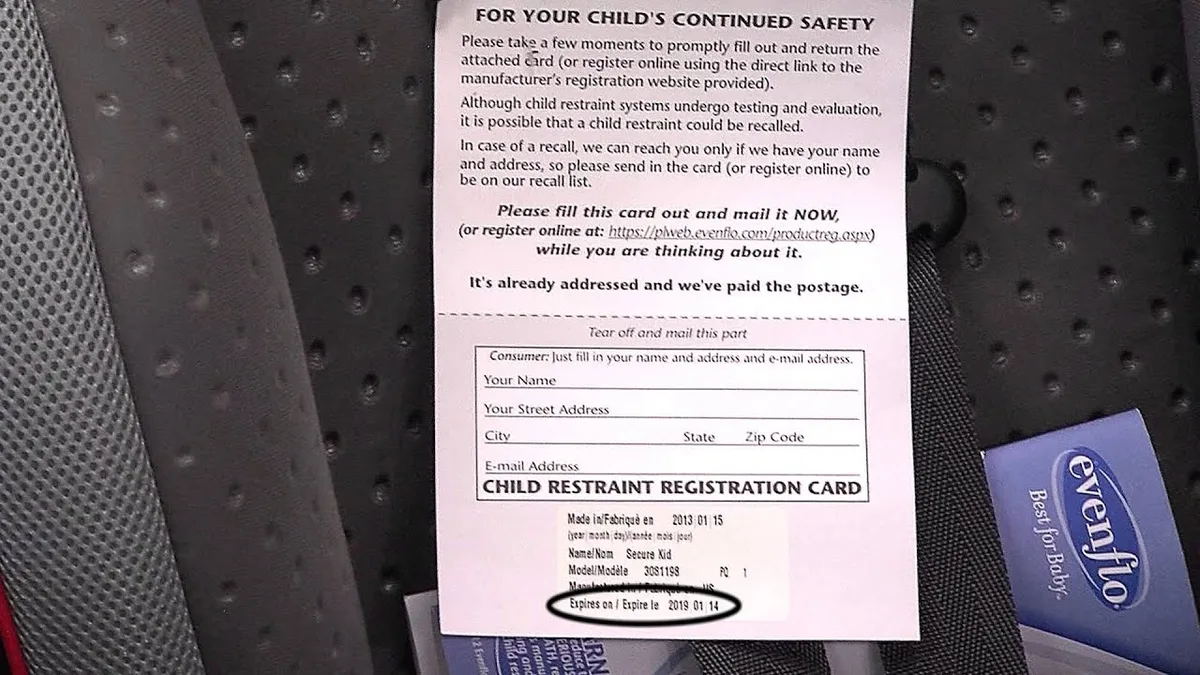
Most rental agency seats still have their expiration sticker, but not always. The sticker can be worn off, covered in grime, or removed entirely. Without the sticker, you have no idea if the seat is expired.
Even if the sticker is present, the seat could be within its date but still compromised by heat exposure. Car seats left in hot cars for days can degrade faster than the expiration date suggests.
Cleanliness and Hygiene Reality Check
You’re not just renting a safety device. You’re renting a fabric-covered object that has held countless children. Multiple verified buyer reports describe seats with food crumbs, dried spills, and even bodily fluids.
Rental agencies do clean them, but there is no industry standard for how thoroughly.
Beyond the gross factor, there’s a practical concern: if the straps are saturated with sticky residue or the buckle is clogged with debris, the harness may not tighten properly. A loose harness is a serious safety issue.
Recall Blind Spots
Manufacturers issue recalls for car seats fairly often. NHTSA maintains a searchable recall database. Rental agencies do not automatically check each seat against that database between rentals.
It is entirely possible to be handed a seat that has an open recall.
You can check yourself using the brand and model number on the seat, but that requires time at the counter. If you are rushing to get to your destination, you may not think to do it.
When Renting Makes Sense (And When It Doesn’t)
Renting a car seat from an agency works best in very narrow circumstances. Think about a single 15-minute Uber ride from the airport to a hotel where your child will stay in your lap for the rest of the trip. In that case, the risk is low enough that many parents accept it.
Another scenario is when both parents are flying separately and one needs a seat at the destination immediately. If your spouse lands two hours before you with the car seat, renting can be a stopgap. You still want to check the seat thoroughly at the counter, but the convenience may outweigh the risk for a short window.
When renting does not make sense: long road trips, highway driving, rural areas with no nearby stores, or any trip exceeding two days. The cost adds up fast, and the safety unknowns compound with every mile. Also avoid renting if your child is under two years old or under 20 pounds.
Rear-facing seats are more size-sensitive, and rental agencies rarely carry premium models with higher limits.
The Real Alternative: Buying a Travel Car Seat
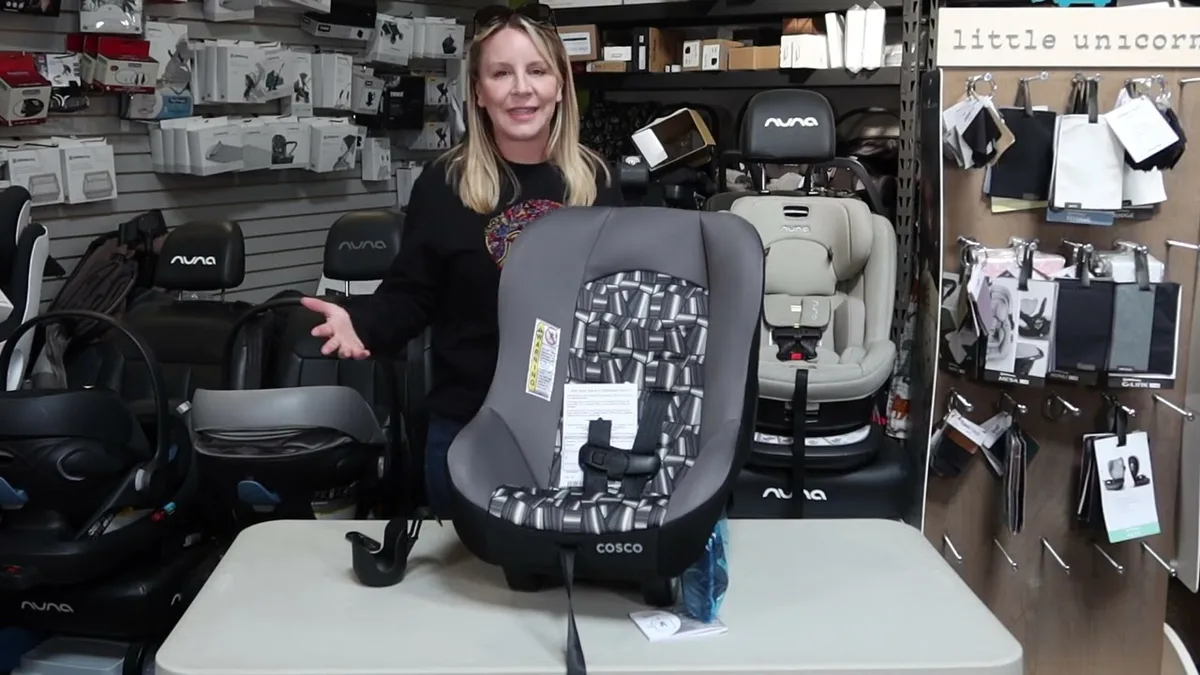
Here is the solution most safety experts quietly recommend: buy a cheap, lightweight travel car seat and bring it with you. It costs about the same as renting for a week, and you control the entire history.
The Cosco Scenera NEXT is the poster child for this approach. It weighs 7.5 pounds, costs around $50, and meets all federal safety standards. It is FAA approved for aircraft use, meaning you can install it on the plane for free rather than checking it.
That alone saves you the risk of baggage handlers damaging your primary seat.
Other solid options include the Evenflo Tribute Lite (9 pounds, around $60) and the Safety 1st Guide 65 (8 pounds, around $55). These seats are not as plush as a $300 Britax, but they are perfectly safe for occasional travel. You use them for trips, then stash them in the closet until next time.
Many parents find that after two or three trips, the seat has effectively paid for itself compared to renting.
The only downside is carrying it through the airport. But with a lightweight seat that clips onto a rolling suitcase or fits in a backpack, that hassle is minimal. Editorial analysis of thousands of parent reviews confirms that the extra effort is worth the peace of mind.
Step-by-Step: How to Rent a Car Seat Safely (If You Must)
If you decide to rent despite the risks, follow this checklist to reduce the chances of getting a bad seat.
Before You Book
Call the rental location directly. Ask three questions: What brand and model do you typically stock? Is the seat less than six years old?
Can I inspect it before accepting it? If they cannot answer, consider a different location or a third-party service.
Reserve the seat online, but confirm at pickup that the correct type is available. Infant seats, convertible seats, and boosters are not interchangeable. Never accept a booster for a child who needs a five-point harness.
At the Counter: Your Inspection Checklist
Spend five minutes examining the seat before you drive away. Look for:
- Expiration sticker. It should be visible and readable. If missing or worn, reject the seat.
- Crash damage. Cracks in the plastic shell, frayed webbing, bent metal parts. Any of these mean do not accept.
- Harness condition. Straps should pull smoothly and retract. The buckle should click firmly and release cleanly.
- Recall status. Use your phone to check the NHTSA recall database. Enter the brand and model number printed on the seat. If there is an open recall, reject the seat.
- Manual. If the manual is missing, ask the agent to print one. Without it, you cannot verify proper installation or weight limits.
Installation Tips for Rental Cars
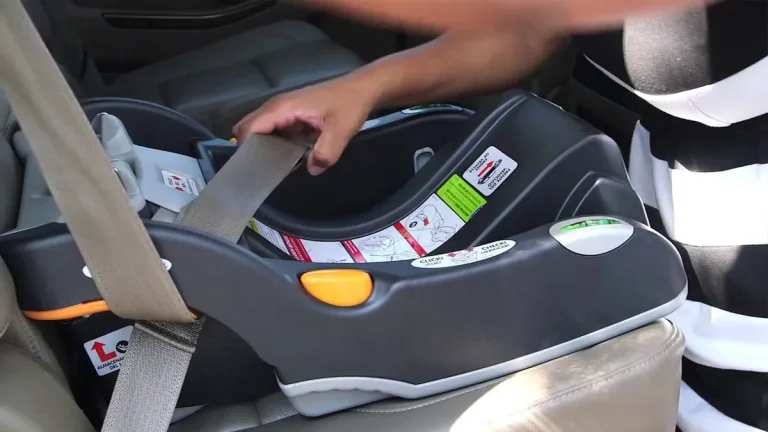
Rental cars often have different seat belt and LATCH configurations than your own car. Look for the lower anchors in the seat bight. If the seat has them, use LATCH for a tighter install.
If not, use the seat belt method.
The seat should not move more than one inch at the belt path when you push firmly. If it shifts more, reinstall. Many rental cars have sloped seats that make installation harder.
Use a rolled towel or pool noodle under the seat base to level it if needed.
What It Actually Costs: Pricing Breakdown
Here is the real cost picture, including fees you may not expect.
| Option | Daily Rate | Week Total | Hidden Costs |
|---|---|---|---|
| Rental agency seat | $10–$15 | $70–$105 | None upfront, but no refund if dirty |
| Third-party rental | $15–$25 | $105–$175 | $20–$30 delivery fee, deposit |
| Buy travel seat (e.g. Cosco) | $50 one-time | $50 | None after purchase |
| Bring your own primary seat | $0 | $0 | Checked baggage fee (if not carrying on) |
The travel seat purchase wins on cost after two trips. Even if you check your primary seat in a bag (baggage fee around $30 each way), the math still favors owning a lightweight travel seat. The rental agency option only makes sense for a single day of use, and only if you are willing to accept the safety risks.
One hidden cost people miss: if you rent and the seat is damaged or missing parts, the agency may charge you a replacement fee. That fee can be $100 or more. With a travel seat you own, that risk disappears.
Legal and Safety Compliance You Can’t Ignore
State laws on car seats vary, but the basics are consistent across the U.S. Children must ride in a rear-facing seat until at least age two in most states. Booster seats are required until the child reaches 4 feet 9 inches tall and is between 8 and 12 years old.
Rental agency seats must meet these laws, but you are responsible for proper use.
If you get into a crash with a rented seat, the legal liability falls on you. The rental agency’s liability waiver generally covers the vehicle, not its contents. Your auto insurance or personal injury protection may cover the child, but that is not guaranteed.
Checking with your insurance provider before traveling is wise.
As of 2026, FAA rules allow car seats with a solid back and five-point harness on aircraft if they are labeled “FAA approved.” Rental agency seats do not have this label, so you cannot use them on the plane. That means you still need a way to get your child to the rental counter. This is another reason the travel seat purchase makes more sense.
You can install it on the plane, and then bring it to the rental car. No gap.
Common Mistakes Parents Make (And How to Avoid Them)
Booking the wrong type of seat. Parents often reserve an infant seat for a toddler who needs a forward-facing convertible. The result is a child who is too tall or too heavy for the seat before the trip ends. Always confirm the weight and height limits of the rental seat before you book.
Assuming installation help is available. Counter agents are not certified child passenger safety technicians. They cannot legally confirm your installation is correct. You are responsible for reading the manual and securing the seat yourself.
If the rental location has no manual, do not accept the seat.
Forgetting to check the return policy. Some agencies charge a cleaning fee if the seat is returned dirty. Others charge a replacement fee if the seat is missing parts or damaged. Read the terms carefully at booking.
A $10 daily rental can turn into a $150 bill if you miss the fine print.
Decision Guide: Renting vs. Third-Party vs. Buying a Travel Seat
Here is a quick reference for which option fits your situation.
| Scenario | Best Option | Why |
|---|---|---|
| One-day rental, short drive | Rental agency seat | Low risk, lowest cost |
| Weeklong road trip | Buy a travel seat | Same cost as renting, safer |
| Flying with a toddler | Buy a travel seat | FAA approved, carry on plane |
| Multi-city trip, no luggage space | Third-party rental | Delivered to hotel, verified condition |
| Infant under 20 pounds | Bring your own seat | Rental seats rarely fit properly |
If you drive regularly with your child at home, buying a travel seat is almost always the better investment. It costs about the same as renting for one week. After that, every trip is free.
Frequently Asked Questions
Can you rent a car seat from Enterprise or Hertz?
Yes, both agencies offer car seats as add-ons at the counter. Enterprise charges about $11 per day. Hertz charges about $12 per day.
You must reserve the seat when you book the car or add it at pickup. Availability varies by location.
Are rental car seats safe?
Rental car seats meet federal safety standards when new, but you cannot verify their history. They may have been in a crash, exposed to extreme heat, or recalled. Without a manual or expiration sticker, you cannot confirm safety.
Most safety experts recommend bringing your own.
How much does it cost to rent a car seat?
Rental agencies charge $10 to $15 per day. Third-party services charge $15 to $25 per day plus a delivery fee. Buying a travel seat costs $50 to $60 one time.
After three or four days of rental, the travel seat pays for itself.
Can I use a rental car seat on a plane?
No. Rental agency seats are not labeled FAA approved for aircraft use. You cannot install them on a plane.
You must carry your child onto the aircraft or bring a separate FAA approved seat. This is another reason travel seats are more practical.
What should I check before accepting a rental car seat?
Check the expiration sticker, visible damage, harness condition, and recall status. Look for cracks, frayed webbing, or bent metal. If the manual is missing, ask for a printed copy.
If any red flag appears, reject the seat and ask for a different one.
The Bottom Line
You can rent a car seat with a rental car, but it is rarely the best choice for your child’s safety or your wallet. Rental agency seats come with unknown history, no manual, and no guarantee of condition. Third-party rentals offer more transparency at a higher cost.
The safest and most cost effective option is to buy a lightweight travel seat like the Cosco Scenera NEXT for about $50.
If you do rent, inspect the seat thoroughly at the counter. Check the expiration date, look for damage, and verify there is no open recall. Never assume the seat is safe just because the agency provided it.
Your child’s safety depends on what you do with that seat, not where it came from.