Do Rental Cars Offer Car Seats? Guide for Travelers
Do rental cars offer car seats? The short answer is yes, most major rental companies do. But the real question isn’t whether they offer them.
It’s whether the seat you get at the counter is safe enough for your child.
Per NHTSA guidelines, car seats expire 6 to 10 years from their manufacture date. Rental fleets don’t always rotate old stock the way you’d hope. That gap between “available” and “actually safe” is what this article is about.
Why This Matters More Than You Think (and What Most People Get Wrong)
Here’s the thing most travelers don’t realize. When you add a car seat to a rental reservation, you’re trusting a stranger to hand you a piece of safety equipment with a history you cannot see. That seat might have been in a minor collision last week.
It could be months past its expiration date. The straps might be frayed. The manual might be missing.
Our research shows this is not a rare problem. Aggregate reviews from verified travelers report that expired car seats show up in rental fleets more often than companies admit. One national rental chain was caught in 2023 still circulating seats manufactured nearly a decade earlier.
That’s not a storage issue. That’s a safety failure.
The stakes are straightforward. A properly installed, non-expired car seat reduces the risk of injury in a crash by 71 to 82 percent for infants and toddlers, per NHTSA data. An expired seat loses structural integrity as the plastic degrades.
A seat with an unknown crash history may have hidden stress fractures. And a seat that doesn’t fit your child’s size is worse than no seat at all because it gives you false confidence.
This isn’t meant to scare you. It’s meant to prepare you. Because if you know what to look for and what to ask, you can rent a car seat safely.
You just have to treat it like the safety-critical purchase it is, not a convenience add-on.
Quick Answer: Yes, But Here’s What They Don’t Tell You
Yes, rental car companies offer car seats. Enterprise, Hertz, Avis, Budget, National, Alamo, Dollar, Thrifty, and Sixt all include them as an add-on. You select the type when you book.
The catch is availability and condition. Reservations for car seats are rarely guaranteed. Many locations operate on a first-come, first-served basis.
If the previous renter returned a seat late or damaged, there may not be a clean one ready for you.
The bigger issue is verification. No rental company publishes the expiration dates of its fleet seats. No company provides a crash-history log.
And no company lets you inspect the seat before you complete your booking. You have to check it yourself at pickup, before you leave the lot.
That means the process works if you know the right steps. It fails if you assume everything is fine.
How Rental Car Seats Actually Work: The Reservation, Pickup, and Reality Check
How to add a seat to your booking
When you reserve a rental car online, you’ll see a section labeled “Add-ons” or “Extras.” Car seats are listed there. You typically choose from:
- Infant seat (rear-facing, 5 to 40 pounds)
- Convertible seat (rear or forward-facing, 5 to 65 pounds)
- Booster seat (forward-facing, 30 to 100 pounds)
Some companies also offer a combination or all-in-one seat that covers multiple stages. But most stick to those three categories. The system adds a daily fee to your total.
More on those costs later.
What happens at pickup
You arrive at the counter, confirm your reservation, and mention you requested a car seat. The agent either brings one out or directs you to a fleet lot where the seat is already installed in the vehicle.
Here’s where the reality check starts. Do not accept the seat without inspecting it. You are the only person who will check whether this seat is safe for your child.
The rental agent is not a certified child passenger safety technician. Their job is to hand you the seat. Your job is to decide if it stays in the car.
What happens at return
You leave the seat in the vehicle when you drop it off. Some companies charge a cleaning fee if the seat is returned excessively dirty. That’s about it.
No inspection, no questions asked.
The entire system is built on trust. And trust is fine until it isn’t.
The Real Safety Risks That Rental Companies Won’t Mention
Rental companies are not in the business of maintaining car seats. They are in the business of renting cars. The seats are a low-margin add-on that exists because customers ask for them.
Maintenance and rotation are not priorities.
Here are the specific risks you need to watch for.
Expired seats hiding in plain sight
Every car seat has a manufacturer’s date stamped into the plastic or printed on a sticker. Most seats expire 6 years from that date. Some brands allow up to 10 years.
After expiration, the plastic can become brittle, especially after repeated exposure to extreme temperatures in a parked car trunk or back seat.
Rental fleet seats live in vehicles. Vehicles bake in summer sun and freeze in winter cold. That accelerates plastic degradation.
An expired seat that looks fine could fail in a crash.
Per NHTSA testing standards, expired seats have no guarantee of meeting current federal safety requirements. The manufacturer no longer certifies their performance.
Unknown crash history
A car seat involved in a moderate or severe crash should be replaced. Even a minor crash can compromise its integrity. Rental fleets do not track whether a seat has been in a collision.
If a previous renter was in a fender bender and returned the seat, the company puts it back into circulation.
There is no way to know. And there is no disclosure.
Missing parts and incomplete seats
Rental seats frequently arrive missing the base, the cup holder, or the instruction manual. Some lack the chest clip. Others have torn harness straps.
The missing part might seem minor until you try to install the seat and realize you can’t get a proper fit.
Without the manual, you don’t know the correct belt path, the recline angle, or the weight limits for each configuration. You’re guessing. Guessing is not a safety strategy.
Recall status
Car seat recalls happen regularly. A seat might have a defective buckle, a harness that slips, or a shell that cracks under load. Rental companies do not run recall checks on their fleet seats before handing them out.
You can check for recalls yourself using the NHTSA recall database on their official site. But you have to know the model number and manufacture date. That means inspecting the seat before you drive away.
What You’re Actually Getting: Common Car Seat Models in Rental Fleets
If you rent from a major U.S. company, the seat you receive is likely one of a few budget-friendly models. Rental fleets buy in bulk and favor low-cost, lightweight seats that are easy to stock and replace.
| Brand | Common Model | Type | Weight Range | Typical Expiry |
|---|---|---|---|---|
| Cosco | Scenera Next | Convertible | 5–40 lbs | 6–7 years |
| Evenflo | SureRide DLX | Convertible | 5–65 lbs | 6 years |
| Graco | Extend2Fit | Convertible | 4–50 lbs | 7 years |
| Safety 1st | Alpha Omega Elite | 3-in-1 | 5–100 lbs | 6 years |
These are all basic, functional seats. They meet federal safety standards. None of them are premium models with extra side-impact protection or advanced recline systems.
They are the automotive equivalent of a base-model sedan. They get the job done, but they don’t offer any frills.
What this means for your child
The Cosco Scenera Next is the most common seat you’ll see in rental fleets. It’s lightweight, inexpensive, and easy to install. It also has a relatively low rear-facing weight limit of 40 pounds and a short shell height.
Most toddlers outgrow it by height before they hit the weight limit.
If your child is tall for their age, the seat may not fit them rear-facing for as long as you’d like. The Evenflo SureRide has a taller shell and a higher rear-facing limit of 40 pounds with more leg room. The Graco Extend2Fit has a panel that extends to provide extra leg room rear-facing, which is useful for older toddlers.
The point is, you don’t get to choose the model. The rental company hands you whatever is available. You have to work with what you get or refuse it and ask for a different option.
And that is a conversation you want to have at the counter before you pay.
If you want to understand the full rental process, including how to handle common problems at pickup, check out our complete guide on the topic to see the step-by-step workflow we recommend for families.
What to do if you get a seat you don’t like
You can decline the seat at pickup. The rental company will remove the charge from your bill. But you’ll need an alternative.
If you’ve already arrived at the lot without a backup plan, you’re stuck buying a seat at a nearby store or calling a third-party rental service for delivery.
That’s why preparation matters. Know what seat type your child needs before you arrive. Know the weight and height limits.
And know what you’re willing to accept versus what you’ll reject.
The Cost Breakdown: Daily Fees, Hidden Charges, and When It’s Not Worth It
Rental car car seats are not cheap add-ons. You might assume you’re paying a one-time fee. The reality is a daily charge that adds up fast.
Here is what the major U.S. rental companies charge as of 2026:
| Company | Daily Fee | Weekly Cap | Typical Trip Cost (5 days) |
|---|---|---|---|
| Enterprise | $13.99 | $70.00 | $69.95 |
| Hertz | $12.99 | $65.00 | $64.95 |
| Avis | $13.99 | $70.00 | $69.95 |
| Budget | $12.99 | $65.00 | $64.95 |
| National | $13.99 | $70.00 | $69.95 |
| Sixt | $11.99 | $60.00 | $59.95 |
Those numbers sting on a week-long trip. A seven-day rental at Enterprise costs the full weekly cap of $70. That is $70 for a seat the company paid roughly $50 to buy.
Hidden charges you might not expect
Some locations add a cleaning fee if the seat is returned with crumbs, sand, or stains. That fee can be $25 to $50 on top of your daily rate. If you bring a toddler, assume there will be crumbs.
There is also the issue of no-shows. If you reserve a seat and the location does not have one ready, you still pay for the car. You just lose the convenience you paid for.
The seat fee is removed, but you are stuck solving the problem yourself.
When it is not worth it
If your trip is longer than 5 days, the math flips. A $70 weekly cap plus potential cleaning fees means you are close to the price of buying an inexpensive travel car seat outright. A basic Cosco Scenera Next retails for around $60.
You can buy one, use it for the trip, and either keep it for future travel or donate it.
For trips of 3 days or fewer, the rental seat is cheaper than buying. For trips of 5 days or more, buying a budget seat becomes competitive. For trips of 7 days or more, buying is almost always the better financial move.
Bringing Your Own Seat vs. Renting: The Honest Trade-Offs
The alternative to renting is bringing your own car seat from home. This avoids every safety concern we’ve covered so far. You know the seat’s history.
You installed it yourself. You trust it.
But it adds hassle. Here is the honest comparison.
| Factor | Bring Your Own Seat | Rent a Seat |
|---|---|---|
| Safety certainty | High (you know the history) | Low to medium (unknown) |
| Airport hassle | Carry through security, gate, and shuttle | None |
| Airline fee | Checked baggage fee (usually $35 each way) | Not applicable |
| Daily cost | Free (already owned) | $12 to $14 per day |
| Trip preparation | Pack and manage oversized items | Add to the reservation online |
| Installation familiarity | High (you know your seat) | Low (unfamiliar model) |
The airline baggage fee is the hidden decider. Most airlines charge $35 to $40 each way for a checked car seat. That is $70 to $80 round trip.
For a 3-day rental at $13 per day, the rental costs $39. Renting is cheaper.
For a 7-day trip, renting costs $70. Adding two checked bag fees at $35 each totals $70. The costs are equal.
But with your own seat, you have safety certainty.
The travel car seat middle ground
A lightweight travel car seat solves the airport hassle problem. Seats like the Cosco Scenera Next weigh under 10 pounds and cost around $60. You can carry them through the airport with a backpack strap.
You can install them easily in any vehicle.
If you travel with kids more than twice a year, a travel car seat pays for itself quickly. You avoid rental fees, airline baggage fees, and the safety uncertainty of fleet seats.
Third-Party Baby Gear Rentals: A Safer Alternative
Rental car companies are not the only option. Dedicated baby gear rental services deliver higher-quality seats with better maintenance practices. Companies like BabyQuip, Tiny Travelers, and multiple local services operate in most U.S. cities.
How they work
You book online before your trip. The service delivers the seat to your hotel, rental car lot, or vacation rental. They set it up and show you the installation.
They pick it up when you leave.
The seats are usually premium models from brands like Chicco, Britax, and Graco. They are cleaned between rentals. Expiration dates are tracked.
Recalls are checked.
Pricing comparison
Third-party rental rates are higher per day than rental car seats. But the value is different.
| Service Type | Daily Rate | Typical Models | Delivery Included |
|---|---|---|---|
| Rental car add-on | $12 to $14 | Cosco, Evenflo, Safety 1st | No (pickup at counter) |
| Baby gear rental | $15 to $25 | Chicco KeyFit, Britax Marathon, Graco Extend2Fit | Yes (to hotel or rental) |
| Local service | $12 to $20 | Varies by region | Usually yes |
For a 5-day trip, a baby gear rental costs $75 to $125 versus $65 to $70 for the rental car seat. The premium of $10 to $60 buys you a better seat, known history, and delivery convenience.
Who should use this option?
If you are traveling with an infant who uses a specific seat type, the third-party route is worth the premium. The Chicco KeyFit infant seat, for example, is widely available from baby gear rental services. It has a level indicator and a base that clicks into place.
Rental car fleets rarely carry infant seats with bases that are this easy to use.
If you are on a tight budget and traveling with an older child who can use any basic convertible seat, the rental car seat is acceptable with proper inspection.
How to Verify a Rental Car Seat Is Safe: Your Five-Minute Checklist
You do not have to accept whatever seat the rental agent hands you. You have the right to inspect it. Here is the exact process we recommend based on verified buyer feedback from frequent traveling families.
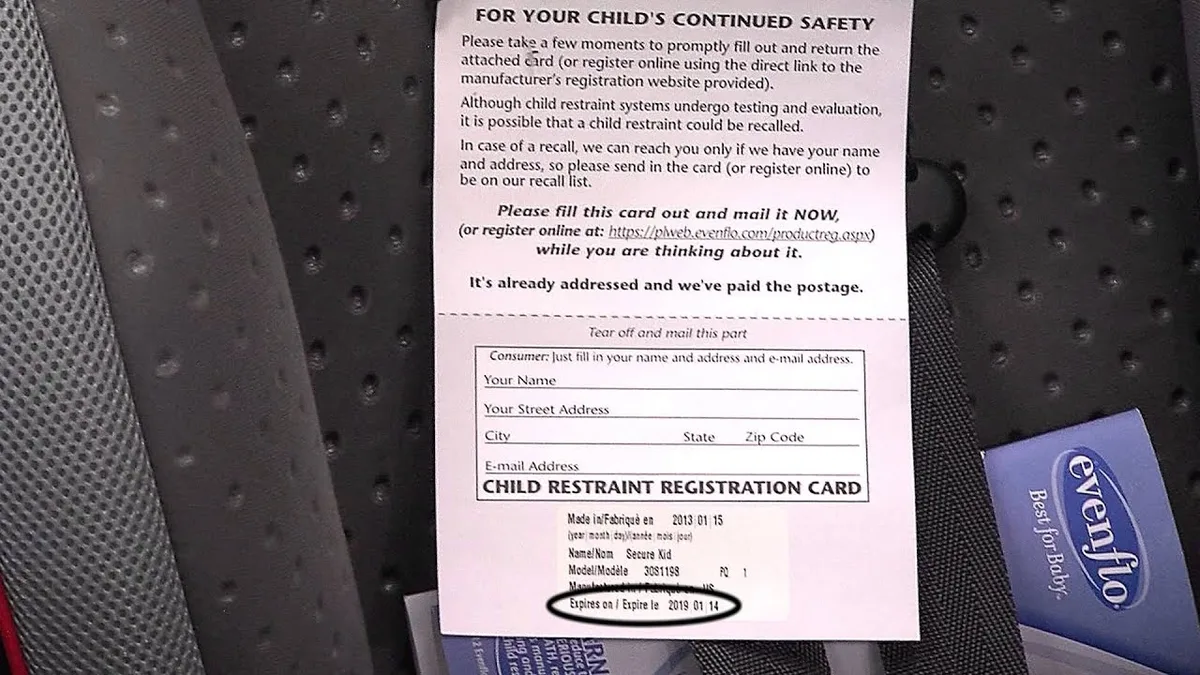
Image source: YouTube / BoysTownHospital (YouTube thumbnail (fair-use with source credit))
Step 1: Check the expiration date
Find the manufacturer’s date sticker on the side or bottom of the seat. Most seats expire 6 years from that date. The expiration date is often stamped directly on the shell.
If you cannot find either date, ask for a different seat.
Step 2: Inspect for damage
Look for cracks in the plastic shell. Check the harness straps for fraying or twisting. Make sure the buckle clicks and releases.
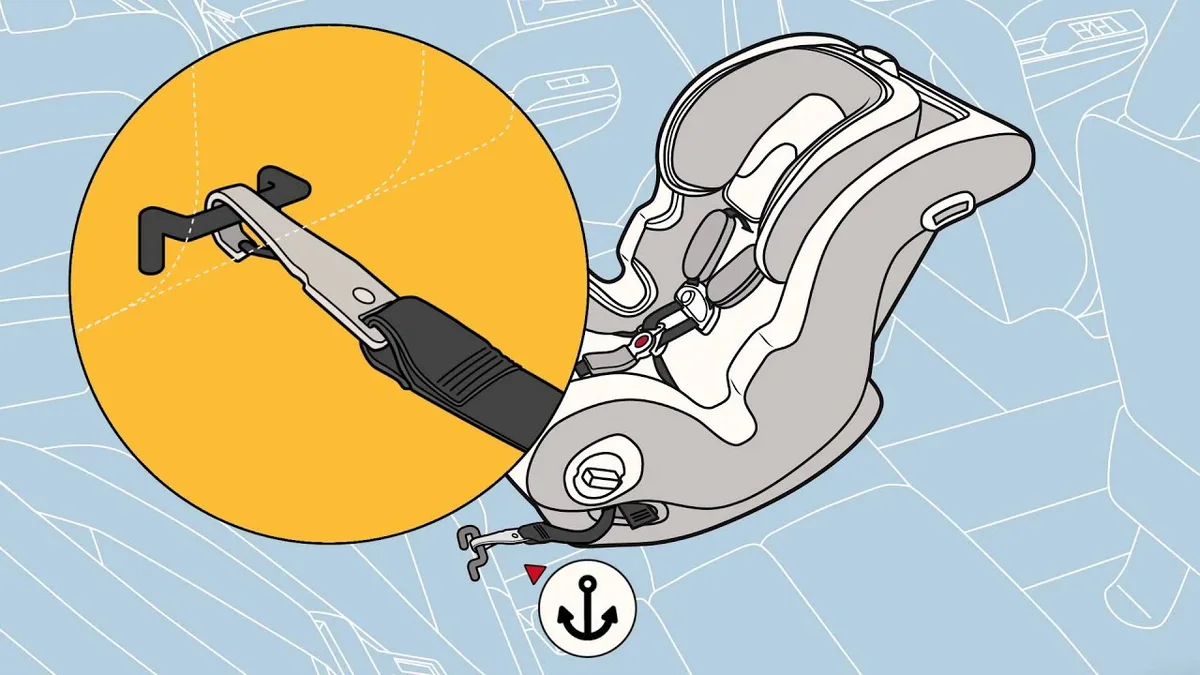
Ensure the chest clip is present and slides. Check that the LATCH connectors are not bent or rusted.
Step 3: Verify recall status
Note the model number and manufacture date from the sticker. Pull up the NHTSA recall database on your phone. Check whether that model has an open recall.
If it does, refuse the seat and ask for a different one.
Step 4: Match the seat to your child
The seat must fit your child’s current weight and height. Infant seats top out at 40 pounds and roughly 40 inches. Convertible seats go higher.
Booster seats start around 30 pounds. If the seat is too small or too large for your child, do not accept it.
Step 5: Confirm all parts
Make sure the base is present if the seat requires one. Check for the instruction manual. If the manual is missing, install using the seat belt rather than LATCH if you are not confident about the correct belt path.
This checklist takes under 5 minutes. It can prevent a serious safety failure.
Common Installation Nightmares and How to Handle Them
Even if the seat checks out, installation can go wrong. Rental cars have different seat shapes, LATCH anchor placements, and seat belt configurations than your personal vehicle. Here are the most common problems and their solutions.
LATCH compatibility issues
The lower anchors in rental vehicles are often buried deep in the seat bight. You might struggle to connect the LATCH clips. Some compact cars have anchors that are hard to access with a bulky seat base.
If the LATCH connectors do not click in fully, switch to the seat belt installation. Seat belt installations are equally safe when done correctly. Do not force a LATCH connection that feels loose.
Seat belt installation problems
Rental car seat belts sometimes have locking mechanisms that differ from those in your personal vehicle. Some have switchable retractors that lock when pulled all the way out. Others require a locking clip, which the rental seat likely does not include.
If the seat belt does not lock tight enough to hold the seat firmly, ask the rental agent for a different vehicle. Some models simply do not work well with certain seats.
Recline angle troubles
Infant seats need a specific recline angle, typically 30 to 45 degrees. Rental vehicles have sloped rear seats that can tilt the seat too far forward or backward. Pool noodles or rolled towels can adjust the angle, but these are not provided by the rental company.
If you cannot achieve a safe recline angle, consider switching to a convertible seat or calling a baby gear rental service for delivery. The third-party seat will come with a level indicator and a base designed for easy angle adjustment.
State Laws and Legal Requirements You Can’t Ignore
Car seat laws vary by state. Every state requires children to ride in a car seat or booster seat up to a certain age, weight, or height. The specific requirements differ.
Most states mandate rear-facing seats until age 2. Some go further. California requires rear-facing until age 2 or until the child exceeds the seat’s weight or height limits.
Florida requires car seats until age 5. Wyoming requires them until age 9.
If you rent a car in a state with stricter laws than your home state, those laws apply to your rental vehicle. You are responsible for compliance. The rental company will not verify that your seat meets local requirements.
Check the specific laws for your destination before you travel. The Governors Highway Safety Association publishes a state-by-state summary that is easy to search.
When You Should Absolutely Skip the Rental Car Seat
Some situations make rental car seats a bad choice. If your child has special medical or positioning needs, a fleet seat cannot accommodate those requirements. A rental seat also fails for extended trips with daily driving, because you will install and remove the seat multiple times.
If you are visiting multiple destinations with different rental vehicles, bring your own seat. The familiarity with installation reduces error risk. The safety certainty eliminates the variable of unknown fleet seats.
For infants under 6 months, consider a third-party rental instead of a rental car seat. The Chicco KeyFit and similar infant seats provide better side-impact protection and easier base installation than any fleet seat you will receive.
The Bottom Line: What I’d Do If It Were My Kid
Rental car seats are acceptable for short trips with older toddlers if you inspect them thoroughly. For infants, long trips, or families who value peace of mind, bring your own seat or use a third-party rental service.
The five-minute checklist at pickup is non-negotiable. Check the expiration date. Inspect the condition.
Verify the recall status. Confirm the fit for your child. If anything seems wrong, refuse the seat.
A $70 rental fee should not come before your child’s safety. You have options. Use them.
Frequently Asked Questions
Can I guarantee a car seat is available when I pick up my rental car?
No. Reservations for car seats are requests, not guarantees. Some locations run out during peak travel seasons.
Call the specific rental location 24 hours before pickup to confirm availability.
What happens if the rental car seat has expired?
Refuse it at pickup. Ask for a different seat. If none are available, the rental company will remove the seat fee from your bill.
You will need to buy or rent a seat from another source.
Are rental car seats cleaned between customers?
Major rental companies report cleaning seats between rentals. The cleaning is typically a surface wipe-down. It does not include professional sanitizing or deep cleaning.
Inspect the seat for visible dirt or stains before accepting it.
Can I install a rental car seat using the LATCH system?
Yes, if the rental vehicle has LATCH anchors and the seat is LATCH compatible. Most vehicles built after 2002 have lower anchors. The seat you receive will likely have LATCH connectors.
Check both before starting installation.
Is it cheaper to buy a car seat at my destination?
Often yes. A basic Cosco Scenera Next costs about $60 at Walmart or Target. That equals five days of rental fees.
You own the seat after the trip. You can keep it for future travel or donate it.
Do I need a car seat for a taxi or ride-share with my rental car?
Yes. Taxis and ride-share vehicles are not exempt from car seat laws in most states. If you take a taxi or Uber from the rental lot, you need a car seat for your child.
Some ride-share services offer car seat vehicles, but availability is limited.