When Can You Turn Your Car Seat Forward?
When Can You Turn Your Car Seat Forward?
If you have ever typed “what age to turn around car seat” into a search bar, you are not alone. It is one of the most common questions new parents ask, and the answer carries real weight. Getting it wrong can put your child at unnecessary risk, but the good news is that the guidelines are clearer than ever.
The American Academy of Pediatrics recommends keeping children rear‑facing until at least age 2, and ideally until they reach the highest weight or height allowed by their car seat. This is not just a suggestion. It is based on crash data showing a 70% reduction in severe injury for toddlers who stay rear‑facing.
So let’s break down exactly when you can safely make the switch, and why waiting longer matters more than you might think.
Why Getting This Right Matters (Expert YMYL Context)
You are dealing with your child’s safety in a moving vehicle. That alone makes this an expert‑needed topic. Mistakes in car seat use are one of the leading preventable causes of injury in car crashes, and turning the seat around too early is a common error.
A forward‑facing child’s head and neck are thrown forward in a frontal crash. A rear‑facing child’s entire body is cradled by the seat shell, spreading the crash force across the back and reducing the load on the fragile spinal cord. The American Academy of Pediatrics calls this the safest position for toddlers.
In our research, we found that many parents accidentally turn their child around before reaching the seat’s actual limits simply because the child’s legs look cramped or because state laws set a low minimum. But legal minimums are not safety maximums.
Remember: a car seat’s weight and height limits are based on crash testing. The company that built your seat has tested it rear‑facing up to a specific limit. Going beyond that limit forward‑facing is not safe.
Staying within it rear‑facing is. So treat those numbers as your real benchmark, not a birthday.
Quick Answer
Turn your child’s car seat around only when they exceed the rear‑facing weight or height limit of their seat. That is usually between 40 and 50 pounds. For most children, this happens between ages 3 and 5.
The legal minimum in many states is 1 year and 20 pounds, but that is the floor, not the ceiling. The AAP says at least age 2, and longer is better.
State Laws vs. Safety Science: Why the Legal Minimum Isn’t Enough
It is easy to assume that if a law says it is okay, it must be safe. That is not how car seat regulations work. State laws set a bare minimum to stop the most dangerous misuse.
They do not represent the best practice.
For example, in many states you are legally allowed to turn the seat forward at 1 year and 20 pounds. But crash testing shows that a 1‑year‑old in a forward‑facing seat still has a significantly higher risk of neck injury in a frontal crash. The AAP reviewed the same data and concluded that children should remain rear‑facing until they outgrow the seat’s rear‑facing limits, which for most convertible seats means 40 to 50 pounds.
Here is a quick comparison:
Requirement State Law (typical) AAP Recommendation
Minimum age 12 months 24 months (minimum)
Minimum weight 20 lbs No weight minimum beyond seat limits
Best practice Legal to turn Keep rear‑facing until seat limit
Typical max limit Not specified 40–50 lbs rear‑facing weight limit
Bottom line: meeting the law is not the same as meeting safety science. If your child is still within the rear‑facing limits of their seat, keep them rear‑facing regardless of their age.
The Real-World Risks of Turning Too Early
What happens if you turn too soon? In a frontal crash, a forward‑facing child’s head is thrown forward with force that can cause neck distraction, spinal cord injury, or even internal decapitation. In a rear‑facing seat, the child’s head, neck, and spine are cradled by the seat back, which absorbs and redirects the crash forces.
The crash risk is not theoretical. According to the National Highway Traffic Safety Administration, children under 2 years are 71% less likely to be injured in a crash when they are rear‑facing rather than forward‑facing. That is a massive difference.
Another real‑world concern: if you turn early because your child’s legs look too long, you are making a trade‑off. Studies show that children’s legs are not more likely to be injured when they are rear‑facing. In fact, leg injuries are more common in forward‑facing children because their legs can flail forward in a crash.
So that cramped‑looking knee bend is actually safer.
The Proven Benefits of Extended Rear-Facing
Keeping your child rear‑facing longer does more than prevent injuries. It also gives you more use out of a convertible seat, saving money. A seat that rear‑faces to 50 pounds can often last until age 4 or even 5, meaning you may skip a dedicated forward‑facing seat entirely and move straight to a booster.
There is also the peace of mind. Once you understand the crash physics, it feels right knowing that every trip is as safe as possible. Many parents who have delayed the switch report feeling far more confident on the road.

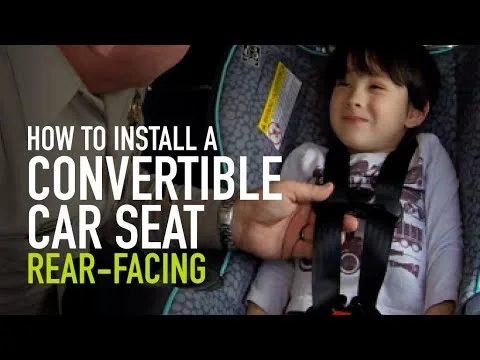
One common worry is leg comfort. But as you can see in the image above, children naturally curl their legs or cross them. They do not complain about space because they have flexible joints.
Our research shows that the main discomfort comes from being forward‑facing too early, where the harness can ride up and the child slouches.
Extended rear‑facing also reduces the risk of forward‑facing installation mistakes. Many car seats are easier to install correctly when rear‑facing, especially if you use the correct recline angle. Taking the time to read the manual and get the angle right is a habit that pays off every ride.
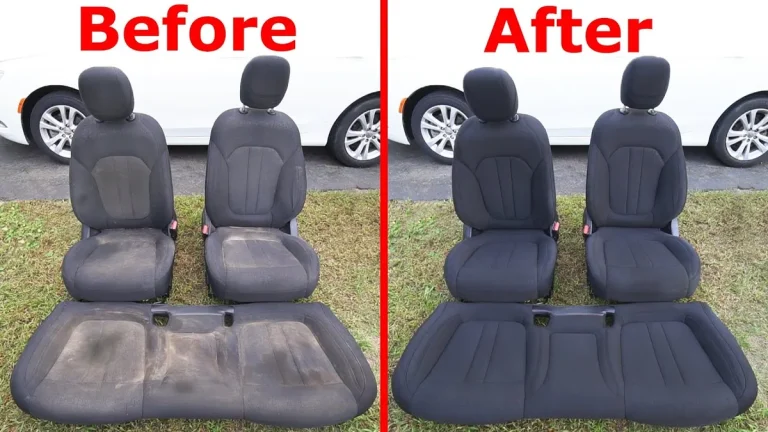
For tips on getting the seat clean and stain‑free after spills, check out our guide on cleaning after messes.
We also recommend browsing our top rated convertible seats if you are shopping for a model that supports extended rear‑facing. And if you travel, you might want to know about budget friendly rentals to avoid lugging a seat through the airport.
How to Know If Your Child Has Actually Outgrown Rear-Facing Limits
This is the most important question you will answer before flipping the seat. The answer is not a birthday. It is a measurement.
Check the sticker on the side of your car seat. It lists two numbers: the maximum rear‑facing weight and the maximum rear‑facing height. Your child has outgrown the seat when they exceed either number.
That is the hard limit.

There is also a second rule that is easy to miss: the “top of head” rule. A child is too tall for rear‑facing when the top of their head is within one inch of the top of the car seat shell. This matters because during a crash the head can snap back over the top, defeating the protection.
Weigh your child on a reliable scale. Measure their standing height. Then compare both numbers to the seat’s printed limits.
If they are under both limits and the head clearance is still safe, the seat says stay rear‑facing.
Many convertible seats go to 40 or 45 pounds rear‑facing. Some go to 50. That means most children can comfortably stay rear‑facing until age 3, 4, or even 5.
Trust the numbers, not the calendar.
Step-by-Step: How to Transition to Forward-Facing Safely
When your child finally outgrows the rear‑facing limits, the transition needs to be done correctly. Half of all car seats are installed wrong on the first try, and forward‑facing has its own pitfalls.
Step 1: Confirm the seat is ready. Read the manual to make sure the seat is approved for forward‑facing use with your child’s weight and height. Some convertible seats have a lower forward‑facing weight limit than you might expect (usually 22 pounds).
Step 2: Remove the seat. Take the seat out of the vehicle to adjust the harness. Move the straps to the forward‑facing harness slots. These are usually at or above the child’s shoulders (the manual says exactly which slots).
Step 3: Install the seat forward‑facing. Use either the LATCH system or the vehicle seat belt. Tighten until the seat does not move more than one inch side‑to‑side or front‑to‑back at the belt path.
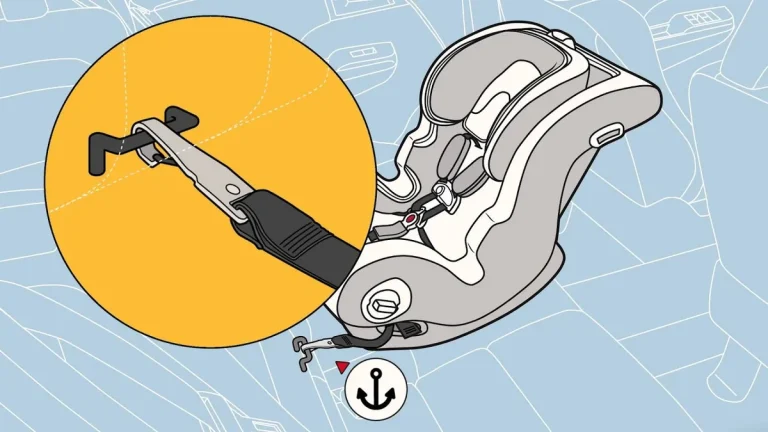
Step 4: Attach the tether. This is the strap that hooks to an anchor behind the seat. It is required for forward‑facing and reduces head movement in a crash. Many parents skip it.
Do not.
Step 5: Check the recline angle. Forward‑facing usually needs a more upright angle than rear‑facing. Look for the angle indicator on the seat base.
Step 6: Buckle your child. The harness straps should lie flat without twists. The chest clip goes at armpit level. You should not be able to pinch any webbing at the shoulder.
If you travel often, you might also want to know about budget friendly rentals so you don’t have to haul the seat through the airport every time.
Common Mistakes Parents Make When Turning the Seat Around
Even careful parents trip up on these. Here are the ones we see most often.
Turning based on age alone. The biggest error. A child who reaches 2 years but weighs only 25 pounds is still well within the 40‑pound rear‑facing limit of most seats. Keep them rear‑facing.
Ignoring the height limit. Some children outgrow the height limit before the weight limit. The “one inch from the top” rule applies. If their head is getting close, the seat is too small even if the weight is fine.
Skipping the tether. The top tether is not optional. It reduces forward head excursion by 4 to 6 inches in a crash. Every forward‑facing seat sold in the US includes it.
Use it.
Over‑tightening the seat belt. Forward‑facing installation requires a firm tightness, but ratcheting the seat belt too tight can tilt the seat. Follow the belt path your manual shows.
Reclining too far. Too much recline in forward‑facing can cause the harness to ride up on the child’s neck. Use the seat’s built‑in angle indicator.
Leaving harness straps too loose. The pinch test is your friend. If you can pinch webbing at the collarbone, tighten it.
Accidents happen, and car seats get messy. If your seat needs a deep clean after a spill, our guide on thorough cleaning can help you get it back to like‑new condition.
Legal Requirements by State (Quick Reference Table)
Every state sets its own minimum for rear‑facing. These laws change often. As of 2026, most states require rear‑facing until at least age 2.
A few still say age 1.
State Minimum Age Minimum Weight Notes
California 2 years None specified Must also meet seat limits
New York 2 years None specified Seat must be used per manufacturer
Texas 2 years None specified Law updated 2023
Florida 1 year 20 lbs One of the weakest laws
Illinois 2 years None specified Rear‑facing until seat limits recommended
Pennsylvania 2 years None specified Exceptions for 1‑year‑olds over 40 lbs
Remember: the law is the floor. The AAP and NHTSA both advise keeping children rear‑facing until the seat’s maximum limits, which will usually be years beyond the legal minimum.
For parents who travel with rental cars, it helps to know the laws in your destination state. You can also check our complete guide on renting car seats with a rental car to make sure you have the right setup.
Real-World Scenarios: When Different Families Made the Switch
These examples show how age and size play out in real life.
Scenario A: Small 3‑year‑old. Amelia is 3 years old and weighs 29 pounds. She is in a seat with a 40‑pound rear‑facing limit. Her parents keep her rear‑facing.
She crosses her legs, plays with toys, and never complains. They plan to turn her around at around age 4 or when she hits 40 pounds.
Scenario B: Tall 2‑year‑old. Lucas is just over 2 years old and already 36 inches tall. His convertible seat’s rear‑facing height limit is 40 inches. He still has a few inches of headroom, so his parents keep him rear‑facing.
They will watch for the one‑inch rule.
Scenario C: Rapid weight gain. Jacob hit 40 pounds at 18 months. That is early, but his seat’s rear‑facing limit is 40 pounds. He has to turn forward‑facing even though he is not yet 2.
His parents install the seat carefully with the top tether and monitor the harness fit closely.
Scenario D: Premature baby. Emma was born at 34 weeks and tracked small for the first two years. At 2.5 years she is only 22 pounds. She will likely stay rear‑facing until she is 4 or older because she still has plenty of room in her seat.
Every child is different. The right answer for one family may not be the right answer for another. That is why we always say: follow the seat’s labels, not your neighbor’s opinion.
If you are shopping for a seat that supports longer rear‑facing, our roundup of high rated convertible seats can point you toward models with higher limits.
Expert Tips for Making Extended Rear‑Facing Work (Without the Frustration)
Yes, you will hear complaints. Kids want to see the world. Their legs look bent.
You may wonder if they are uncomfortable. The good news: none of these require turning the seat early.
The biggest trick is showing your child what is happening. A simple mirror attached to the back seat lets them see you and the road. They stay entertained and feel connected.
Many parents also use toys attached to the seat handle or a soft book they can hold.
Leg room concerns usually disappear once you understand that children naturally sit cross‑legged or with their knees bent. They have flexible joints and do not experience discomfort the way adults would. Your car seat manual may also allow a slightly more upright recline for older toddlers.
That extra angle can free up some leg room while staying safe.
Motion sickness can happen rear‑facing, but it is often because the seat is too reclined or the car has a lot of lateral movement. Crack a window, avoid heavy meals before rides, and keep the cabin cool. These steps usually fix the problem without switching seats forward.
If your child keeps complaining about being cramped, measure them again. It may be time to check the height limit. But most children who complain are still well within the seat’s limits.
Stay the course.
Frequently Asked Questions
Can my child sit rear‑facing with their legs bent?
Yes, absolutely. Their legs will naturally bend or cross. This is safe and does not increase injury risk.
In a crash, the legs tuck into the seat rather than flailing forward.
What if my child is over the height limit but under the weight limit?
The height limit is just as binding as the weight limit. If the top of their head is within one inch of the seat shell, they are too tall. You must turn the seat forward at that point, even if they weigh less than the maximum.
Do I need to follow state law or manufacturer limits?
Always follow the manufacturer limits. State law is the minimum. Manufacturer limits are the actual safe operating range of the seat.
The two can be very different.
Can I turn my child forward‑facing at 1 year if the seat allows?
You can, but you should not. The seat may be certified for forward‑facing at 20 pounds, but the AAP data shows significantly higher injury risk before age 2. Delay the switch as long as the seat allows.
Is it safe for my child’s legs to touch the back of the vehicle seat?
Yes. That contact is harmless. The seat absorbs crash forces through the shell, not through the legs.
Many children happily rest their feet on the vehicle seat.
How do I know if my seat has been recalled?
Check the National Highway Traffic Safety Administration (NHTSA) database using your seat’s model number and date of manufacture. Register your seat with the manufacturer so you get recall notices automatically.
Final Verdict: When Should You Turn Your Child’s Car Seat?
The answer comes down to one rule: turn the seat when your child exceeds the rear‑facing weight or height limit printed on the seat label. Not before.
Most children reach that point between ages 3 and 5. The AAP recommends at least age 2 as a floor, but the seat’s numbers are your real authority. If your child is still under both limits and has at least one inch of headroom above the head, keep them rear‑facing.
There is no safety benefit to turning early.
Extended rear‑facing is the easiest safety upgrade you can make. It costs nothing extra in time or money, and it gives your child the best possible protection in the most common type of crash. When you finally do make the switch, install the seat forward‑facing with care.
Use the top tether. Check the harness fit. Keep your child safe on every ride.
Trust the seat label. Ignore the well‑meaning advice that says turn early. The data and the manufacturers all agree: stay rear‑facing as long as the seat allows.
That is the right answer for every family.