When Do Car Seats Expire Safety 1st? What Parents Need
You’ve probably asked yourself when do car seats expire safety first. It’s one of those questions that feels awkward to ask, yet it could be the single most important thing you check before buckling your child in. The honest answer is yes, every car seat has an expiration date, and ignoring it puts your kid at risk in ways you can’t see.
Here’s what most parents don’t realize. The plastic shell, harness webbing, and foam padding all degrade over time, even if the seat looks brand new in your garage. As of 2026, every car seat sold in the US must meet Federal Motor Vehicle Safety Standard (FMVSS) 213, but that standard only guarantees protection during the seat’s usable lifespan.
After that, the seat’s materials simply can’t perform the way they were designed to in a crash.
Let’s break down exactly what happens, how to find your seat’s expiration date, and what to do when that date passes.
Quick Answer
Car seats expire because materials degrade over time. Most seats last 6 to 10 years from the date of manufacture. The exact lifespan is printed on the seat’s label.
Always check the manufacturer’s stamped expiration date. If you can’t find it, don’t use the seat. After a crash, replace the seat immediately regardless of age.
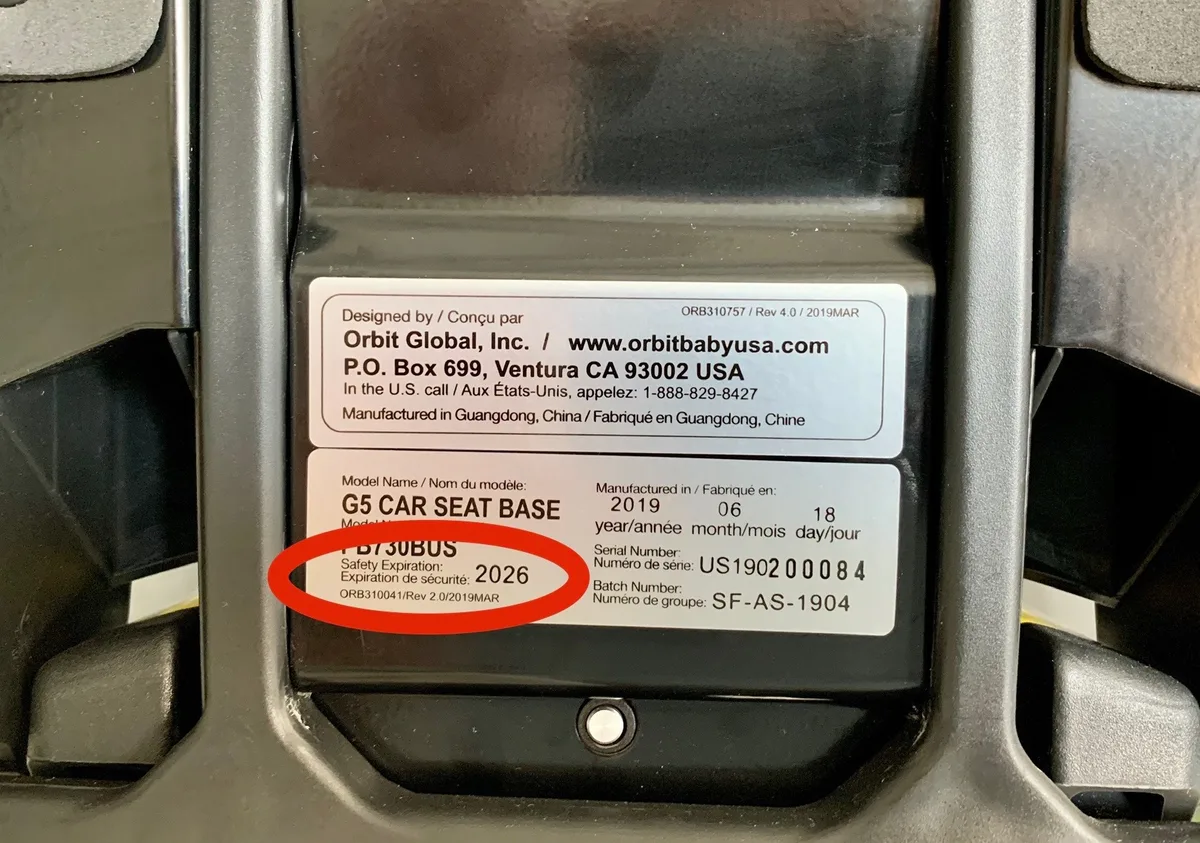
Image source: Web (Bing) / carseatcare.com (Web image (fair-use with source credit))
The Short Answer: 6 to 10 Years (Here’s Why)
The quick answer is that most car seats expire between 6 and 10 years after the date of manufacture. That range isn’t random. Each manufacturer tests its own materials and sets the lifespan based on how quickly they expect the plastic, foam, and webbing to degrade under normal conditions.
In our research, the most common expiration period we found across major brands is 6 years. Some convertible and all-in-one seats stretch to 8 or even 10 years. Britax, Graco, Chicco, and Evenflo all publish specific lifespans for each model, so you can’t assume every brand follows the same timeline.
But here’s the thing you need to understand. An expiration date isn’t a suggestion. It’s the point at which the manufacturer can no longer guarantee the seat will protect your child in a crash.
The label exists because the seat’s structural integrity genuinely changes over time.
Even if a seat has never been in a crash, the plastic shell becomes more brittle as it’s exposed to temperature swings inside a parked car. The heat inside a car on a summer day can exceed 150°F, and that repeated heat cycling breaks down the polymer bonds in the plastic.
The same goes for the harness straps. The webbing is designed to handle extreme force during a crash, but it weakens with exposure to UV light, sweat, and general wear. By the time a seat hits its expiration date, those straps may not hold up the way they did when you first installed them.
Image source: Bing (Web (fair-use with source credit))
Why Car Seats Actually Expire: The Science of Plastic and Wear
Most parents assume the expiration date is a marketing trick to sell more seats. It’s not. The reality is grounded in materials science, and it’s worth understanding because it explains why you can’t just “eyeball it” when deciding whether a seat is still safe.
Polypropylene Plastic and Heat Degradation
The shell of nearly every car seat on the market is made from polypropylene plastic. This material is chosen because it’s tough, lightweight, and can absorb energy during a crash by flexing and cracking in controlled ways.
But polypropylene has a weakness. It degrades when exposed to heat, UV light, and time. Over years of sitting in a car, the polymer chains break down.
The plastic becomes more brittle and less able to absorb impact energy. In a crash scenario, an older seat might shatter rather than flex, which is catastrophic for the child inside.
The degradation is accelerated by extreme heat. If you live in a climate with hot summers, your seat’s plastic is aging faster than the same seat would in a cooler region. That’s why manufacturers build a margin of safety into the expiration date, but it’s also why you shouldn’t push that date.
Harness Webbing and Buckle Fading Over Time
The harness system is the second critical component. The webbing is made from polyester, which doesn’t degrade as quickly as plastic, but it does weaken with UV exposure and repeated use. Every time you tighten and loosen the straps, you’re causing micro-friction that slowly wears the fibers.
The buckle is another weak point. Over time, dust, crumbs, and sticky juice can get inside the mechanism, causing the latch to stick or fail to release. If the buckle doesn’t click properly in an emergency, you can’t get your child out quickly, and if it fails during a crash, the harness won’t hold the child securely.
The foam padding, which provides side-impact protection and comfort, also degrades. It can compress, lose its energy-absorbing properties, and become less effective at protecting your child’s head and torso.
How to Find Your Seat’s Exact Expiration Date
Finding your seat’s expiration date is straightforward, but it requires knowing where to look. Most parents don’t realize there are two different dates printed on a car seat, and confusing them can be dangerous.
The first is the date of manufacture (DOM). This is sometimes called the production date. The second is the expiration date itself.
Some manufacturers print both on the same label, while others only print the DOM and expect you to calculate the expiration based on the stated lifespan in the manual.
Start by flipping the seat over or checking the sides. You’re looking for a white or silver sticker that lists the model number, serial number, and dates. The sticker is usually located on the bottom of the seat or on the side near the harness adjustment.
For infant seats, check the base as well as the carrier itself.
The label will typically say something like “Date of Manufacture” and “Expiration Date” or “Do Not Use After.” If you see a date that’s 6 years after the DOM, that’s your expiration. If the label only shows a manufacture date, you’ll need to look up the model in the manufacturer’s manual or on their website to find the specific lifespan.
Locating the DOM Sticker
Here’s a quick process for finding the sticker on most seats:
- Turn the seat upside down and look at the base. This is the most common location.
- Check the side near the harness slot. Some seats place the label on the plastic shell under the armrests.
- Look at the back of the seat for a raised foam panel. The sticker might be underneath.
- Check the manual if you still have it. The manual often lists the exact location for your model.
If the sticker is faded or scratched off entirely, don’t guess. A missing label on a used seat is a red flag, and you should treat the seat as expired or unsafe.
Model Numbers, Serial Numbers, and Registration Cards
The model number and serial number are just as important as the date. These numbers allow you to check if your seat has been recalled and confirm whether the expiration date applies to your specific unit. You can enter the model number on the manufacturer’s website or contact their customer support directly.
While you’re at it, make sure you’ve registered your seat. The registration card that comes in the box isn’t junk mail. It’s how manufacturers contact you if there’s a recall.
If you bought a used seat, you can still register it with the manufacturer, but only if it hasn’t expired and you have the model number. Without registration, you might never find out about a safety defect until it’s too late. And if you’re looking to understand when car seats became mandatory in California, registration becomes even more critical for staying compliant with state laws.
What If the Expiration Sticker Is Missing or Faded?
This is a situation we see all the time, especially with used car seats. The sticker gets scratched off, or it fades to the point where you can’t read the date. It’s tempting to assume the seat is probably fine, especially if it looks new.
Don’t do it.
In our research, the consensus across child passenger safety organizations is clear. If you can’t verify a car seat’s expiration date, the seat should be treated as expired and replaced. There’s no way to test the plastic’s integrity at home, so you’re making a guess with your child’s safety as the stake.
Here’s what you should do if you find a seat with a missing label:
- Contact the manufacturer with the model number if you can find it. They may be able to look up the production date based on other identifying marks.
- Check for a date stamped directly into the plastic. Some seats have the DOM molded into the shell underneath the fabric.
- Ask the previous owner for the original manual or receipt. If they kept the manual, it might list the purchase date, which gives you an approximate timeline.
- When in doubt, throw it out. A new seat costs anywhere from $80 to $300. A funeral costs considerably more.
The same logic applies if the label shows a date but is partially torn. If you can’t read the full expiration date, don’t guess whether it’s a 5 or an 8. The consequences of being wrong aren’t worth it.
If you’re buying a used seat and the seller can’t show you a clear label, walk away. This is also worth keeping in mind if you’re debating whether to buy a used car seat at all. The risk isn’t worth the savings.
Expired vs. Crash-Damaged: Which Is Riskier?
This is a question that comes up a lot when parents are trying to decide whether to keep a hand-me-down seat. It’s also one where the answer is more nuanced than most people expect.
The simple answer is that both expired seats and crash-damaged seats are unsafe. But they’re unsafe in different ways, and understanding those differences helps you make better decisions.
An expired seat fails because its materials have degraded. The plastic may look fine on the outside, but it’s lost its ability to absorb impact energy. In a crash, the seat might break apart, which means your child isn’t contained.
The harness webbing might also snap under load, especially if it’s been exposed to years of UV light.
A crash-damaged seat is a different problem. Even a minor fender bender can cause structural damage that isn’t visible to the naked eye. The plastic may have micro-cracks, the foam may have compressed, and the harness anchors may have shifted.
NHTSA guidelines recommend replacing any seat after a moderate or severe crash, and many manufacturers now recommend replacement after any crash, no matter how minor.
Here’s the thing. A 5-year-old seat that’s never been crashed is safer than a 1-year-old seat that’s been through a moderate collision. Crash damage is harder to detect, and seat manufacturers can’t guarantee the performance of a seat that’s absorbed any impact forces.
When you’re evaluating a secondhand seat, ask yourself two questions. First, do I know the seat’s full history? Second, can I verify it’s never been in a crash?
If the answer to either is no, pass on the seat. A used seat from a trusted friend or family member who can vouch for its history is one thing. A seat from a stranger at a consignment sale is another.
That’s a risk that’s hard to justify, which is exactly what we cover in our guide to the truth about buying used seats.