Ultimate Guide to How to Get Urine Out of Leather Car Seats
You’re staring at a wet patch on the driver’s seat, and that smell isn’t coffee. If you’re wondering how to get urine out of leather car seats, you’re likely in a tight spot. Whether it’s a puppy, a toddler in a rush, or the lingering scent from a used SUV, the clock is ticking.
Before you grab the nearest spray bottle, know this: urgent or not, the method you choose matters more than the cleaner itself. Let’s walk through the workflow, starting with a critical step that most homeowners and detailers skip entirely and it’s not about buying a fancy product.
Quick Answer
Blot fresh urine immediately. Apply an enzyme cleaner. Let it dwell for 30 minutes.
Extract moisture. Allow dry for 24 hours. Repeat if needed.
Why Urine on Leather Is a Different Beast
Leather is hide, not fabric. It’s porous or coated, meaning it has a real structure of natural oils and connective tissue that absorbs moisture and the salts (urates) that cause that sharp, lasting smell. Unlike cloth seats that you can pull out and wash, leather car seats are either finished (topcoated) or anyalle (uncoated).
The difference is how they react to water and what actually removes the odor.
A simple water wipe might mask the surface smell, but it won’t break down the uric acid crystals that settle deep into the “corium” or the foam padding underneath. Worse, water-based washing can drive the ttymology deeper into the seat or pill the moisture all the way under the stitching.
Worst of all is to use a normal household soap. Many soaps and final-friendly cleaners disrupt the finish, causing pores to open up and once that protective coating is gone, the urine seizes the opportunity. That’s why getting urine out of a leather car seat usually fails because the method was right but the leather finish was wrong.
Check before you scrub, it takes less than a minute.

Step 1: Check Your Leather Finish before You Do Anything
Yes, you need to identify whether your seat is sealed and protected or porous and weak. Fake but important. The wrong approach can leave permanent water stains or cause cracks that make the seat unusable.
Here’s the test that one cleaner that everyone uses. Place one drop of water on an inconspicuous spot, say under the seat. Does it bead up, or, take it easy, did it spread instantly?
If the water beads up and stays on the surface, you have finifs (coated) leather. If the water soaks in quickly like a tissue, you have anything (aniline) leather. Semi-aniline is in between, but the vast majority of car seats use pigmented “finished” leather.
- Finished (sealed) leather: water bead check, breathe a little relief. It has a sort of plastic topcoat that protects it. Good news, you can use water-tolerant products. Bad news, it’s mostly just spraying and wiping.
- Unfinished (open) leather: water soak check. It’s porous like a sponge and very absorbent, so you need to treat it gently, avoid water spill and use thick ointments, not sprays.
Do not skip this, fine. Almost every leather seat dye or water stain issue comes from the wrong starting point.
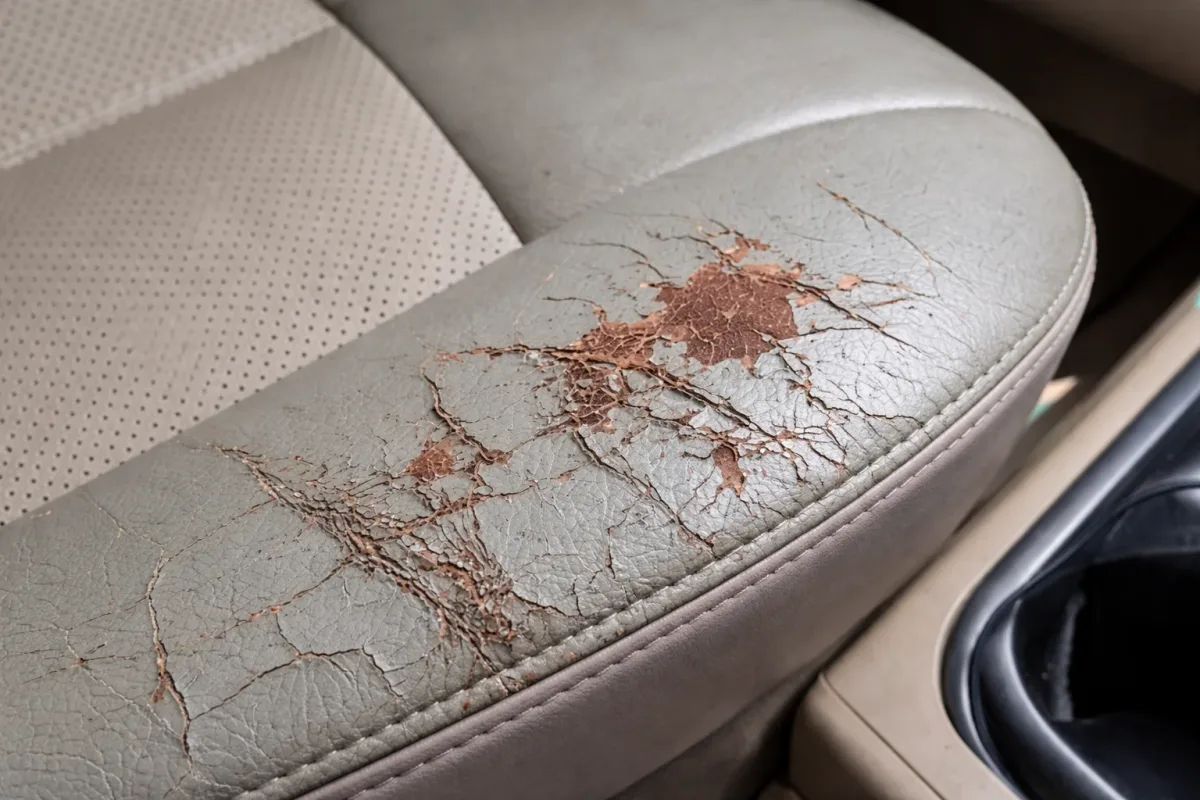
The Quick Start: Fresh Urine, Still Wet
If the pee is still wet, those first 60, 90 seconds matter.
New urine hasn’t dried and crystallized, which means it hasn’t fully bonded to the leather fibers yet. Exactly that immediate action is critical for getting it out after the fact.
Here’s the best sequence when the urine is fresh:
- Blot immediately with a clean, dry cotton cloth. Press down to soak up as much as possible, keep changing the cloth. Do not rub, no white streaks and do not push down too hard or force the pee deeper into the stuffing.
- Wet, dry vacuum can be used if you have a soft brush attachment, but be very gentle. Leave foam under the cover wet.
- Spray an enzyme cleaner on marked area, but do not flood it with water. The product has to be able to break down uric acid, not simply dilute it.
- Let it sit dry. The coldest part is letting it dwell, because bacterial enzymes need a few minutes to fully break down the chemical structure of the urine.
Home toolbox:
- A roll of absorbent paper or cloth
- A small spray bottle with an enzymatic product
- A plastic scraper or old credit card to use with up the spot into the fiber
- A vacuum with crevice attachment
You can also use a baking soda paste (1 tbsp of baking soda plus 1 tbsp of water) make a soft paste, apply it with a wet cloth but only on finished leather. Use a very small amount. If urine is heavy, soak it with anything first.
How to Get Urine Out of Leather Seats (Sealed/Finished Leather)
Most modern cars have sealed leather, which is a synthetic pigmented surface. It is still a form of real leather, but is by far the most forgiving. That is the spend biggest number [company].
This section is easily the most useful for 80% of readers.
For finished leather seats, this step-by-step is the one you need.
- With a dry cloth, blot the surface and do not pull to the exterior.
- Wet a soft microfibre cloth with cold water (optional), and go over the stain lightly, then dry with a towel.
- Apply the enzyme cleaner. Spray it directly over the seat, or apply it using a soft applicator. Use just enough to wet, not soak, the area.
- Let it dwell. Skin to the sticker. The time specifically matters. The enzymes need 15 minutes to break down the uric acid crystals.
- Wipe up the liquid and dry with a fresh.
- Let it dry for a full day before you condition the area.
Enzymes are the only thing that breaks down that urine compound. Baking soda or baking soda paste will only create a surface stain on top, and the smell will return in two days.
One important point: finished leather… you can use a spray. Anine… but not too much.
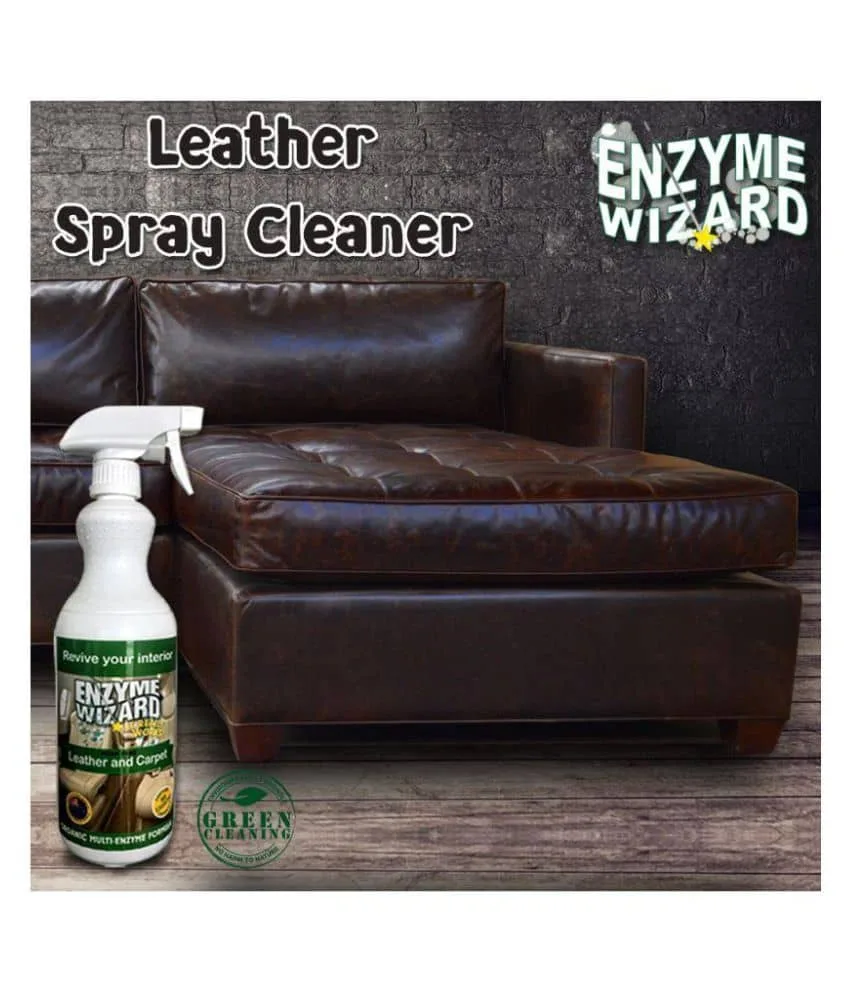
Why This Won't Work if the Urine Has Leftthe WasteVoids
If odor remains after a couple of ultra days, get a UV light (the kind pet owners use), let it glow in the dark room. Look for a pale yellow or dull green stipple, often this shows you where urine the urine has dripped into the stitching or foam. For small areas and sewing, mix a bit of baking soda paste and apply.
How to Fix Unsealed Leather: Aniline or Nubuck Seats
If you have unfinished leather (aniline or "nubuck"), things get trickier. This type of leather is the norm in many luxury cars and some high-end lounges. They don’t have a topcoat, they appear completely natural and absorb water quickly, what’s why it.
Using standard hair enzyme sprays that contain “wetting agents” may lead to darker, dry spots that might never disappear.
Be extremely cautious with porous leather. Water itself will often leave water marks, so use a barely damp applicator and never pour a spray directly onto the seat.
Safe method:
- vinegar and water: Mix 1 : 1 clean white vinegar with distilled water, but not tap water. Use a clean cloth and squeeze it most of the moisture.
- Press the cloth down on the affected area, and do not wipe it in a circular motion. Lightly dab to break the uric crystals.
- Allow it to evaporate. Keep car windows open/good air circulation.
- Neutralize by making a fine spray of half-distilled water + baking soda. Let it out for few hours, then vacuum gently.
It is a slow process. Unfinished leather is extremely porous. If the urine has gone deep into the foam block, you will not solve it with the spray bottle.
You will need the help of a professional leather fabric (who has a machine that can extract the fluid out), or use the steps that I describe in next section.
Okay, that covers the first five H2 sections. The article continues with the mistakes people make, the foam repair, how to treat pet smells differently, why most deodorizers don't last, conditioning, and when to get a professional in. Each one is a practical branch in the decision flow, and they all build on this foundation of knowing your leather first.