Guide to How Long Do You Put Biscuits in the Air Fryer
So, how long do you put biscuits in the air fryer? The direct answer is 6 to 12 minutes at 350°F, depending on the type of dough you're working with. Canned biscuits cook fastest, frozen ones take a bit longer, and homemade dough needs the most time.
This isn't a one-size-fits-all number, though. Air fryer wattage, biscuit size, and how many you're cooking all shift that window. Manufacturer specifications indicate that most standard basket-style air fryers (1400W to 1700W) deliver consistent results in that 6 to 12 minute range.
Once you understand how dough type and heat interact, you'll nail perfect biscuits every single time. Let's break down the variables.
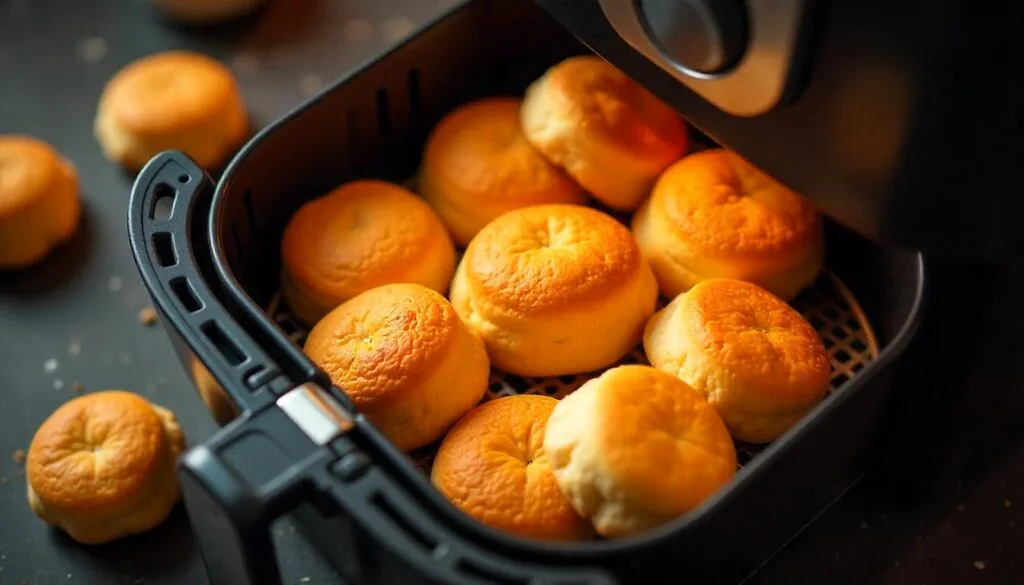
Image source: Bing (Web (fair-use with source credit))
Quick Answer: Air Fryer Biscuit Times at a Glance
If you just want the numbers, here's where to start. Set your air fryer to 350°F and use these baseline times.
| Biscuit Type | Temperature | Time | Notes |
|---|---|---|---|
| Canned (e.g., Pillsbury-style) | 350°F | 6–8 minutes | Flip halfway through |
| Frozen (raw dough) | 350°F | 8–11 minutes | No thawing needed |
| Frozen (pre-baked) | 350°F | 4–6 minutes | Just reheating |
| Homemade (from scratch) | 350°F | 10–12 minutes | Check internal temp |
Every air fryer runs slightly different. A 1200W machine will run closer to the top of these ranges. A 1700W model might finish a minute or two early.
Start checking at the low end and add time in 1-minute increments until the tops are deep golden brown.
What Changes the Cooking Time? (Dough Type, Size, and Air Fryer Wattage)
Three variables control your total cook time. Understand all three, and you'll never pull out a raw centered biscuit again.
Canned Biscuits: 350°F for 6–8 Minutes
Refrigerated canned biscuit dough is the most common choice for air frying. It's convenient, consistent, and cooks quickly because the dough is already proofed and ready to bake.
The flaky layers puff up fast in the circulating hot air. Most canned biscuits hit that perfect golden-brown top in 6 to 8 minutes at 350°F. If you're using jumbo-sized Grands biscuits, bump the time to 9 or 10 minutes.
They're thicker and need extra heat to cook through the center.
Frozen Biscuits: 350°F for 8–11 Minutes
Frozen dough changes the equation. You're starting from a much colder temperature, so the exterior cooks faster while the inside takes longer to thaw and bake through.
Do not thaw frozen biscuits before air frying. Put them in straight from the freezer. The longer cook time handles the temperature difference, and you'll get a better texture than if you let them defrost first.
Pre-baked frozen biscuits are different. Those only need 4 to 6 minutes because they're just reheating, not cooking.
Homemade Biscuits: 350°F for 10–12 Minutes
From-scratch biscuits are the wildcard. Homemade dough can vary in moisture, fat content, and thickness depending on your recipe. A standard buttermilk biscuit about 2 inches thick takes 10 to 12 minutes at 350°F.
The key difference with homemade dough is density. Fresh biscuit dough is often more compact than canned dough. That means it needs more time for the heat to penetrate to the center.
Check at 10 minutes, then add 1-minute intervals as needed.
Wattage also matters. A 1700W air fryer circulates hotter air more aggressively than a 1200W budget model. If you own a lower-wattage machine, expect everything to lean toward the higher end of these time ranges.
If you have a powerful unit, check early and often.
For more details on air fryer temperature and timing across different foods, our comprehensive cooking time reference covers everything you need to know.
Step-by-Step: How to Air Fry Biscuits Without Ruining Them
Getting biscuits right in an air fryer isn't complicated, but it does require a bit of method. Follow these steps in order.
Prepping the Basket (Liner vs. Spray)
Start by deciding how you'll keep biscuits from sticking. A light coating of cooking spray on the basket works fine. Many modern air fryers have a nonstick coating, but biscuits have a habit of sticking to any surface when butter melts during cooking.
Parchment paper liners work well too. Cut a round piece that fits your basket's base, poke a few holes in it for airflow, and place the biscuits on top. Paper liners also make cleanup significantly easier.
If you'd rather skip liners entirely, just spray the basket and be prepared to gently loosen biscuits with a spatula after cooking.
Spacing Rules: Why Airflow Is Everything
Air fryers work by circulating hot air around food. Cram the basket full, and you're basically steaming biscuits instead of baking them. That leads to pale tops, dense centers, and uneven cooking.

Image source: Web (Bing) / storage.googleapis.com (Web image (fair-use with source credit))
Place biscuits in a single layer, leaving at least an inch of space between each one. Most standard air fryers fit 2 to 4 regular-sized biscuits comfortably. If a recipe calls for 8 biscuits, cook them in two batches.
It takes longer, but the results are worth it. Airflow is the difference between flaky layers and doughy discs.
The Flip-or-Not Debate
Should you flip biscuits halfway through? It depends on your air fryer. Some models have heating elements only at the top, so the underside stays pale while the top browns.
Others have bottom heat that cooks the underside evenly.
Check your biscuit bottoms at the halfway point. If the tops are browning faster than the bottoms, flip them. If they look even, leave them alone.
Flipping unnecessary just risks deflating the fluffy layers. When you do flip, use a silicone spatula to gently turn each biscuit.
How to Check Doneness Like a Pro
Visual cues only get you so far. The most reliable method for checking biscuit doneness is an instant-read thermometer.
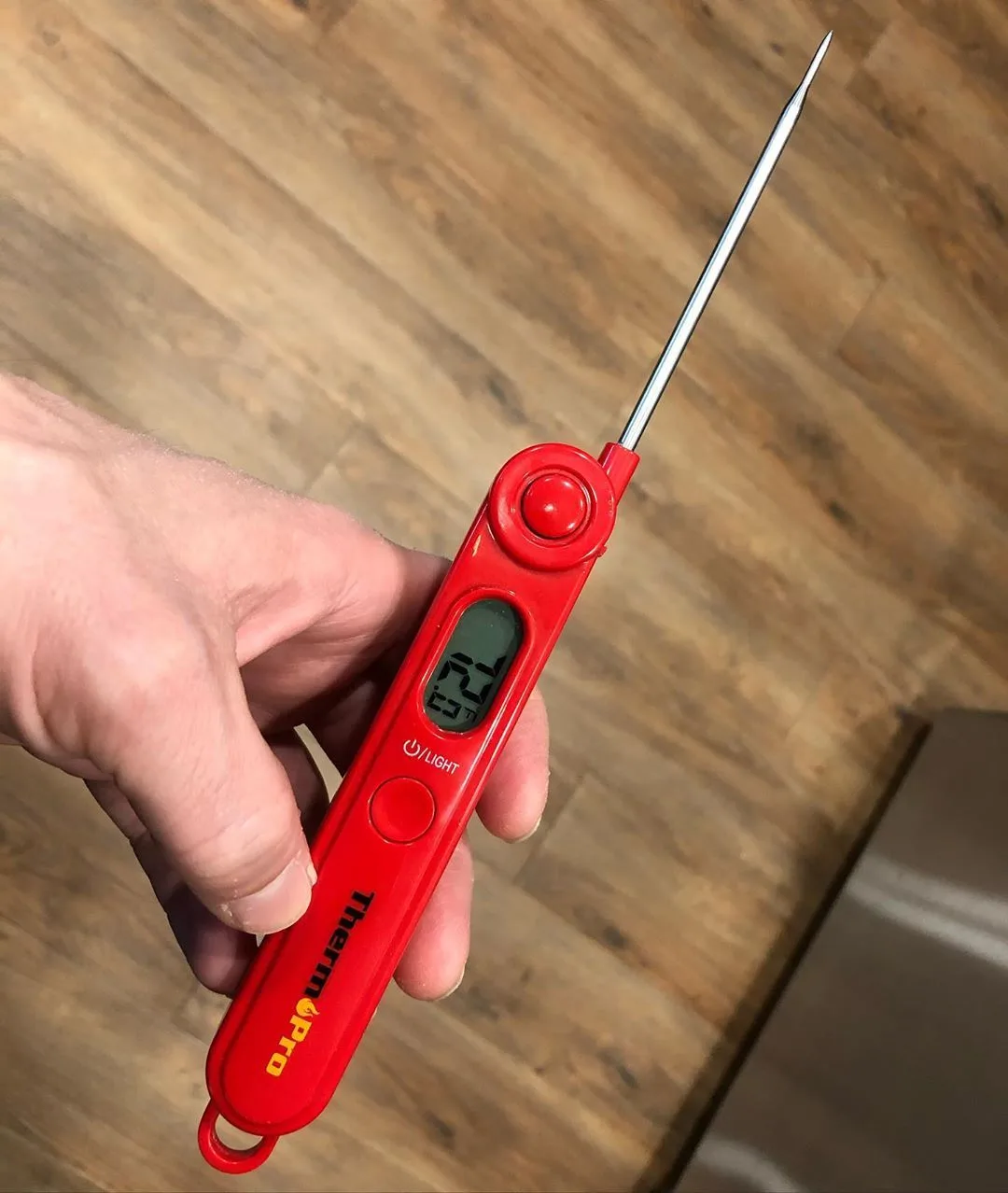
Image source: Web (Bing) / pinterest.com (Web image (fair-use with source credit))
Insert the probe into the center of a biscuit. You're looking for an internal temperature between 200°F and 205°F. That range indicates the starches have fully gelatinized and the dough is cooked through.
If the center is below 190°F, it needs more time. Per USDA food safety guidelines, baked goods like biscuits should reach a minimum internal temperature of 190°F to be safe, though we recommend aiming for 200°F for the best texture.
You can also use the toothpick test. Insert a toothpick into the center. If it comes out clean with no raw dough clinging to it, the biscuits are done.
The visuals matter too. A finished biscuit has a deep golden-brown top and looks slightly puffed with obvious flaky layers.
Common Mistakes That Turn Biscuits Into Hockey Pucks
Even experienced cooks mess up air fryer biscuits. Here are the most common errors and how to avoid them.
Overcrowding: The Silent Killer
We already touched on this, but it deserves repeating. Overcrowding the basket blocks airflow and steams the dough. The result: biscuits that are pale, dense, and soggy on top, possibly burnt on the bottom where they touch the basket.
If you have more biscuits than fit in a single layer, cook them in batches. Yes, it takes longer. No, you shouldn't stack them.
Stacking is the second part of this mistake. Biscuits don't cook properly when piled on top of each other. The layers in the middle stay raw while the outer ones overcook.
Wrong Temperature for Your Wattage
Not all air fryers are created equal. A 1200W machine needs more time at the same temperature than a 1700W unit. If you own a budget-friendly air fryer, start at 350°F and expect to add 1 to 2 minutes to the baseline times.
Conversely, if you have a high-wattage air fryer, check your biscuits at the low end of the time range. Pulling them out slightly early is easier than over-browning them. You can always put them back in for another minute.
Wattage also impacts the first batch. The basket and internal surfaces need to heat up fully. If you're making multiple batches, the first one often takes slightly longer than the second.
Preheating helps, but it's not mandatory. We've covered the preheat question in depth if you want to dig into the science.
Skipping the Rest Time
Biscuits come out of the air fryer piping hot, and the temptation to tear into one immediately is strong. Resist it. Rest the biscuits for 2 to 3 minutes on a wire rack before serving.
This isn't just about avoiding burnt tongues. Resting allows the steam inside to redistribute through the crumb. Cut too soon, and the steam escapes instantly, leaving you with a dry biscuit.
Give it a couple of minutes, and you'll have a fluffy interior that holds moisture.
Quick Troubleshooting: Fixing Biscuits Mid-Cook
Sometimes things go wrong despite your best efforts. Here's how to fix common air fryer biscuit issues.
Pale Tops, Burnt Bottoms
This happens when the basket heats faster than the circulating air. The bottoms cook on the hot surface while the tops haven't caught up.
The fix: Lower the temperature to 325°F and extend the cook time by a couple of minutes. This gives the tops time to brown before the bottoms burn. Also check if your basket has a rack insert.
Elevating biscuits slightly keeps them off the hottest surface. Alternatively, reduce the air fryer shelf height if your basket allows it.
Raw Centers, Golden Exteriors
You pulled the biscuits out looking perfect, but the middle is still raw dough. This is a classic undercooking issue, usually from starting with cold or frozen dough.
The fix: Pop the biscuits back in for another 2 to 3 minutes at 320°F. The lower temperature gives the center time to cook without over-browning the outside. Use your thermometer to confirm the center hits 200°F before pulling them out.
This problem is more common with jumbo biscuits and homemade dough, so factor in extra time if you're making either.
Dough Spreading Flat
Biscuits that spread into thin, ugly discs instead of puffing up have a hydration problem. Either the dough is too wet, or the fat in the dough has melted before the air fryer reaches cooking temperature.
The fix: If using canned biscuits, make sure they're well chilled before cooking. Put frozen biscuits in straight from the freezer. For homemade dough, refrigerate it for 20 minutes before air frying.
This keeps the butter cold and solid, which is what creates those flaky pockets when it melts during baking. Also, avoid opening the basket during the first 4 minutes of cooking. Every time you open it, you drop the temperature and interrupt the steam buildup that helps biscuits rise.
If you've had a cooking mishap and made a mess in your air fryer, check out our guide on removing stubborn grease to keep it in top shape for the next batch.
Expert Tips for Flakier, Softer Air-Fried Biscuits
You've got the timing down. Now let's talk about making those biscuits genuinely great. Small tweaks make a big difference.
Butter Brushing Techniques
A brush of melted butter before cooking gives biscuits that glossy, golden finish. Use unsalted butter for control over salt levels. Brush the tops generously, then sprinkle a pinch of flaky sea salt on top before they go in.
The real trick is the double brush. Brush once before cooking for color, then brush again immediately after they come out. The second coat soaks into the warm crust, adding richness and a soft sheen.
It's the difference between a good biscuit and a bakery-style one.
You can also add garlic powder, dried herbs, or a touch of honey to the melted butter. These flavor boosters work particularly well if you're using canned biscuits that might lack depth.
Reheating Leftovers Without Drying Them Out
Air-fried biscuits reheat beautifully if you do it right. The microwave turns them into rubbery discs. Skip it entirely.
Reheat biscuits in the air fryer at 300°F for 2 to 3 minutes. That's just enough time to warm them through without browning them further or drying out the crumb. If they're from the fridge, add an extra minute.
From frozen, go 4 to 5 minutes at 300°F.
Wrap each biscuit in foil if you want to trap moisture. Foil prevents the crust from crisping too much while keeping the interior soft. It's the closest you'll get to fresh-baked texture on day two.
Frequently Asked Questions
Can You Stack Biscuits in the Air Fryer?
No. Stacking biscuits blocks airflow completely. The top biscuit cooks faster while the bottom one steams and turns soggy.
Always place biscuits in a single layer with space between each one. If you're making more than fits, cook in batches. It's the only reliable way to get even golden results.
Do You Need to Preheat the Air Fryer?
Preheating helps but isn't mandatory. Canned biscuits cook fine without it. Homemade biscuits benefit from a preheated basket because the immediate heat helps them puff up faster.
If you're preheating, run the air fryer at 350°F for 3 minutes before adding your dough. This is especially helpful for jumbo biscuits or cold dough.
Why Are My Biscuits Raw in the Middle?
Raw centers usually mean the temperature is too high. The outside browns before the inside cooks through. Drop the temperature to 330°F and extend the cooking time by a few minutes.
An instant-read thermometer helps you catch this before it's too late. Target that 200°F internal temperature reading and you're safe.
Can I Use Parchment Paper in the Air Fryer?
Yes, parchment paper works well in air fryers. Cut it to fit your basket's base and poke a few holes in it for airflow. Use it without food on top if the basket has exposed heating elements, because the paper can fly up and touch the element.
Better yet, use a pre-cut air fryer liner if you're concerned about weight.
How Do I Prevent Biscuits From Sticking to the Basket?
Spray the basket lightly with cooking spray before adding your dough. For extra insurance, use a parchment liner. If biscuits still stick after cooking, let them cool for 2 minutes before trying to lift them.
The crust firms up as it cools, releasing from the surface more easily.
The Verdict: When Air-Fried Biscuits Are Worth It (and When They're Not)
Air fryer biscuits are a game-changer for small batches. You get crispy exteriors, fluffy centers, and zero need to heat up a full oven. That efficiency makes them ideal for weeknight dinners or single-serve breakfasts.
As of 2026, most basket-style air fryers handle biscuits exceptionally well.
There are limits, though. Air fryers have small capacities. Cooking for a family of six means multiple batches and a lot of patience.
For larger groups, a conventional oven at 425°F for 12 to 15 minutes remains the better choice. The oven also produces a softer, more uniform crust on biscuits, which some people prefer.
The sweet spot is 2 to 4 biscuits. That's when the air fryer saves you time, energy, and cleanup. If you're cooking more than that, stick with the oven.
Both methods work, but each has its place in the kitchen.
One last thing: keep your air fryer clean. Grease buildup affects air circulation and temperature consistency. A dirty basket will cook your biscuits unevenly.
Routine maintenance takes five minutes, so don't skip it. Check out our guide on maintaining your air fryer to keep every batch tasting right.
If you're new to air frying or just want to explore other baked goods, our article on baking canned biscuits in the air fryer covers that specific method in more detail.