Ultimate Guide to How to Fly With a Car Seat and Stroller
Flying with a baby means hauling enough gear to make you question your life choices. If you've been wondering how to fly with a car seat and stroller without losing your mind, hang tight. Most airlines let you check both for free.
The real challenge is figuring out what goes in the cabin, what gets gate-checked, and what your specific airline allows.
Here's a hard number to anchor your planning: the FAA requires any car seat used on board to carry an approval label stating it's certified for motor vehicles and aircraft. That label, plus your car seat's width (most aircraft seats measure roughly 16 to 17 inches across), decides whether your seat can fly in the cabin at all. Let's walk through the decision process step by step.
Quick Answer
How to fly with a car seat and stroller? Bring the car seat on board if you can. FAA-approved car seats fit most aircraft seats.
If your seat is too wide, gate-check it instead. Strollers can be gate-checked for free. Gate-check both when in doubt.

Image source: Bing (Web (fair-use with source credit))
First, Decide: Is Your Car Seat Coming On Board?
Before you book anything, ask one question: does your child have their own seat? That single answer changes everything.
If you bought a ticket for your child, you can install a car seat in the cabin. If your child flies as a lap infant, the car seat can't occupy a seat, so it gets gate-checked or checked at the counter.
Here's the if/then logic that sorts most families:
- If your child is under 2 and flying as a lap infant, gate-check the car seat.
- If your child is 2 or older, most airlines require their own seat, so using the car seat on board makes sense.
- If you're using a bucket-style infant seat, it usually fits on board because it's built to pair with a stroller frame.
- If you're traveling with a convertible car seat, measure it against the aircraft seat width first.
The safest option, when it works, is using the car seat on the plane. Your child sits in a familiar restraint, sleeps better, and you avoid the risk of the seat being thrown into cargo. Just make sure your seat meets the requirements for an FAA-approved car seat before you pack.
The Rules That Decide Everything: FAA Approval, Airline Policy, and Seat Width
Three rules control whether a car seat flies in the cabin. Nail all three and you're set.
FAA approval. The seat must have a label stitched into the shell that reads: "This restraint is certified for use in motor vehicles and aircraft." No label, no boarding with the seat. Airlines can refuse a car seat without this marking. Check the label before you leave the house, not at the check-in counter.
The FAA's guidance on child restraints covers this in detail.
Seat width. Most economy seats are 16 to 17 inches wide between the armrests. A car seat wider than that won't fit. Measure the widest point of your seat before your trip.
Many convertible car seats come in around 18 to 19 inches, which makes them too wide for most domestic coach cabins.
Airline policy. Every carrier writes its own baby equipment rules. Some airlines publish exact car seat dimensions, others just say "FAA-approved." Some let you gate-check a stroller free, others charge for a second item. Read the airline's contract of carriage before booking.
The FAA also requires car seats to be installed in a window seat whenever they're used on board. That's not a suggestion, it's a rule. Think of it like the safest spot for a child in a car, applied to the aircraft cabin.
Car Seat Options: Onboard Installation vs. Gate-Check vs. Counter Check
You have three paths for your car seat. Each one trades off convenience, safety, and peace of mind.
| Option | Safety | Convenience | Best for |
|---|---|---|---|
| Onboard installation | Highest, seat stays with you | Moderate, you carry it through the airport | Kids with their own seat, seats under 16 inches wide |
| Gate-check | Moderate, less handling than cargo | High, you use it up to the plane door | Lap infants, seats too wide for aircraft seats |
| Counter check | Lowest, more risk of damage | Low, you lose it before security | Only when you have no other option |
Onboard installation is the gold standard. The seat gets strapped into an aircraft seat with the plane's belt, your child rides in it, and you don't worry about it being tossed in the hold. The downside is lugging a heavy seat through security and down a narrow aisle.
Gate-checking is the middle ground. You bring the seat through the airport, hand it to crew at the plane door, and collect it at your destination gate. It faces far less handling than checked baggage.
A padded travel bag helps. If you're worried about damage that voids a car seat's protection, gate-check beats counter check every time.
Counter check means the seat goes down the normal luggage chute. It's free on most airlines, but it gets thrown, stacked, and possibly crushed. The NHTSA recommends replacing car seats after any significant impact, and baggage handling is far from gentle.
If you must counter-check, use a padded bag and be ready to replace the seat.
Booster seats don't work on airplanes because they need a vehicle seatbelt system to function. Your child will need a harnessed car seat or a CARES harness instead. That's a big shift from moving to a booster for car travel.
Stroller Options: Gate-Check vs. Checking It Like Regular Luggage
Strollers are simpler, but they still need a plan. You have two choices.
Gate-checking the stroller is the default move. You push your child through the airport, fold the stroller at the aircraft door, and hand it to the crew. It gets loaded into the hold and returned to you at the gate on landing.
That's huge on connecting flights because you keep the stroller between legs.
Checking at the ticket counter makes sense in only one scenario: you have a direct flight and don't need the stroller before boarding. Otherwise you're stuck carrying a baby through security and down to the gate.
Stroller type matters too. Full-size strollers fold wide and eat up luggage space. Umbrella strollers fold narrow and pack small.
If you fly often, a lightweight travel stroller that folds with one hand saves you at the gate. Nobody wants to fight a sticky release button while holding up a boarding line.
A good airline policy note: most US carriers treat a stroller as a free checked item, even on basic economy fares where regular bags cost money. As of 2026, gate-checking a stroller and a car seat remains free on the major US airlines. International carriers often follow the same pattern, but always double check the specific airline's wording.
The Pre-Flight Checklist: Booking a Seat, Measuring Your Car Seat, and Reading the Fine Print
This is where you do your homework. Give yourself a day or two before departure.
Book a seat for your child. If you're using a car seat on board, your child needs their own airline seat. That's true even for kids under 2, who can otherwise fly free on your lap. The moment you decide to install a car seat, buy that ticket.
Booking ahead also lets you pick a window seat, which you'll need anyway.
Measure the car seat. Use a tape measure across the widest point of the seat shell. Compare that against the aircraft seat width for your airline and specific plane model. If you fly the same route often, note the aircraft type in your booking.
Check the FAA label. Look for the stitched label on the car seat shell. If it's faded or missing, the airline may refuse the seat at the gate. That's a costly surprise you can avoid in thirty seconds.
Read the airline's baby equipment policy. Search for "child restraint" or "baby equipment" on the carrier's website. Policies shift over time. What worked on your last flight may not apply on your next.
Label your gear. Write your name and phone number on the car seat bag and stroller frame. If a gate-checked item gets sent to the wrong carousel, a visible tag helps baggage agents reunite you faster.
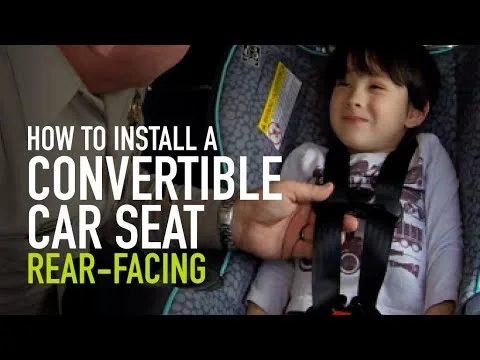
Check the rear-facing or forward-facing setup. Some bulkhead rows don't have enough space for a rear-facing seat with its angle tilted. If you're still using a rear-facing seat, confirm your row assignment works. Knowing when your child can ride forward-facing also changes which seats you can book on certain aircraft.
At the Airport: TSA Screening, Tags, and What Happens to Your Gear
Airport security treats baby gear differently from regular luggage. Car seats and strollers get extra scrutiny, so plan for it.
Car seats must go through the X-ray machine. That means detaching the base from an infant seat and collapsing the stroller before the conveyor belt. TSA agents will swab the straps and shell for explosive residue.
It takes a few extra minutes, but it's routine.
Strollers also go through X-ray. If you're using an infant travel system, the car seat and stroller frame need to go separately. Fold the stroller, remove the car seat, and stack them on the belt.
TSA requires all child equipment to pass through the scanner. Security officers are available to help you break down your gear.
One tip that saves real time: keep your car seat installation basics in your head when you pack. Think about how quickly you can release the seat from its base and fold the frame. If you can do it in under 30 seconds at home, you'll do it easily at the checkpoint.
After security, you're carrying everything until the gate. This is where a travel cart or a car seat strap that hooks over your rolling suitcase pays for itself.
At the Gate: When to Hand Over the Stroller and How to Board with a Car Seat
Gate-checking is a simple handoff, but timing matters. If you wait until the gate agent calls your boarding group, you'll be fumbling while thirty people queue behind you. Research shows the smoothest process involves acting early.
Here's the workflow that works:
- Find the gate agent 10 minutes before boarding starts. Ask where to leave the stroller.
- Fold your stroller completely. Lock the frame and keep any loose items with you.
- Collect a gate-check tag. Attach it to the stroller handle or frame.
- Leave the stroller at the end of the jet bridge or in the designated stroller parking area.
- Carry the car seat on board if you're installing it. Otherwise, tag it and leave it with the stroller.
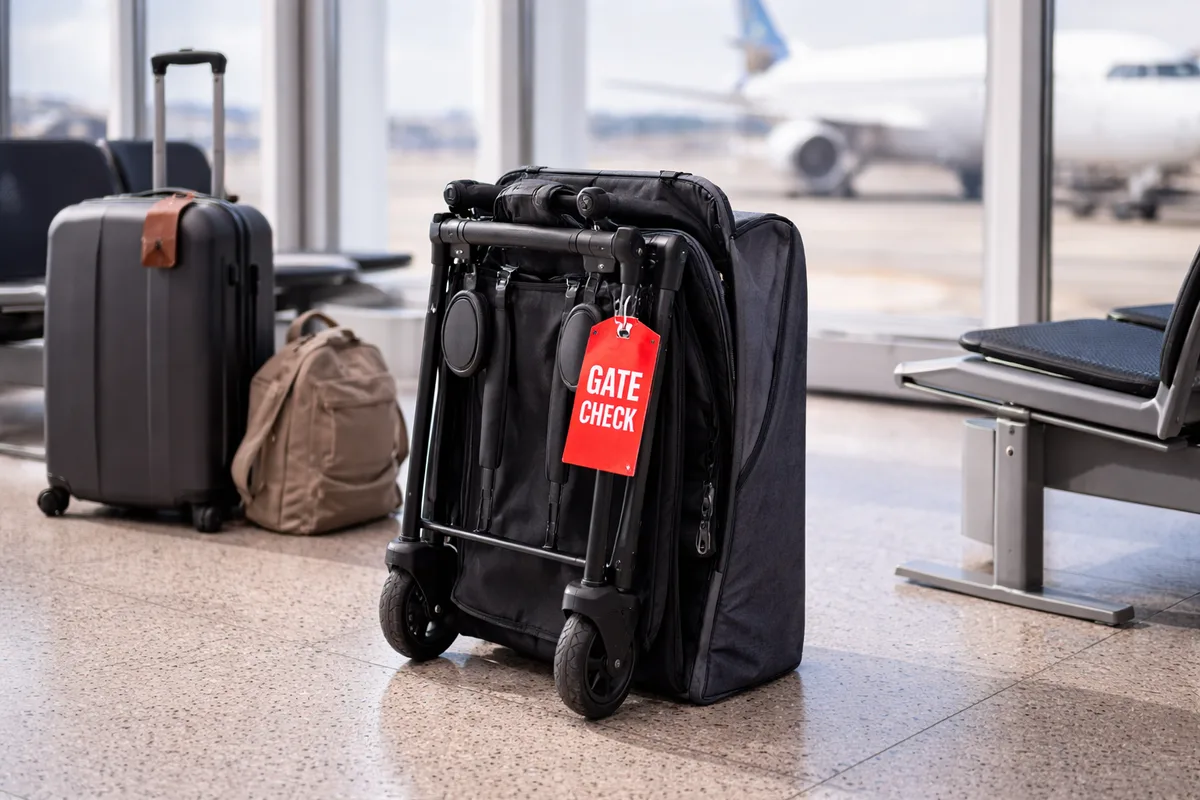
Image source: Bing (Web (fair-use with source credit))
When the flight lands, gate-checked gear returns at the aircraft door or the jet bridge. On smaller regional planes it gets delivered to the baggage claim area instead. Ask a flight attendant where to collect it if you're unsure.
The window-seat rule affects boarding, too. You need to install the car seat at the window seat. That means loading the car seat first, then sliding in past it.
Give yourself extra time to board early.
On the Plane: Installing the Car Seat, Seatbelt Routing, and the Window-Seat Rule
The FAA requires car seats to be installed at a window seat. Door rows and exit rows are off-limits entirely. Know which row you booked, because you can't move the car seat to the middle of the cabin.
Installation follows a simple but strict process:
- Place the car seat on the window seat, facing forward or rearward based on your child's stage.
- Locate the belt path on the car seat. It's a narrow channel in the shell, clearly marked.
- Thread the aircraft seatbelt through the belt path, not over the top or around the armrest.
- Buckle the aircraft seatbelt and pull it tight.
- Press firmly on the car seat. It shouldn't move more than an inch in any direction.

Image source: Bing (Web (fair-use with source credit))
The aircraft lap belt works like a vehicle seatbelt for this purpose. The car seat's LATCH connectors aren't used on planes. Aircraft seats don't have lower anchors.
Rear-facing car seats need the aircraft seatbelt routed through their rear-facing belt path. Forward-facing seats use the forward belt path. If the car seat manual is packed away, look for red or blue belt-path markings on the shell.
Most modern seats color-code these areas.
One common issue: seatbelt extenders. If the aircraft belt is too short to reach around your car seat, ask a flight attendant for an extender. This happens most often with convertible seats installed rear-facing.
There's no shame in asking, and it takes two minutes.
If the car seat won't fit between the armrests, stop immediately. Don't force it. Return the seat to a gate-check and bring your child onto the plane without it.
Forcing a wide seat can damage both the seat and the aircraft hardware.
After Landing: Collecting Gate-Checked Gear and Inspecting for Damage
Landing is when families scramble. Resist the urge to rush off first.
Gate-checked strollers are usually placed outside the aircraft door or at the end of the jet bridge. Car seats that were gate-checked come back the same way. If you don't see your gear immediately, check with a flight attendant before walking through the terminal.
Once you have everything, do a quick visual check. Look for:
- New scratches or dents on the car seat shell
- Bent or loose stroller frame joints
- Torn fabric or popped rivets
- Missing wheels or a misaligned front wheel
If the stroller is damaged, report it to the airline's baggage service office before you leave the airport. You'll need your gate-check tag number. Airlines typically cover the repair or replacement cost.
For car seats, damage is more serious. A car seat with any visible crack, stress mark, or missing foam should not be used. As of 2026, aggregate recorder reports and safety groups recommend replacing a car seat after any heavy impact, and baggage handling counts as an impact.
If your car seat looks bruised, don't risk it. Contact your car seat manufacturer about inspection and replacement.
That doesn't mean every gate-checked seat is ruined. It means you need to look carefully before placing your child in it on the ride home.
Common Mistakes to Avoid: Damaged Car Seats, Lost Strollers, and Policy Surprises
Families make the same travel errors every year. Avoid them and your trip gets far smoother.
Not reading the airline's baby equipment rules. Policies change. One carrier may allow a stroller and car seat free of charge, while another imposes fees on a second item. Some specifically exclude full-size strollers from the gate-check walking area on regional jets.
Assuming the car seat fits the aircraft seat. Always measure before booking. A car seat that fits your sedan may be two inches too wide for an economy row.
Forgetting the FAA label. Airline staff can deny boarding with your car seat if the label is missing or faded. Check it before you leave home.
Letting a gate-checked car seat roll loose in its bag. Car seats suffer the most damage in cargo when they're unsecured. Some parents disconnect and pack the car seat base separately to absorb impact.
Leaving gate-check tags on your gear. Those tags are meant to track items per flight. Remove them after landing so they don't confuse things on your next leg.
Skipping the padded travel bag. A bare stroller gets scratched, dented, and worse. A $30 bag with thick padding protects a $400 stroller on a long layover.
Taking an expired car seat on a plane. Airlines are unlikely to check, but why risk it? Car seats expire six to seven years after manufacture, and a seat past its expiration date won't protect a child properly. If yours is old, you're overdue for a replacement.
The same logic applies to turning the seat forward too early and losing the safety benefit of rear-facing travel.
Safety and Legal Must-Knows: FAA Labels, the Booster Seat Ban, and What to Do if the Seat Gets Banged Up
The FAA approval label is non-negotiable. It must read: "This restraint is certified for use in motor vehicles and aircraft." Airlines can refuse any seat without it, so check before you pack. Booster seats are banned on aircraft entirely because they require a vehicle seatbelt to function.
If your car seat takes a hard knock in baggage handling, inspect it immediately. Look for cracks, bent frame sections, or compressed foam. Per NHTSA guidance, any car seat involved in a significant impact should be replaced.
When in doubt, call the manufacturer with your model number. They can confirm whether the seat is still safe.
Also check the expiration date. Most seats expire six to seven years after manufacture. A stale seat won't protect your child, regardless of how the flight goes.
Quick Decision Guide: Which Workflow Fits Your Trip?
| Your situation | Best move |
|---|---|
| Child has a paid seat, car seat is under 16 inches wide | Install the car seat on board |
| Child flies as a lap infant | Gate-check the car seat and stroller |
| Car seat is too wide for the aircraft seat | Gate-check the car seat, keep the stroller until the jet bridge |
| You're renting a car at your destination | Bring one car seat only and use it both on the plane and in the rental |
| Connecting flight with a long layover | Gate-check both items so you keep them between legs |
Frequently Asked Questions
Do I need a separate ticket for my car seat?
Yes, if you plan to install it on board. Your child needs their own seat for the car seat to occupy one. Without a purchased seat, the child flies as a lap infant and the car seat gets gate-checked.
Can I bring a stroller through security?
Yes, but it must pass through the X-ray machine. Fold it down and remove any detachable parts before the conveyor belt. Larger strollers may need to be checked at the gate instead.
What happens if my gate-checked stroller gets lost?
Report it to the airline's baggage service office before leaving the airport. Bring your gate-check tag number and a photo of the stroller. Airlines typically reimburse repair or replacement costs for mishandled baby equipment.
Is a booster seat allowed on an airplane?
No. The FAA prohibits booster seats because they rely on a vehicle's shoulder belt. Use a harnessed car seat or a CARES harness instead.