When Can Car Seat Turn Around? Signs Your Child Is Ready
You’re staring at that rear-facing car seat, and your toddler’s legs are pressed against the vehicle seat. You start wondering, is it time? The question “when can car seat turn around” feels urgent, especially when your child looks cramped. Here’s the truth: the answer isn’t about age alone.
It’s about the specific limits of the seat you own.
The American Academy of Pediatrics recommends keeping children rear-facing until age 2 at minimum, and longer if your seat allows. As of 2026, many convertible seats on the market support rear-facing up to 50 pounds. That means most kids can safely stay rear-facing well past their second birthday.
Let’s break down how to know for sure.
Quick Answer
Turn the car seat around only when your child exceeds the rear-facing weight or height limit printed on the seat’s label. The legal minimum in most states is age 1 and 20 pounds. But those laws are floors, not targets.
Keep your child rear-facing as long as the seat allows. This provides significantly better head, neck, and spine protection. Check your manual for the exact numbers.
Why Rear-Facing Is Safer (Even When Their Legs Look Cramped)
The physics here are simple. In a frontal crash, a forward-facing child’s body is held by the harness, but their heavy head keeps moving forward. That puts enormous stress on the neck and spinal cord.
Rear-facing seats cradle the entire body, spreading crash forces across the skull, back, and rear of the seat. The head and neck move as one unit.
Studies show rear-facing reduces the risk of serious injury by about 5 times compared to forward-facing for toddlers. That’s not a small margin. That’s the difference between walking away and a hospital visit.
The position works because it leverages the strongest parts of a child’s body to absorb impact.

Image source: Bing (Web (fair-use with source credit))
So about those legs. You see them bent at an awkward angle, and you worry. But here’s the reality: children’s bones are soft and still developing.
The hip joint is designed to flex naturally into that frog-like position. No research links rear-facing leg position to hip dysplasia or injury. Kids are extraordinarily flexible, and they find comfortable positions quickly.
The risk of not rear-facing is far worse. A forward-facing child’s spine can stretch up to 2 inches during a crash before injury occurs. Rear-facing eliminates that dangerous stretch almost entirely.
That’s why the confusion about “cramped” legs is worth ignoring. Your child is safe, comfortable, and protected.
If your child complains, try buckling them with their feet touching the seat back. They’ll often just sit cross-legged or prop their feet up on the seat. In our research, most kids adapt within a week of extended rear-facing.
The complaints fade fast, and the safety benefits continue.
The Real Limits: Weight, Height, and the 1-Inch Rule
The single most important fact is this: every car seat has specific rear-facing limits. These are printed on a permanent label on the side or bottom of the seat. You must also read the manual to confirm.
The label includes a maximum weight and a maximum height. Exceeding either one means it’s time to turn the seat around.
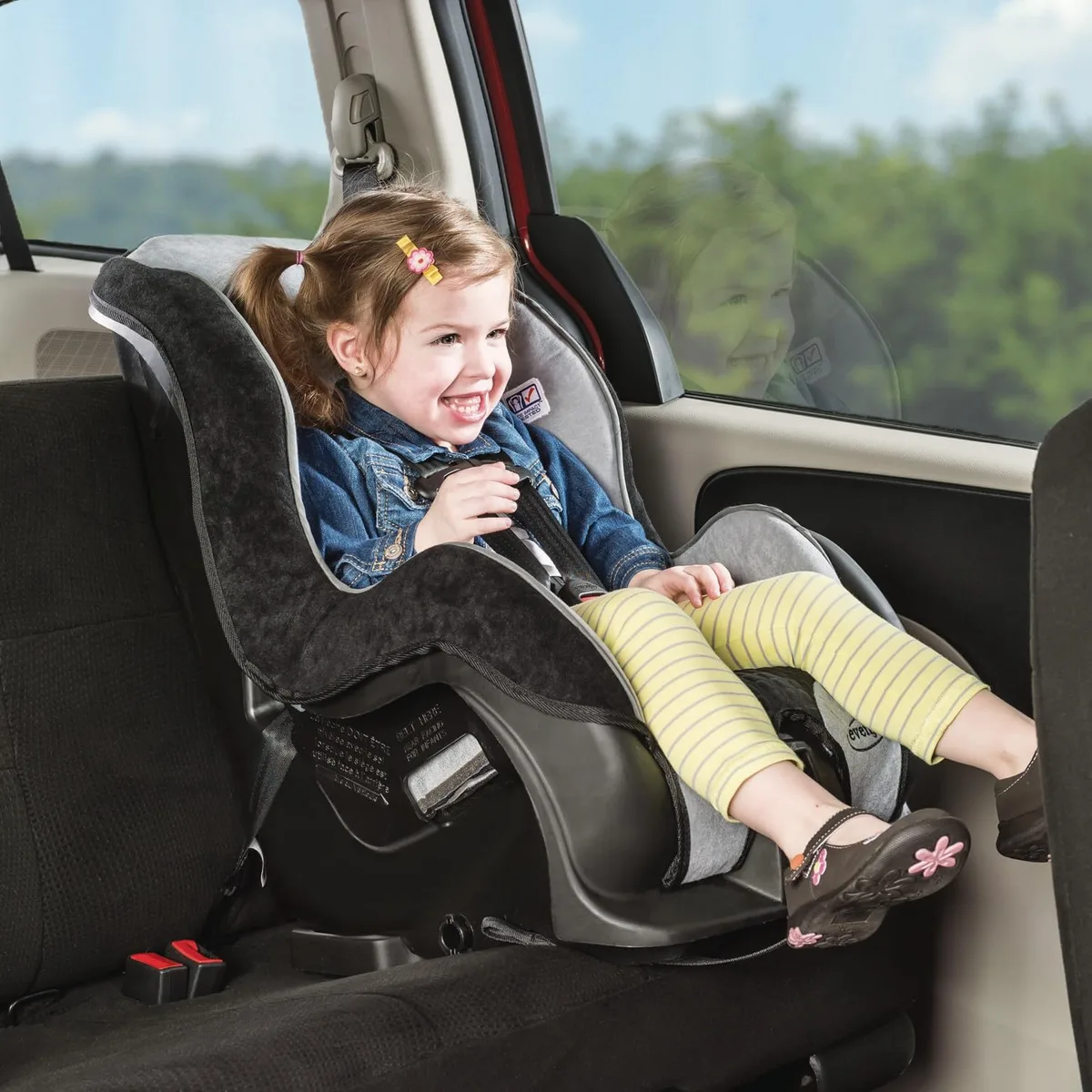
Image source: Bing (Web (fair-use with source credit))
Weight limits for rear-facing typically range from 30 to 50 pounds, depending on the seat model. Budget-friendly convertible seats often cap out around 40 pounds. Higher-end models and extended rear-facing seats go up to 50 pounds.
Check your specific seat’s label. The height limit is just as important. You’ll usually find it listed as a standing height or a seated height measurement.
The “1-inch rule” matters more than many parents realize. When rear-facing, your child’s head must stay at least 1 inch below the top of the hard plastic shell. This position keeps the head protected during a crash.
If the head is above that line, the seat can’t adequately shield the neck and skull. This is measured with the seat installed at the correct recline angle.
Here’s how to check the 1-inch rule: place your child in the seat with the harness snug. Look from the side and see where the top of their head sits relative to the shell. If there’s less than 1 inch of shell above the top of the head, the seat is outgrown.
This applies even if your child is well under the weight limit. Height limits are real, and they protect lives.
Some seats also list a harness slot requirement. For rear-facing, the harness straps should be at or just below the child’s shoulders. This is the opposite of forward-facing, where straps sit at or above.
Incorrect harness height reduces the seat’s effectiveness in a crash. So always double-check this. It’s an easy fix that makes a big difference.
Convertible vs. Infant Seats: When to Make the Switch
To understand when to turn a car seat around, you first need to know which type you own. Infant bucket seats are the ones with a carrying handle and a detachable base. These are always rear-facing and typically max out at 30 to 35 pounds.
Once your child outgrows the infant seat, you move to a convertible seat.
Convertible seats are the workhorses. They start rear-facing and then convert to forward-facing later. These are the seats you’ll use from about 1 year old (or earlier) through the toddler and preschool years.
Some are even usable through the booster stage. The key difference is that a convertible seat stays rear-facing longer because it has much higher limits.
Here’s a quick comparison to clarify your situation:
| Seat Type | Rear-Facing Max Weight | Rear-Facing Max Height | Best For |
|---|---|---|---|
| Infant Bucket Seat | 30–35 lbs | 29–32 inches | Newborns through ~12 months |
| Convertible Seat (Budget) | 35–40 lbs | 40–43 inches | Most toddlers |
| Convertible Seat (Extended) | 45–50 lbs | 49–52 inches | Kids who benefit from extended rear-facing |
If you own an infant bucket seat, the moment your child hits its limits, you don’t turn it around. You switch to a convertible seat in the rear-facing position. This is a common misunderstanding.
The infant seat never faces forward. It just gets replaced. So the “when to turn around” question really applies to convertible seats.
When you make the switch, keep the convertible seat rear-facing too. Many parents assume moving to a “big kid” seat means facing forward. It doesn’t.
The new seat simply gives your child more room to keep riding safely. Your child gains legroom and shoulder space, but the rear-facing protection stays the same. This is the safest possible setup for a growing toddler.
The transition itself is straightforward. Install the convertible seat rear-facing in your vehicle, adjust the harness to fit your child snugly, and check the recline angle. A rear-facing seat needs a more reclined angle (30 to 45 degrees) to keep your child’s airway open.
Forward-facing seats sit more upright. That distinction matters when you finally do turn the seat around.
Step-by-Step: How to Tell If It’s Time to Turn Around
You don’t have to guess. Follow this simple process, and you’ll know exactly when the seat can be turned. It takes about five minutes and requires only a tape measure and a scale.
Step 1: Weigh your child accurately. Use a home scale or a pediatrician visit. Record the weight in pounds. Know this before you touch the car seat.
Step 2: Measure your child’s standing height. Have them stand flat against a wall. Use a book or ruler on top of their head to mark the spot. Measure from the floor to the mark.
This gives you the height number you need.
Step 3: Locate the seat’s rear-facing limits. Look for the permanent label on the side or back of the seat. It lists maximum weight and height for rear-facing use. Take a photo for reference.

Image source: Bing (Web (fair-use with source credit))
Step 4: Check the 1-inch rule. With your child seated in the seat, verify their head is at least 1 inch below the top of the shell. If not, the seat is outgrown. This is a hard stop.
Step 5: Compare your numbers. If your child exceeds either the weight limit or the height limit, it’s time to turn the seat around. If they’re under both limits, keep it rear-facing. The restraint continues to protect them.
Here’s the if/then logic for clarity:
- If weight is under max, height is under max, and head has 1-inch clearance → continue rear-facing.
- If weight exceeds max but height is fine → turn the seat forward.
- If height exceeds max but weight is fine → turn the seat forward.
- If either limit is met and the head is within 1 inch of the top → turn forward immediately.
Remember that the later limit you hit is the one that counts. Some kids hit height limits early, especially tall toddlers. Others hit weight limits first.
Whichever comes first determines the transition. Don’t wait for both to be exceeded, because that puts your child at risk.
One more tip: always consult the seat manual before the transition. The manual specifies installation details for forward-facing mode, including the tether strap. You’ll need to rethread the harness to the correct slots.
The manual shows you exactly how. When you do turn the seat, you’re taking on a new set of installation requirements, which we’ll cover shortly. The decision is made based on the numbers.
The installation then follows the manual.