Mastering How to Fit Booster Seat in Car
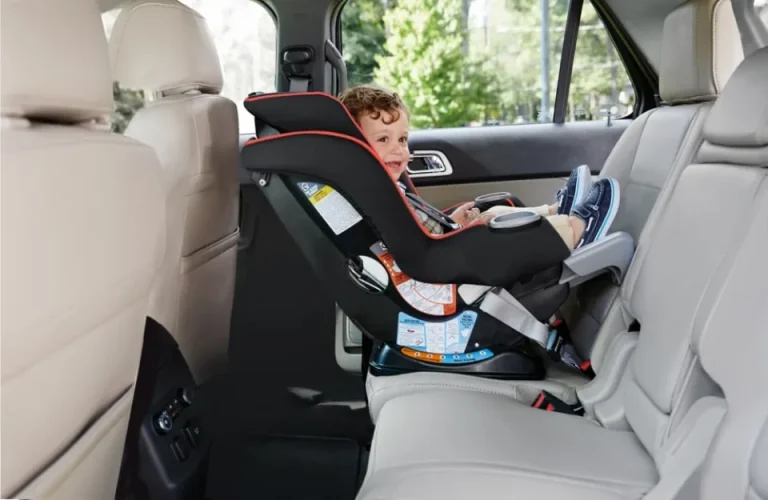
Fitting a booster seat in your car can feel surprisingly tricky. The seat looks simple, but the installation rules matter far more than most parents realize. If you're wondering how to fit booster seat in car safely, you're not alone.
Across the U.S., child passenger safety technicians see the same mistakes at almost every car seat check event.
According to the National Highway Traffic Safety Administration (NHTSA), car crashes remain a leading cause of death for children, and the right restraint used correctly cuts that risk dramatically. As of 2026, booster seat laws vary by state, but best-practice guidelines from the American Academy of Pediatrics (AAP) recommend keeping kids in a booster until they pass the 5-step seat belt fit test. That's the real benchmark.
Here's how to get it right.

Image source: Bing (Web (fair-use with source credit))
Why Correct Booster Installation Is Non-Negotiable
A booster seat does one serious job: it lifts your child so the vehicle's lap-and-shoulder belt fits across the right body landmarks. When the lap belt rides too high, it presses on the abdomen. A crash then sends force into soft organs like the liver and spleen, not the strong pelvis.
That's how life-changing injuries happen.
Many parents assume a booster is "just a cushion." Wrong. The seat belt does the actual restraining work, and the booster shapes the entire belt path. If the belt is routed incorrectly, the booster can't do its job.
In our research, we've seen kids sitting with the shoulder belt under an arm, behind the back, or resting against their neck. Each one is a major crash risk.
Another overlooked issue is movement. A loose-fitting booster slides sideways in a turn. An unsecured booster can become a projectile in a collision.
That's why installation isn't just about child comfort, it's about crash physics. The seat, the belt, and the child all need to work as one system.
The good news? Getting it right is straightforward once you know the checkpoints. The rest of this guide walks through every step.
Quick Answer: The 30-Second Booster Fit Checklist
Here's the fast version. After installation, run through these five checks every single time:
- The lap belt lies flat across the upper thighs, not the stomach.
- The shoulder belt crosses the middle of the shoulder and chest, not the neck or face.
- The child's knees bend at the edge of the seat, and both feet rest flat on the floor.
- The booster doesn't move more than 1 inch side to side when you push it at the belt path.
- The vehicle headrest sits behind the child's head, with the top of the headrest above the ears.
If any check fails, adjust the booster or move to a different seating position. A booster that fits poorly in one car may fit perfectly in another.
Is Your Child Ready for a Booster Seat? (Not Just Age)
Age is the weakest indicator of booster readiness. A small 6-year-old may need a harnessed seat, while a tall 4-year-old might be booster-ready. The deciding factors are height, weight, and behavior.
Per NHTSA guidance, most children move to a booster between ages 4 and 8, but only after outgrowing the forward-facing harness. That means the harness slots sit at or below the child's shoulders, and the child exceeds the seat's maximum weight. You also need a vehicle lap-and-shoulder belt in the seating position, not a lap-only belt.
Maturity matters just as much. The child must sit still for the entire ride, stay centered, and keep the seat belt in place. If they slouch, lean, or wiggle out of position, they aren't ready.
Here's a quick readiness snapshot:
| Checkpoint | Booster Ready? |
|---|---|
| Minimum weight | 40 lb (18 kg) |
| Minimum height | 38–40 in (97–102 cm) |
| Minimum age | 4 years (typical, not required) |
| Vehicle seat belt | Lap-and-shoulder belt required |
| Behavior | Can stay seated properly for full ride |
Remember, these are starting points, not guarantees. The 5-step seat belt fit test we'll cover later is the true green light. If you're unsure whether your child has outgrown the harness, review the exact readiness guidelines on our page about switching from a car seat to a booster.
High-Back vs. Backless Boosters: Which One Fits Your Car and Kid?
The right booster type depends on your car's seats and your child's comfort. Both high-back and backless models work correctly when installed properly, but each suits different scenarios.
High-back boosters come with a headrest and side wings. They offer head and neck support, especially in vehicles with low seatbacks or no headrests. They also provide some side-impact protection.
The shoulder belt routes through an integrated guide, which keeps it positioned even while the child sleeps. Use a high-back when your vehicle has no headrest, or when your child's ears are above the top of the vehicle seat.
Backless boosters are lower and lighter. They're easier to move between cars and simpler for trips and carpools. Kids often like them because they feel grown-up.
But they require a vehicle headrest that extends above the child's ears, and they offer no side-impact wings. They're a fine choice for older, taller children.
Here's a side-by-side comparison:
| Feature | High-Back Booster | Backless Booster |
|---|---|---|
| Head support | Built-in headrest | Relies on vehicle headrest |
| Side-impact protection | Usually included | Not included |
| Best for | Small cars, deep seats, sleeping kids | Older/larger children, travel |
| Portability | Heavier | Lightweight, easy to move |
| Vehicle headrest needed | Not always | Always required |
For families with multiple vehicles, the safest rear seat position often comes down to seat shape. A high-back can fit awkwardly in seats with integrated headrests that push it forward. A backless booster might fit better in those same seats.
Test both if you can.
Step-by-Step: How to Fit a Booster Seat Correctly in Your Car
Now for the main event. Follow these steps in order, with the booster manual and vehicle owner's manual open nearby. Manufacturer instructions always override generic guidance.
Step 1: Pick the safest seating position. The rear middle seat is the safest spot when possible, because it keeps the child away from side impacts. If you're using a high-back booster, check that the middle seat has a lap-and-shoulder belt. Learn more about which rear seating position offers the most protection before deciding.
Step 2: Place the booster flat on the seat. Sit it flush against the vehicle seatback. If the headrest pushes the booster forward, remove the headrest if possible. A gap here means the booster can tilt forward in a crash.
Step 3: Now the child sits in the booster. Don't buckle the booster to the car when it's empty. But note: many boosters have a LATCH attachment to secure the seat when no child is riding. Those anchors hold the booster in place so it doesn't become a projectile during a sudden stop.
If your booster has LATCH hooks, connect them to the lower anchors and tighten. Check the label to confirm the weight limit.
Step 4: Buckle the seat belt correctly. Pull the lap belt across the child's upper thighs and click it in. Then pull the shoulder belt across the child's chest. For high-back boosters, thread the shoulder belt through the belt guide.
For backless boosters, run it through the armrest belt clip.
Step 5: Tighten and test. Buckle the belt, then tug the lap portion to remove slack. Push the booster side to side: it should move less than 1 inch. Check that the lap belt doesn't ride up onto the stomach, and the shoulder belt clears the neck.
Step 6: Watch for tilt. The vehicle seatback angle shouldn't be too reclined. If the child's head falls forward while sleeping, the shoulder belt will slip off. A high-back booster with a recline adjustment can help.
Step 7: Confirm the anchors don't interfere. LATCH anchors are sometimes positioned at an angle that doesn't work with a booster's rigid base. That's okay. You can leave the booster unsecured when a child is buckled in, but store it when not in use, or use the LATCH anchors for a tighter hold.
Check the owner's manual for anchor location.
Before your first real trip, run through the checklist again. If anything feels off, get a second set of trained eyes. Many fire stations and hospital programs host certified child passenger safety technicians who can review your installation for free.
It's the smartest five minutes you'll spend this year. And while you're planning ahead, remember that booster seats expire just like car seats, so always check the expiration date before trusting a hand-me-down.
The 5-Step Seat Belt Fit Test Every Parent Should Know
This test is the final word on booster readiness. It's quick, free, and more accurate than any age or weight guideline. Put the child in the booster, buckle up, then check all five points.
- Knees bend at the seat edge. The child's back should rest against the vehicle seat while their knees bend naturally over the edge. If the knees don't bend, the lumbar belt rides too high. The booster is still needed.
- Feet sit flat on the floor. Both feet should rest comfortably on the floor. If they dangle, the belt won't stay anchored across the thighs.
- Lap belt crosses the upper thighs. It should touch the tops of the thighs, not the belly. A stomach-positioned belt can cause internal organ injury.
- Shoulder belt crosses the mid-chest. The belt should lie between the neck and the edge of the shoulder. Never let it touch the neck.
- Headrest supports the head. The top of the headrest should sit above the ears, not below them.
Re-test every two to three months. Kids grow in spurts, and a pass in January can become a fail by June. When all five points work, the seat belt does the same job it does for an adult.
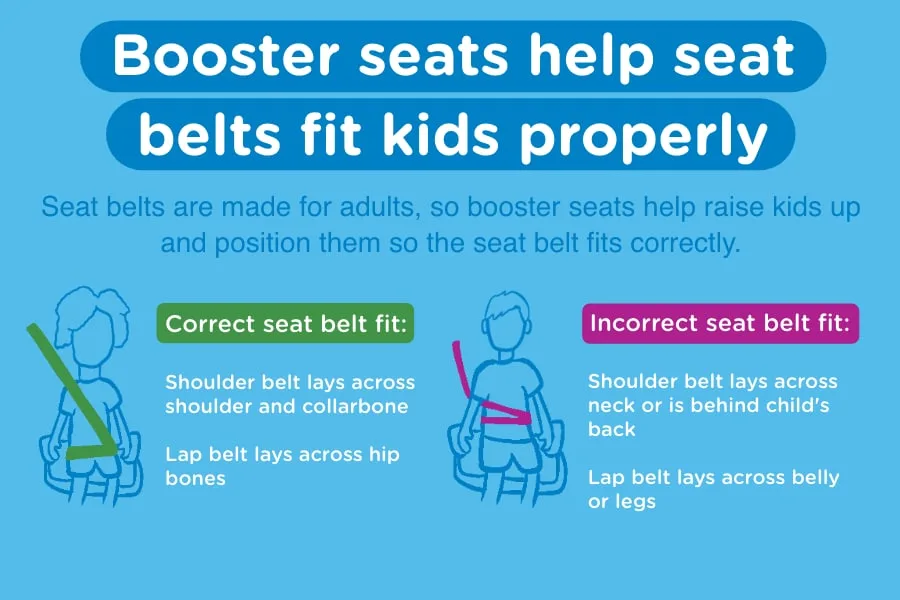
Image source: Bing (Web (fair-use with source credit))
Common Booster Seat Installation Mistakes That Raise Crash Risk
Even careful parents slip up. Across car seat check events, certified technicians see the same dangerous errors again and again. Here are the ones to avoid:
- Moving up too early. A 4-year-old who still fits the harness is safer in the harness. The five-point harness spreads crash forces across the chest and pelvis, which a booster simply can't do.
- Leaving the booster loose. A sliding booster means the belt path shifts mid-ride. Push the booster side to side at the belt path. Movement should stay under one inch.
- Using LATCH as the main restraint. LATCH anchors secure the booster when empty. Once a child is buckled, the vehicle belt does the crash work. Most boosters have a LATCH limit around 65 pounds total.
- Tucking the shoulder belt away. Some kids pull the shoulder belt behind their backs because it feels tight. That leaves the chest unprotected during a crash.
- Allowing belt slack. A snug lap belt reduces forward head movement by inches. Pull the belt tight enough that you can't pinch the webbing.
- Ignoring the neck rub. A belt that hits the neck isn't fitted wrong, it's positioned wrong. Raise the booster's headrest or switch to a different seat position.
Fix these six, and you've eliminated most of the risk factors that keep safety technicians awake at night.
When the Car Fights Back: Headrests, LATCH, and Awkward Seat Shapes
Vehicle seats aren't designed around boosters. The manual says "install against the seatback," but the headrest pushes it forward. Here's how to handle the common battles.
Headrest pushes the booster away
This is the most frequent issue in modern sedans. The vehicle headrest tilts the booster toward the front seat, which ruins the belt geometry. Fix it by removing the vehicle headrest if the owner's manual allows.
A high-back booster has its own head support, so the vehicle headrest isn't needed. Backless boosters often fit fine in front of a headrest, as long as the child's ears stay below the top.
LATCH anchors that won't connect
Lower anchors are sometimes buried too deep for a rigid LATCH connector. That's not a failure. You can run a booster without LATCH as long as a child is buckled in, because the seat belt pins the booster to the seat.
Still, securing an empty booster is smart. Check the weight limit label on the booster side before attaching.
Deep bucket seats cause a wobble
Sculpted passenger seats tilt a backless booster sideways. If the booster rocks, switch to a high-back model with a wider base, or choose a more level seating position. Stability matters more than looks.
Overly reclined vehicle seatback
A steep angle tips the booster back and moves the shoulder belt behind the child's collarbone. If the vehicle seatback is too reclined, set it more upright. Some high-back boosters have a recline adjustment to solve this.
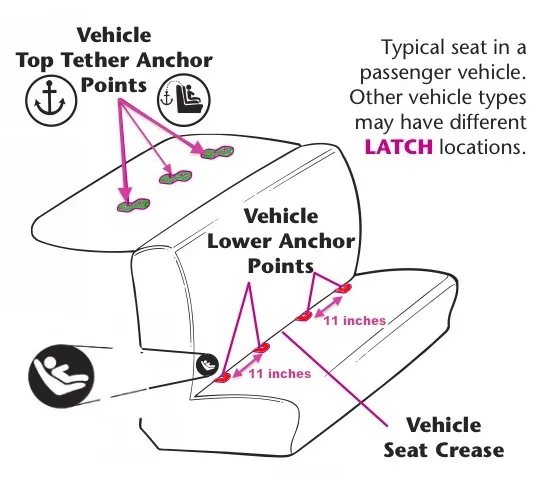
Image source: Bing (Web (fair-use with source credit))
Booster Seat Rules: What the Law Says vs. What Safety Experts Recommend
State laws are the legal floor, not the safety ceiling. As of 2026, most states require a booster until age 7 or 8, often with a height minimum around 4 feet 9 inches. Yet crash data proves some 8-year-olds still don't fit a seat belt alone.
The American Academy of Pediatrics is clear on this: keep children in a booster until the seat belt fits correctly, not just until it's legal. For many kids, that's closer to 10 or 12 years old. The pediatric safety guidelines recommend the 5-step test as the true graduation requirement.
| Standard | Typical State Law | AAP Best Practice |
|---|---|---|
| Minimum age | 4–8 years | Until 5-step test passes |
| Height | ~4 ft | 4 ft 9 in recommended |
| Weight | 40 lb minimum | 80–100 lb for belt alone |
| Enforcement | Fine or citation | Injury prevention |
Following the law keeps you legal. Following best practice keeps your child safe. When in doubt, keep the booster until the test passes.
Real-World Scenarios: Carpool, Travel, and Rental Cars
Carpool
The classic problem: another parent picks up your child, and there's no booster in their car. Keep a spare backless booster in your trunk. It's light, cheap, and takes less than a minute to install.
Don't rely on the other parent remembering, give them the seat directly.
Travel
Boosters are bulky on planes. They're not FAA-approved for takeoff or landing, but most are approved for use on board if the label says so. Look for the FAA approval sticker on the bottom.
If it's not there, gate-check the booster and use it at your destination. Renting a booster at the car rental desk works, but the quality is hit or miss.
Ride-share
Ubers and Lyfts usually don't have boosters. Drivers may not know the rules, so you're the responsible adult. Bring the booster with you, and ask the driver to unhook the seat belt during the trip.
Learn the specifics of booster use in ride-share vehicles before the driver is pulling away. A hand-me-down booster is better than none, but only if it hasn't expired.
How to Know When Your Child Has Outgrown the Booster Seat
The booster's job ends when the vehicle seat belt fits the child alone. That means passing the 5-step test in every car they ride in, not just one. Most children reach this point between ages 8 and 12, usually around 4 feet 9 inches tall.
The child's ears must also sit below the top of the vehicle seatback or headrest. If the belt still touches the neck or rides up on the belly, the booster stays. When in doubt, keep it.
The graduation to a regular seat belt happens gradually, not by birthday.
When to Get Help From a Certified Child Passenger Safety Technician
If anything feels off, get a second set of trained eyes. Certified child passenger safety technicians (CPSTs) review installations for free at car seat check events across the country.
Look for events at fire stations, hospitals, police departments, and state highway safety offices. Bring the car, the booster, the vehicle manual, and your child. No one judges you here.
Final Verdict: Fitting a Booster Seat Safely Every Single Ride
Fitting a booster correctly takes minutes, but it demands attention. Pick the right seat position, secure the booster, and route the belt over the correct body landmarks. Re-check the five fit points every few months as your child grows.
Don't rush the transition. Keep your child in the booster until the 5-step test passes consistently in every vehicle. Follow the manuals, not just state law.
The safest installation is the one you do right on every single ride.
Frequently Asked Questions
Can I install a booster seat with only a lap belt?
No. A booster requires a lap-and-shoulder belt. A lap-only belt provides no upper-body restraint, which raises the risk of head and chest injuries in a crash.
Use a different seating position instead.
Is a high-back booster safer than a backless one?
Both are safe when used correctly. A high-back booster adds head support and side-impact wings, making it ideal for cars without headrests or for children who sleep. Backless boosters work well for older kids in vehicles with adequate headrests.
How tight should the seat belt be?
Snug enough that you can't pinch the webbing at the shoulder. The lap belt should lie flat across the upper thighs with no slack. If your child shifts a lot, tighten the belt more.
Can I use LATCH to secure my booster?
Yes, when the booster is empty. LATCH keeps it from becoming a projectile in a collision. When a child is buckled in, the vehicle seat belt does the crash work.
Always check the label for LATCH weight limits.