Mastering What Is the Age for Forward Facing Car Seat
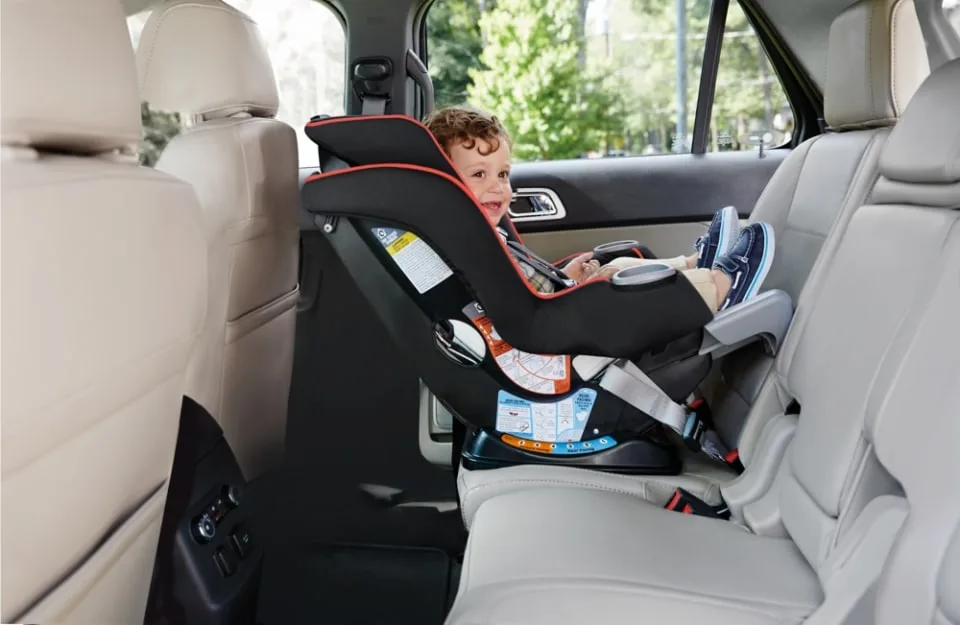
Image source: Web (Bing) / chiccousa.com (Web image (fair-use with source credit))
Every parent I’ve ever talked to has asked some version of this question. Your kid hits a birthday, you see other parents flipping their seats around, and suddenly you’re wondering if you’re falling behind. Here’s the truth: the answer to what is the age for forward facing car seat isn’t a single number.
It’s about size, seat limits, and crash science working together, and once you understand that, the decision gets way easier than the internet makes it.
Here’s what you need to know upfront: pediatricians and safety organizations have spent the last decade pushing back against early forward-facing transitions. The American Academy of Pediatrics (AAP) now recommends keeping kids rear-facing until they max out their seat’s height or weight limits. As of 2026, that often means keeping toddlers rear-facing well past age two.
The legal minimum might be lower in your state, but the safety data points solidly in one direction.
The Age Question That Has Parents Confused
Let’s be honest about why this is so confusing. You’ll find one website saying “as soon as they turn one,” another saying “wait until two,” and your neighbor’s cousin swearing her pediatrician said 18 months was fine. The truth is that car seat guidance has evolved rapidly over the past decade, and a lot of outdated information is still floating around online.
The older rule of “one year and 20 pounds” comes from the early 2000s. That was the federal minimum standard at the time, the floor for what regulators considered safe enough to sell seats. But safety research has moved well past that benchmark.
The AAP revised its guidance in 2011 and again in 2018, pushing parents toward extended rear-facing because crash data consistently showed it was dramatically safer. State laws haven’t all caught up, which is why you might hear conflicting legal minimums.
The other source of confusion is that car seat manufacturers build different limits into different models. A convertible seat from one brand might have a 40-pound rear-facing limit, while another goes to 50 pounds. Your child’s specific seat determines when they need to flip, not a generic rule you read on a forum.
That’s why the manual that came with your seat is actually the most important document you’ll read during this process.
Quick Answer: The Age, Weight, and Height Minimums
The absolute minimum for forward-facing is one year old AND at least 20 pounds, per federal testing standards.
But that’s just the legal floor. The real guidance is this: keep your child rear-facing until they outgrow the rear-facing weight or height limit on their specific car seat. That could be age two, three, or even four depending on the child and the seat.
Most convertible seats now offer rear-facing limits of 40 to 50 pounds and height limits around 44 to 49 inches. Kids typically hit those limits between ages three and five.
The safest approach: check your seat’s label for the rear-facing maximums. If your child still fits those limits, they should stay rear-facing. Period.
For most families, that means planning to keep the seat rear-facing until at least age two, with many going to three or older. If you’ve been wondering when you can safely make the switch, the age guide on when you can turn your car seat forward breaks down the numbers for specific seat types.
Why Rear-Facing Is Still the Gold Standard
Here’s where the crash science gets real. When a car hits something, the child’s body keeps moving forward at the vehicle’s original speed. In a rear-facing seat, the harness holds the child’s torso in place while the seat shell cradles the head, neck, and spine.
Crash forces spread evenly across the entire back and head, which are the strongest parts of a child’s body.
In a forward-facing seat, the harness stops the torso but the head keeps moving. That’s where the danger lives. A young child’s spine is still developing, and the vertebrae haven’t fully ossified into solid bone.
The ligaments that hold the spine together are stretchy and immature. The head is disproportionately large compared to the neck’s strength. That combination puts forward-facing toddlers at real risk of internal deceleration injuries, a medical term for the spine stretching dangerously during a crash.
The numbers back this up. Recent crash data analysis found that children under age two are 75 percent less likely to die or suffer severe injury in a crash when riding rear-facing. The protective advantage doesn’t disappear at age two either.
A 2018 study in the journal Injury Prevention reported that children between two and four were about 70 percent less likely to be seriously injured when rear-facing. That’s why the AAP stopped giving a specific age cutoff and shifted to “until they outgrow the seat limits” instead.
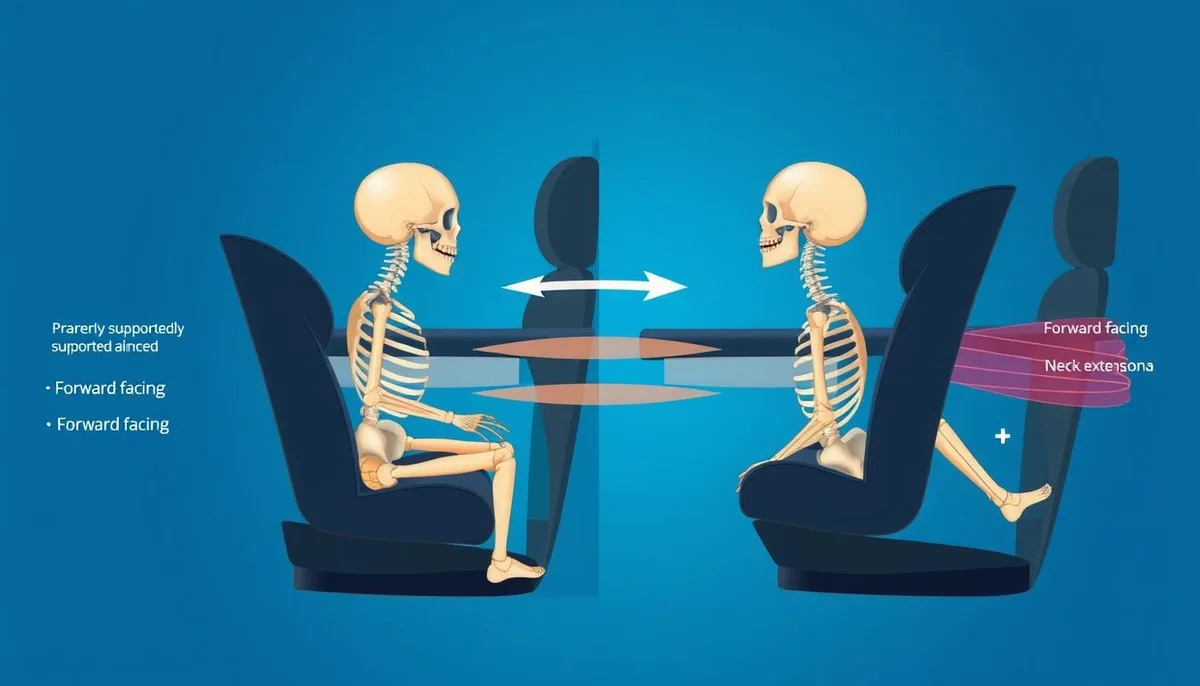
Image source: Web (Bing) / alexcar.com (Web image (fair-use with source credit))
The National Highway Traffic Safety Administration (NHTSA) mirrors this guidance on their official child passenger safety page. They clearly state that children should remain rear-facing as long as possible, until they reach the top height or weight limit allowed by the seat’s manufacturer. This guidance exists for one simple reason: it saves lives.
| Crash Force Direction | Rear-Facing | Forward-Facing |
|---|---|---|
| Head movement | Cradled by shell | Continues forward |
| Spine loading | Distributed across back | Concentrated on neck |
| Primary injury risk | Low | Internal deceleration |
| Best protection age | 0 to 4+ | 4+ (with harness) |
The Real Rule: It’s About Size, Not Just Age
Your child’s birthday is the least important number in this equation. The critical numbers are the weight and height limits printed on your car seat’s label and stamped into the manual. Manufacturers test their seats to specific limits, and going beyond those limits means the seat simply cannot perform as designed in a crash.
Most convertible and all-in-one seats have rear-facing weight limits between 35 and 50 pounds. Height limits typically range from 42 to 49 inches. But here’s the catch: every model is different.
Even within the same brand, the rear-facing limits can vary significantly between seat generations. The only way to know for sure is to check the sticker on the side of your specific seat or open the manual.
The height test matters more than most parents realize. A child can weigh well under the limit but still be too tall for rear-facing. The rule of thumb is that there must be at least one inch of shell above the top of the child’s head.
Once that space disappears, the seat can’t properly protect the head in a crash. Some seats use an adjustable headrest that raises as your child grows, giving you more time before the height limit kicks in.
When checking your child’s readiness, go through this quick size checklist:
- Weight: Does your child weigh more than the rear-facing weight limit on the seat label?
- Head height: Is there at least one inch of shell above the top of the head?
- Harness slots: Are the harness straps at or below shoulder level in the rear-facing position?
- Overall fit: Is the child sitting comfortably without slouching or crying in discomfort?
If you answer yes to any of the first three, it’s time to plan the switch. If not, keep them rear-facing a while longer. The guidance on when kids can safely go forward facing gives you the detailed thresholds for popular seat models.
And if you’ve been wondering about the minimums, the front-facing car seat recommendations covers what’s legally required versus what’s actually safest.
How to Know Your Child Is Actually Ready
So how do you judge readiness beyond the numbers? The seat limits give you the hard boundary, but there are also practical signs that your child is developmentally ready for the forward-facing position. Watch for these clear indicators:
First, your child’s harness should sit at or just above their shoulders when forward-facing. In a rear-facing setup, the straps should be at or slightly below the shoulders. When a child grows past that rear-facing shoulder slot, they’ve technically outgrown that configuration.
The harness can’t hold them properly anymore.
Second, consider the one-inch rule again, but this time from the other direction. Some convertible seats require the top of your child’s ears to be below the top of the seat shell or headrest. If their ears are poking above the shell, they’re too tall for rear-facing in that seat.
The headrest being too low also reduces side-impact protection.
Third, watch for weight plateau. If your child has hit the weight limit on the label but is still under the height limit for a harnessed forward-facing position, you need to switch. There’s no way around this one.
Going over the label’s weight rating compromises the seat’s structural integrity in a crash.
Beyond the physical measurements, look at your child’s behavior. Extreme fussiness in the rear-facing position is common, but it’s not a safety reason to flip. Every parent I’ve worked with has told me they switched partly because their toddler was miserable facing backward.
The data says that misery is worth enduring a bit longer. If you’re struggling with a car-sick toddler, handling car sickness in young kids can help you manage the symptoms without compromising safety.
Some parents worry about leg injuries in rear-facing seats. That’s a common myth. While rear-facing kids might look cramped with their legs bent against the vehicle seat, studies show they’re far more likely to sustain leg injuries in forward-facing seats.
In a crash, forward-facing children can kick the front seat or have their legs flail forward. Rear-facing kids tuck their legs safely against the seat back. Comfort is not a valid reason to flip early.
If you’re still on the fence, think about it this way. The decision to switch forward-facing is permanent. Once you flip, you can’t un-flip without installing a new seat.
A few extra months of rear-facing inconvenience costs you nothing. A crash in the wrong position can cost everything. The complete guide to turning your car seat around walks through the readiness factors in more detail so you can make an informed choice based on your child’s specific measurements.