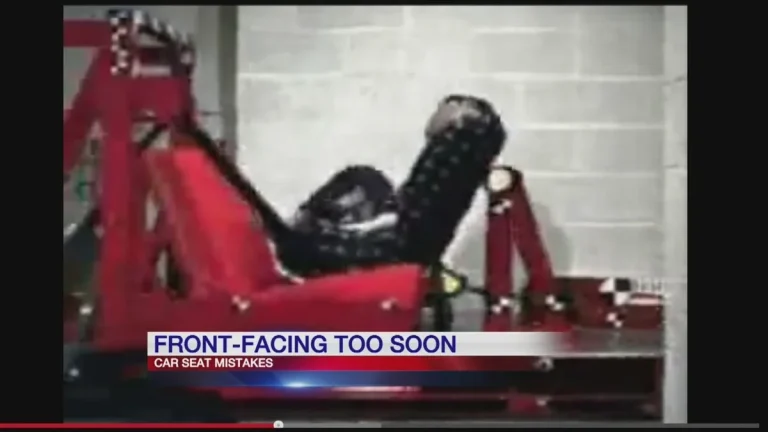
When Can Kids Safely Go Forward Facing in a Car Seat
You’re asking the wrong question.
Most parents search “when can kids go forward facing in a car seat” because their toddler’s legs look cramped or because a well-meaning relative said it was time. But here’s the truth that surprises nearly every new parent: the answer isn’t a birthday. It’s not a state law minimum either.
It’s a combination of your child’s actual measurements, their specific car seat’s limits, and a factor most people have never heard of called bone maturity.
Let’s be clear from the start. The American Academy of Pediatrics has recommended since 2018 that children remain rear-facing until they reach the maximum height or weight allowed by their specific car seat. As of 2026, that means most kids should stay rear-facing until at least age 3 or 4, not age 1 or 2.
The laws in your state might say something different, but laws set the floor, not the ceiling. We’re going to talk about the ceiling.

Image source: YouTube / First Time Father (YouTube thumbnail (fair-use with source credit))
Quick Answer
Kids can go forward facing when they outgrow their rear-facing seat’s limits. Those limits are on the seat’s label. They are usually 40 to 50 pounds and 43 to 49 inches tall.
Most children reach these limits between ages 3 and 5. State minimums like age 1 or 20 pounds are dangerously low. Rear-facing until maximum limits is 5 times safer.
What Actually Happens in a Crash: Rear-Facing vs. Forward-Facing
Let’s walk through the physics because it explains everything about why the timing matters so much.

In a frontal crash, which is the most common and most dangerous type, everything in the car keeps moving forward at the speed you were traveling. Your child’s body does too. A rear-facing seat catches that force across the entire back of the seat shell, distributing it evenly over the child’s back, neck, and head.
The child’s spine stays in a neutral position. The neck barely bends.
A forward-facing seat works differently. The harness catches the child at the shoulders and hips. The child’s body stops, but the head keeps going forward.
That whips the neck forward. In a small child, the vertebrae are not fully ossified, meaning the bones are still mostly cartilage. The spinal cord can stretch up to two inches before tearing, but the vertebrae can only stretch about a quarter inch.
That mismatch is what causes internal decapitation in forward-facing toddlers.
Research from the University of Pennsylvania and Children’s Hospital of Philadelphia consistently shows that children under age 2 are 75 percent less likely to die or suffer serious injury in a crash when riding rear-facing versus forward-facing.
The rear-facing seat does not prevent the crash. It buys your child’s spine time to mature. Every month you delay the switch is a month closer to fully formed neck bones.
The Three Real Requirements Your Child Must Meet
You cannot switch based on one factor alone. Three separate conditions must all be satisfied.
Weight and Height Limits (Your Seat’s Labels Tell the Truth)
Find the sticker on the side of your car seat. It lists two numbers for rear-facing use: a maximum weight and a maximum height. Common rear-facing weight limits are 35, 40, 45, or 50 pounds depending on the seat model.
Height limits typically range from 40 to 49 inches.
Here is the hard rule: if your child exceeds either number, the seat is no longer safe in rear-facing mode. Not “close enough.” Not “just an inch over.” Exceeded means the seat cannot protect them as designed.
Check the height limit carefully. Many parents miss that the limit refers to standing height, not seated height. Measure your child against a wall with a book on their head, the same way the pediatrician does.
Do not guess.
Some seats also have a “one inch rule” for rear-facing: the top of your child’s head must be at least one inch below the top of the seat shell. If their head is at the very top or poking above, they have outgrown the seat even if they haven’t hit the listed height limit.
Bone Maturity: The Silent Factor Most Parents Miss
This is the factor no one talks about because you cannot see it. Your child’s spine does not fully harden from cartilage into bone until somewhere between ages 3 and 6. The medical term is ossification.
Those neck vertebrae start as separate islands of bone connected by soft cartilage. They fuse and harden slowly over years.
In a forward-facing crash, the harness holds the torso, but the head whips forward. That puts tremendous force on the neck. A fully ossified adult spine can handle it.
A partially ossified toddler spine cannot. The vertebrae separate. The spinal cord stretches and tears.
No parent wants to think about this. But every certified child passenger safety technician will tell you the same thing: the single biggest mistake they see is parents flipping the seat too early because the child “looks big” or “seems uncomfortable.”
Behavioral Readiness: Can They Actually Stay Positioned?
This one trips up parents who have the right height and weight but the wrong kid. Forward-facing requires the child to sit upright without slumping or sleeping sideways. The harness must stay snug at all times.
A child who can’t hold their head steady, who falls asleep and slumps forward, or who constantly twists their shoulders out of the harness is not ready.
A rear-facing seat solves this problem automatically. The recline angle keeps the airway open even when the child sleeps. The harness stays in position because the child’s weight pushes back into the seat.
If your child still sleeps hard in the car and wakes up with their chin on their chest, keep them rear-facing. The behavioral readiness test often passes naturally around age 3 or 4.
How to Check If Your Seat Is Built for Forward-Facing Mode
Not every car seat on the market supports forward-facing use. Infant seats, the ones with a carrying handle and a detachable base, are rear-facing only. You cannot flip them.
When your child outgrows the infant seat’s limits, you must buy a convertible seat.
Convertible seats work both rear-facing and forward-facing. They have higher weight and height limits and a more upright recline option. Some convertible seats go up to 50 pounds rear-facing and 65 pounds forward-facing with the harness.
Combination seats are forward-facing only with a harness and later convert to a booster. If you bought a combination seat, you skipped the rear-facing convertible phase entirely. That is fine for older children, but it means you need to confirm your child is truly ready before using it.
Check the forward-facing limits before you install. The forward-facing weight range is usually 22 to 65 pounds. The height limit is often around 49 to 57 inches.
Your child must fit comfortably within both numbers.
Look at the harness slot positions. In forward-facing mode, the shoulder straps should be at or slightly above your child’s shoulders. If the straps are below the shoulders, the child can slide out in a crash.
That is a common installation error that parents miss during the transition.
The Top Tether: The Single Most Overlooked Safety Step
If you remember nothing else from this article, remember this: the top tether is mandatory for forward-facing installation. It is not optional. It is not “nice to have.” It is as important as buckling the harness.
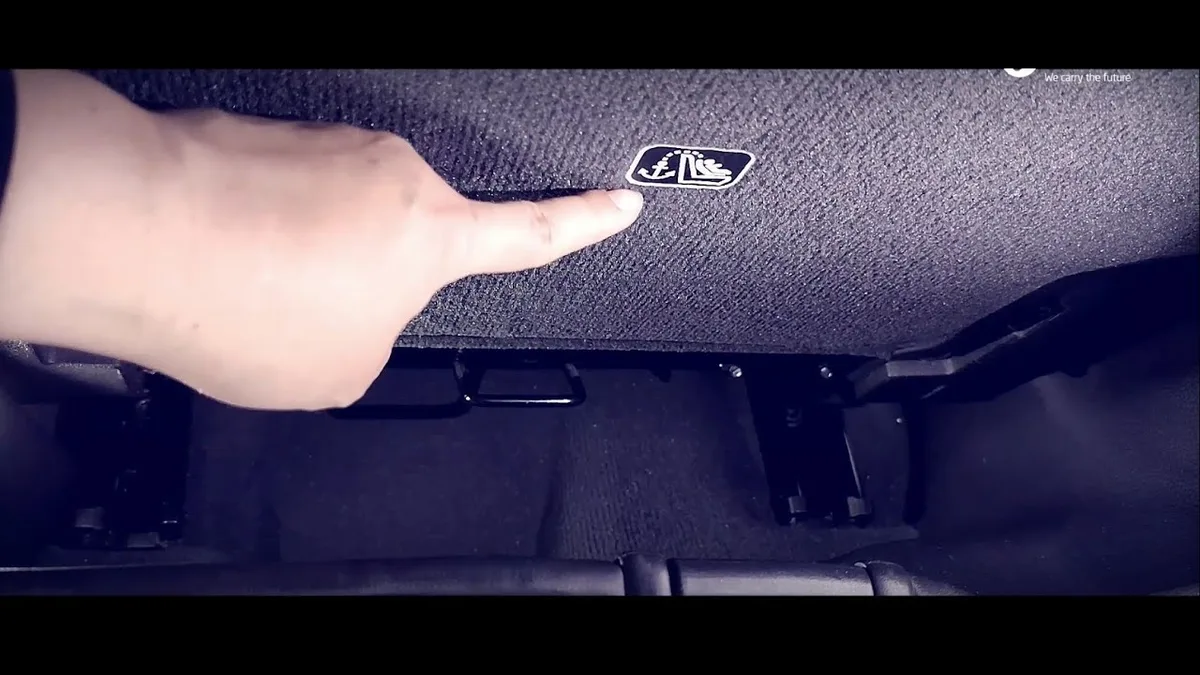
The top tether is a strap with a hook that comes out of the back of the car seat. You attach it to an anchor point in your vehicle, usually on the back of the rear seat, the ceiling, or the cargo floor. Every car made after September 2002 has these anchor points.
Your owner’s manual shows you exactly where they are.
Here is what the tether does. In a crash, a forward-facing seat rotates forward at the vehicle seat belt or LATCH connection point. That rotation throws the child’s head toward the front seat.
The top tether prevents that rotation. It holds the top of the car seat back against the vehicle seat, keeping the child’s head inside the protective shell.
Testing by the National Highway Traffic Safety Administration shows that forward-facing seats installed with the top tether reduce head injury risk by roughly 50 percent compared to the same seat without the tether.
Do not skip it because it is inconvenient to find. Do not skip it because you had to remove the headrest. Do not skip it because the tether strap seems too short.
Movable tether hooks exist for a reason. If the strap is genuinely too short, contact the car seat manufacturer. They often sell tether extenders.
One more thing: do not route the tether under the headrest. Route it over the headrest if possible, or remove the headrest entirely. The strap needs a straight line from the seat to the anchor point.
Any bend or pinch reduces its effectiveness.
Step-by-Step: Making the Switch the Right Way
You have checked the limits. You have confirmed your child meets all three requirements. Now let’s walk through the actual installation process because doing it wrong defeats the whole purpose.
Step 1: Read Both Manuals
Pull out the car seat manual and your vehicle owner’s manual. You need both. The car seat manual tells you the exact recline angle for forward-facing mode.
The vehicle manual tells you where the tether anchors are and whether to use LATCH or the seat belt at this weight.
Step 2: Remove the Infant Insert
Most convertible seats come with an infant insert or body pillow for rear-facing use. Take it out before switching to forward-facing. It pushes the child too far forward and interferes with harness fit.
Step 3: Adjust the Harness Height
Move the shoulder straps to the slots that are at or just above your child’s shoulders. Forward-facing harness slots are usually the top two positions. Re thread the harness through the correct slots from front to back.
This step trips up a lot of parents. Take your time.
Step 4: Position the Seat
Place the seat on the vehicle seat in the forward-facing orientation. Most seats have a forward-facing recline indicator. It usually shows a green level line or a bubble level.
The seat should be more upright than rear-facing but not completely vertical. A slight recline keeps the child’s head from slamming forward too hard in a crash.
Step 5: Secure the Seat
Use either LATCH or the seat belt. Never use both at the same time unless the manual explicitly allows it. Push your full weight into the seat while tightening.
The seat should not move more than one inch side to side or front to back at the belt path. Test it firmly.
Step 6: Attach the Top Tether
Hook the tether strap to the anchor point. Tighten it until the strap is firm but not pulling the seat out of recline. You should not be able to push the top of the seat forward more than an inch.
Step 7: Buckle and Adjust the Harness
Place your child in the seat. Buckle the harness. Pull the adjuster strap until the harness is snug against the child’s body.
The chest clip should be at armpit level. Run the pinch test at the collarbone: if you can pinch any webbing, it is too loose.
Common Mistakes That Make Forward-Facing Less Safe
Switching to forward-facing introduces new risks that rear-facing simply does not have. Here are the ones we see most often.
Loose harness straps. Parents get used to a looser fit because rear-facing seats allow a bit more give. Forward-facing requires the harness to be tight against the body. A loose harness lets the child submarine under the straps in a crash.
Chest clip too low. The clip should sit at armpit level, not on the belly or near the neck. A belly-level clip can compress internal organs in a crash. A neck-level clip can injure the throat.
Tether not connected. We already covered this, but it deserves repeating. Roughly half of forward-facing installations inspected at car seat check events have the tether missing or improperly attached.
Failure to readjust after growth. Kids grow fast. The harness height that fit last month might be too low now. Check the harness position every time you buckle.
If the straps are below the shoulders, adjust them up.
Leg room anxiety. Parents panic when their forward-facing child’s legs dangle or look squished. That is normal. Kids do not need flat foot support.
Their legs will hang, bend, or cross. It does not hurt them and it does not create safety issues.
When the “Leg Cramping” Worry Is (and Isn’t) Worth Listening To
Let’s address the elephant in the back seat. Every parent who keeps a child rear-facing past age 2 hears the same complaint: “My legs are squished.” Or worse, they see photos online of kids in rear-facing seats with their legs folded, feet touching the vehicle seat, or knees sticking up.
Here is the research-backed truth. Children are not uncomfortable in that position. They are remarkably flexible.
Their joints bend in ways adult joints cannot. A folded leg position in a rear-facing seat is safe. Crash data from the Children’s Hospital of Philadelphia confirms that rear-facing children have no higher rate of leg or hip fractures than forward-facing children.
The “leg cramping” worry convinces parents to flip too early. Do not let it. Kids who complain about leg room adjust within a week.
They find positions that work. They cross their legs, put their feet on the seat back, or drape them over the sides. All of that is fine.
The only time leg positioning matters is if your child can push their feet against the vehicle seat so hard that they push the car seat out of recline. That is rare. If it happens, check the seat angle and tighten the installation.
State Laws vs. Best Practice: What You Legally Can Do vs. What You Should Do
State laws vary wildly. Some states require rear-facing only until age 1 and 20 pounds. Others require age 2.
A few have no specific rear-facing law at all and simply say children must be in an approved car seat.
Here is the catch. State laws are political compromises. They are not safety recommendations.
They are the bare minimum you can do without getting a ticket. The AAP recommendation, backed by decades of crash data, is to rear-face until the child outgrows the seat’s limits.
To make this concrete, here is a quick comparison of what various states require versus what the evidence supports.
| Factor | Typical State Law Minimum | AAP Best Practice |
|---|---|---|
| Minimum age | 1 year | No minimum age; use seat limits |
| Minimum weight | 20 lbs | No minimum weight; use seat limits |
| Maximum rear-facing duration | Age 1 or 2 | Until child exceeds seat height or weight limit |
| Typical age at switch | 12 to 24 months | 3 to 5 years |
If your state law says 1 year and 20 pounds, you can legally turn your child forward-facing at that point. But legal does not mean safe. The crash forces that injure a 1-year-old’s neck are exactly the same regardless of what your state legislature voted on.
Real Scenarios: When Parents Should Wait Longer Than the Minimum
Let us make this practical with a few examples.
Scenario one: The 2-year-old who is tall but light. Your child is 38 inches tall and weighs 30 pounds. They have passed the minimums. But their convertible seat allows rear-facing up to 50 pounds and 44 inches.
They should stay rear-facing. The extra height buys weeks or months of additional protection.
Scenario two: The 3-year-old who complains every ride. Leg complaints are normal. Ignore them for at least two weeks. Most kids stop complaining after they realize it is not changing.
If they still complain, check the seat angle. A slightly more reclined position can give more foot room without compromising safety.
Scenario three: The 4-year-old who is developmentally delayed. Some children with low muscle tone or developmental delays do not have the neck strength for forward-facing at the same age as peers. If your child cannot hold their head steady for the entire car ride, keep them rear-facing. That is true regardless of their height and weight.
Scenario four: The hand-me-down seat from a friend. Never use a car seat without checking the expiration date and the crash history. Plastic degrades. A seat that expired three years ago offers unknown protection in forward-facing mode.
If you cannot confirm the history, buy a new seat.
Quick Reference Checklist for the Transition
Before you flip the seat, run through this list.
- Child meets the seat’s rear-facing weight limit
- Child meets the seat’s rear-facing height limit
- There is at least 1 inch of shell above the child’s head
- Harness slots are at or above the child’s shoulders for forward-facing
- Top tether anchor is located and accessible
- Vehicle seat belt or LATCH is in good working condition
- Car seat is not expired and has no crash history
- Both the car seat manual and vehicle manual are on hand
If every box is checked, proceed. If any box is unchecked, wait.
When to Ask a Certified Technician for Help
Car seat installation is not intuitive. Studies published by the National Highway Traffic Safety Administration show that roughly 46 percent of car seats are installed incorrectly in ways that reduce their effectiveness.
Certified child passenger safety technicians, or CPSTs, are trained professionals who check installations for free or low cost. They catch mistakes that the average parent cannot see. They know the quirks of every car seat brand and every vehicle model.
Find a technician through Safe Kids Worldwide or your local fire department. Many offer drive through check events where you pull up and they inspect your seat in about 20 minutes.
You should absolutely see a technician if you cannot get the seat tight enough. You should see one if the tether strap is confusing. You should see one if your child is near the weight limit for LATCH and you are not sure whether to switch to the seat belt.
There is no shame in asking for help. The technician wants the same thing you do: a safe kid.
Frequently Asked Questions
Can I turn my 1-year-old forward facing if the state allows it?
You can legally do it. It is not safe. The American Academy of Pediatrics recommends rear-facing until your child reaches the seat’s maximum height or weight.
That usually happens between ages 3 and 5. Wait as long as possible.
What if my child’s legs are too long for rear-facing?
Children are flexible. Their legs naturally fold and cross without discomfort. Crash data shows no increase in leg injuries for rear-facing children compared to forward-facing children.
The leg room concern is not backed by safety evidence.
How do I know if my child has outgrown the rear-facing seat?
Check the sticker on the car seat for maximum rear-facing weight and height. Measure your child standing up against a wall. If they exceed either number, or if the top of their head is less than one inch below the top of the seat shell, they have outgrown it.
Do I need a different car seat to go forward-facing?
If you have an infant seat, yes. Infant seats are rear-facing only. You need a convertible seat.
If you already have a convertible seat, it works both rear-facing and forward-facing. Check the manual to confirm the forward-facing mode.
Can I use LATCH for forward-facing installation?
Yes, but check your vehicle manual and car seat manual for the maximum LATCH weight limit. Many vehicles specify 65 pounds total including the child. If your child is close to that limit, switch to the seat belt.
The top tether is still required in either case.
What happens if my child falls asleep forward-facing without head support?
That is a real concern. Forward-facing children often slump forward when they sleep, which can restrict their airway. A rear-facing seat keeps the head cradled naturally.
If your child regularly falls asleep in the car and slumps, strongly consider keeping them rear-facing until they can sit upright without collapsing.
How tight should the harness be in forward-facing mode?
You should not be able to pinch any excess webbing at the collarbone. That is the standard test. Pull the harness adjuster strap until the harness is snug against the body with no slack.
The chest clip should sit flat at armpit level.
Do I need to remove the top tether when cleaning the car seat?
No. The top tether stays attached permanently during forward-facing use. You only disconnect it if you switch back to rear-facing or remove the seat from the vehicle.
Keep it hooked and tight at all times.
Can I use a headrest accessory with a forward-facing seat?
No. Never use aftermarket headrests, strap covers, or body supports that did not come with the car seat. They interfere with harness fit and were not crash-tested with the seat.
The seat was designed to work as shipped. Keep it that way.
What should I do if my car seat expired and I need a forward-facing seat?
Buy a new seat immediately. Expired plastic becomes brittle and can fracture in a crash. Check the manufacturer date sticker on the seat.
Most seats expire 6 to 10 years from that date. Do not use a hand-me-down if you cannot confirm the expiration date or crash history.
Can my child use a seat belt instead of the harness in forward-facing mode?
No. A forward-facing seat uses the 5-point harness until the child outgrows it. The seat belt is for booster mode, which comes much later.
The harness distributes crash forces across the strongest parts of the child’s body. A seat belt alone does not fit a small child correctly.
How do I clean vomit or spills off a forward-facing harness?
Follow the car seat manual exactly. Most manufacturers allow spot cleaning with mild soap and water. Never submerge the harness straps or use harsh chemicals.
Harsh cleaners weaken the webbing. If the harness is saturated or stained, contact the manufacturer for replacement straps. Never use aftermarket replacement straps from unknown sellers.
That is a solid plan. Let me add a few more real questions that parents search for, then the article wraps up naturally.
What is the minimum age for forward-facing in the US?
There is no federal minimum age. Each state sets its own law. Most states require at least 1 year and 20 pounds.
A few require age 2. But the AAP recommends waiting until the child outgrows the seat’s rear-facing limits. That is the number to follow, not the state minimum.
Can I turn my child forward-facing if they are over the weight limit but under the height limit?
No. You need both limits satisfied. If your child exceeds the weight limit, they have outgrown the seat in rear-facing mode regardless of height.
The seat was not tested or certified for a child heavier than that number. Move to forward-facing using the seat’s forward-facing limits.
How do I know if my child’s neck is strong enough for forward-facing?
There is no home test for neck strength. The practical test is behavioral. If your child can sit upright for the entire car ride, hold their head steady, and does not slump when sleeping, they are likely ready.
If they consistently slump forward or sideways, wait. Rear-facing gives them more time to develop that strength naturally.
What is the safest age to switch to forward-facing?
There is no single safest age because every child grows differently. The safest approach is to keep your child rear-facing until they reach the maximum height or weight allowed by their specific seat. That is usually between ages 3 and 5.
Every additional month rear-facing reduces the risk of neck and spinal injury in a crash.
Why This Answer Could Save Your Child’s Life
Every parent wants to know the exact moment they can flip the seat. The real answer is not a date on the calendar. It is the day your child physically outgrows their rear-facing seat.
That day is almost always later than you think.
The Simple Rule That Beats Every State Law
State laws set the floor. Your child’s body sets the ceiling. The simple rule is this: keep them rear-facing until they hit the maximum weight or height listed on their specific seat.
Ignore the birthday. Ignore what your neighbor did.
Maintenance and Long-Term Optimization
Once your child is forward-facing, check the installation monthly. Re tighten the seat if it loosens. Clean the harness straps with mild soap only.
Replace the seat after any moderate or severe crash. Keeping it in good shape is just as important as the initial install.
Real Scenarios: When Parents Should Wait Longer Than the Minimum
If your child is tall but light, wait. If your child has low muscle tone or developmental delays, wait. If your child falls asleep hard and slumps, wait.
Every month of rear-facing buys more protection for the neck and spine.
Final Recommendation
There is no prize for switching early. The only prize is a safer ride. Follow the seat’s limits.
Use the top tether every time. Get a certified technician to check your installation. That is how you know you got it right.
What Actually Happens in a Crash: Rear-Facing vs. Forward-Facing
In a frontal crash, everything in the car keeps moving forward at the speed you were traveling. A rear-facing seat catches that force across the entire back of the shell. The child’s spine stays neutral and the neck barely bends.
A forward-facing seat works differently. The harness catches the shoulders and hips, but the head keeps moving forward. That whips the neck.
In small children, the vertebrae are still mostly cartilage. The spinal cord can stretch two inches before tearing, but the vertebrae only stretch about a quarter inch. That mismatch causes internal decapitation.
Research consistently shows children under 2 are 75 percent less likely to die or suffer serious injury when riding rear-facing versus forward-facing. Every month you delay the switch buys more bone maturity.
The Three Real Requirements Your Child Must Meet
Weight and Height Limits
Find the sticker on your car seat. It lists rear-facing maximum weight and height. Common limits are 35 to 50 pounds and 40 to 49 inches.
If your child exceeds either number, the seat is no longer safe in rear-facing mode. Measure with a wall and a book. Do not guess.
Bone Maturity
Your child’s spine does not fully harden until ages 3 to 6. Those neck vertebrae start as separate islands of bone connected by cartilage. In a forward-facing crash, the harness holds the torso but the head whips forward.
Partially ossified vertebrae can separate. The spinal cord stretches and tears.
Behavioral Readiness
Forward-facing requires the child to sit upright without slumping or twisting. A child who falls asleep and slumps forward is not ready. Rear-facing solves this automatically.
The recline angle keeps the airway open. If your child sleeps hard in the car, keep them rear-facing.
How to Check If Your Seat Is Built for Forward-Facing Mode
Infant seats are rear-facing only. You cannot flip them. Convertible seats work both ways.
Combination seats are forward-facing only with a harness that later becomes a booster.
Check the forward-facing limits before installing. The weight range is usually 22 to 65 pounds. The height limit is often 49 to 57 inches.
The shoulder straps must be at or above the child’s shoulders in forward-facing mode. Straps below the shoulders let the child slide out in a crash.
The Top Tether: The Single Most Overlooked Safety Step
The top tether is mandatory for forward-facing installation. It is not optional. It attaches from the back of the car seat to an anchor point in your vehicle.
Every car made after September 2002 has these anchors.
In a crash, a forward-facing seat rotates forward at the belt path. That rotation throws the child’s head toward the front seat. The top tether prevents that rotation.
NHTSA testing shows it reduces head injury risk by about 50 percent.
Do not skip it because it is inconvenient. Do not route it under the headrest. Route it over or remove the headrest entirely.
The strap needs a straight line to the anchor point.
Step-by-Step: Making the Switch the Right Way
Read both manuals first. Remove the infant insert. Move the harness straps to slots at or above the shoulders.
Position the seat using the forward-facing recline indicator. Secure with LATCH or seat belt, never both. Push your full weight into the seat while tightening.
It should not move more than one inch at the belt path.
Attach the top tether. Tighten until firm but not pulling the seat out of recline. Buckle your child and tighten the harness.
Run the pinch test at the collarbone. If you can pinch any webbing, it is too loose. The chest clip goes at armpit level.
Common Mistakes That Make Forward-Facing Less Safe
Loose harness straps let the child submarine under them in a crash. A chest clip on the belly compresses internal organs. A missing tether is the single most common error found at car seat check events.
Check the harness height every month. Kids grow fast and straps that fit last month might be too low now.