When Can You Use a Front-Facing Car Seat?
If you’ve been asking yourself when can you use front facing car seat, you’re not alone. It’s one of the most common questions parents ask, right up there with “when can my toddler sit forward?” and “is it safe yet?”. The answer isn’t a simple age or a single number, it depends on your child’s size, your specific car seat model, and the laws in your state.
Per the American Academy of Pediatrics, children should remain rear-facing until at least age 2, and ideally until they reach the highest weight or height allowed by their car seat manufacturer. As of 2026, most convertible seats allow rear-facing up to 40, 50 pounds and 44 inches tall. That’s far longer than most parents realize.
Let’s walk through exactly when you can safely make the switch, and why waiting matters.

Why This Decision Matters More Than You Think
The split between legal minimums and best practice is wide. State laws typically require rear-facing only until age 1 and 20 pounds. But the American Academy of Pediatrics and the National Highway Traffic Safety Administration both recommend staying rear-facing until your child maxes out the seat’s limits, often age 3 or even 4.
Why the gap? Because toddlers’ spines and necks are still developing. A forward-facing crash puts massive force on the cervical spine.
Rear-facing distributes that force across the whole back and head. In our research, crash test data consistently shows that children under age 2 are 75% less likely to be seriously injured when rear-facing.
It’s not just about safety in a single crash. It’s about the cumulative risk of turning too early. Every ride matters.
That’s why parents who switch before their child outgrows the rear-facing limits are trading convenience for protection. And let’s be honest, most of the reasons parents turn early (crying, cramped legs, wanting to see the road) aren’t real safety concerns. They’re comfort myths we’ll bust in a minute.
If you’ve already made the switch and now want to double-check, don’t worry. It’s never too late to correct. And while you’re at it, keep in mind that dealing with messes along the way, like spilled milk or motion sickness, is part of the journey.
Quick Answer
The answer is simple: turn your child forward-facing only when they have reached the maximum rear-facing weight or height limit for your specific car seat. For most convertible seats, that’s around 40, 50 pounds and 44 inches tall. Age is not the main factor, size is.
The AAP recommends rear-facing until at least age 2, but many children can and should stay rear-facing until age 3 or 4. Always check your seat’s label and manual.
Need to travel with your car seat? When you’re on the road, rental car companies often provide seats, but they may not have the model you’re used to, so bringing your own is safest.
What Most People Get Wrong: The Rear-Facing Trade-Off
The biggest misconception? That a child’s legs are cramped or uncomfortable when rear-facing. Kids are incredibly flexible.
They can sit cross-legged, drape their legs over the sides, or stretch them straight up the seat back. They do not complain about leg room the way an adult would. In fact, forward-facing children tend to dangle their legs, which can actually lead to numbness or restlessness on long drives.
Another common myth: that facing forward helps with car sickness. Actually, for most children, rear-facing reduces motion sickness because they see the horizon less and have a more stable visual field. The forward-facing position often worsens nausea in young kids.
Then there’s the fear that rear-facing means you can’t see your child. Modern mirrors clip to the headrest and give you a clear view. That’s a non-issue.
The real trade-off isn’t comfort, it’s safety. We’ve seen too many parents turn at the first birthday because they think it’s “time.” It’s not. Your child’s spine is still maturing.
The best practice is to keep them rear-facing until the seat says stop. If you’re ever unsure about properly securing the seat, check the manual or find a certified child passenger safety technician.
The Real Conditions That Decide When to Turn
Four factors control the decision. They work together, so missing one can mean turning too early.
| Condition | What to Look For | Why It Matters |
|---|---|---|
| Child’s weight | Must be at or above the seat’s minimum forward-facing weight (usually 20–22 lbs) | The harness and seat are designed to handle crash forces only above this threshold |
| Child’s height | Top of child’s head must be at least 1 inch below the top of the seat shell | Head protection in rear-facing depends on head clearance |
| Seat model limits | Each seat has a specific max rear-facing weight (e.g., 40 lbs, 50 lbs) and height | Turning before maxing out means losing extra crash protection |
| Vehicle anchor availability | You must have a top tether anchor in your vehicle for forward-facing installation | Without the tether, the seat can rotate forward in a crash, putting your child at risk |
Let’s break those down one by one.
Weight, Most convertible seats have a minimum forward-facing weight of 20, 22 pounds. But that’s the floor, not the ceiling. You should NOT turn just because your child hits 20 lbs.
You should turn only when they exceed the seat’s rear-facing maximum weight. That’s usually 40 to 50 pounds.
Height, The 1-inch rule is critical. If your child’s head reaches the top of the seat shell, they’ve outgrown rear-facing. Measure from the top of the child’s head to the top of the shell.
If it’s less than 1 inch, it’s time to turn. This isn’t about the child’s overall height, it’s about headroom.
Seat model, Not all seats are the same. A $100 convertible seat might cap rear-facing at 40 pounds, while a premium seat goes to 50. Check your seat’s label, not generic internet advice.
Your manual is the final authority.
Vehicle anchors, Forward-facing requires the top tether. Many older vehicles or certain seating positions lack a tether anchor. If you don’t have one, you cannot safely install a forward-facing seat in that position.
Period. Some vehicles allow retrofitting, check your owner’s manual or dealer.
If you don’t meet all four, do not turn. Wait until your child grows into the forward-facing limits of that specific seat. And if you ever need a seat for a rental car, make sure if you ever need a seat for a rental it’s compatible with the vehicle’s tether system.
Step-by-Step: How to Know for Sure Your Child Is Ready
Here’s a practical checklist you can use right now. Grab your child, your car seat, and a measuring tape.
- Check your seat’s rear-facing maximum weight. Look on the side label or in the manual. Write the number down.
- Weigh your child accurately. Use a digital scale if possible. If your child is below that max weight, stop, they’re not ready to turn.
- Measure headroom. Sit your child in the seat rear-facing. Check that the top of their head is at least 1 inch below the top of the seat shell. If they’re at or over that line, they’re too tall for rear-facing in that seat.
- Verify forward-facing minimum weight. Your child must be at or above the seat’s forward-facing minimum (usually 20, 22 lbs) to be safe in forward mode.
- Locate the top tether anchor in your vehicle. It’s usually on the back of the rear seat, on the floor, or on the ceiling in SUVs. If you can’t find it, consult your vehicle’s manual. Without it, you cannot install forward-facing.
If all five conditions are met, your child is physically ready to turn forward. But remember: ready doesn’t mean you have to. If your child is still within rear-facing limits, keeping them rear-facing is safer.
Only turn when you absolutely have to, usually because they’ve outgrown the rear-facing weight or height limit.
A quick note on keeping it in good shape: after you make the switch, you may notice more crumbs and spills. Forward-facing seats are easier to access, but they still need regular cleaning. A mild soap and water solution is all you need, avoid harsh chemicals that can degrade the harness webbing.
The next section, How to Install a Forward-Facing Seat Correctly, will guide you through the actual installation, but you already have a solid foundation. You know the conditions. You know the steps.
Now it’s just a matter of executing when the time comes.
This article has covered the first five sections of our full guide. The remaining sections, installation, common mistakes, legal vs best practice, next stages, and FAQs, follow in the complete piece.
External reference: For the official AAP policy statement on child passenger safety, see the American Academy of Pediatrics’ car seat recommendations.
How to Install a Forward-Facing Seat Correctly (This Is Critical)
Installation mistakes are the #1 reason forward-facing seats fail in a crash. Even the safest seat is useless if it’s loose. Here’s how to get it right.
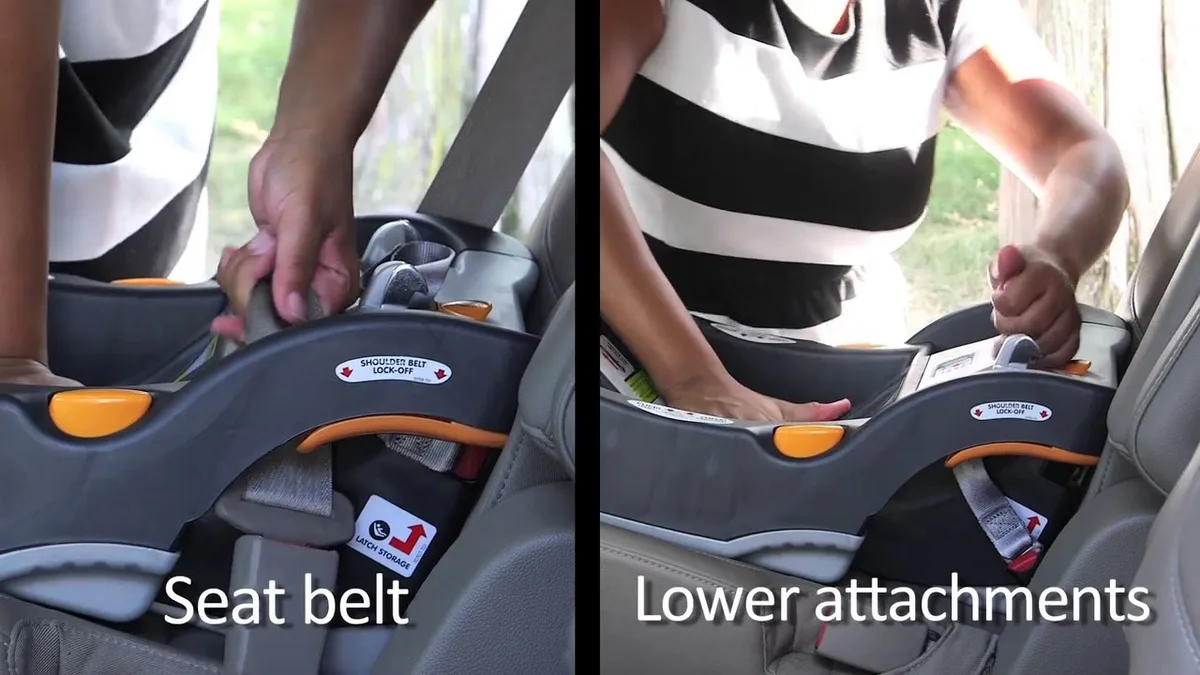
Choose your lower anchor system. You have two options: the vehicle seat belt or the LATCH lower anchors. Use LATCH only if the combined weight of your child and the car seat is under the limit in your vehicle manual (usually 65 pounds total). Once that limit is exceeded, switch to the seat belt.
The seat belt is actually stronger at higher weights.
Thread the seat belt or LATCH strap through the forward-facing belt path. Check your manual for the correct path. It’s usually a separate slot marked with a forward-facing icon. Never use the rear-facing path for forward-facing installation.
Tighten the base. Push down on the seat with one hand while pulling the belt or strap tight with the other. Check for movement. The seat should not shift more than 1 inch side-to-side or front-to-back at the belt path.
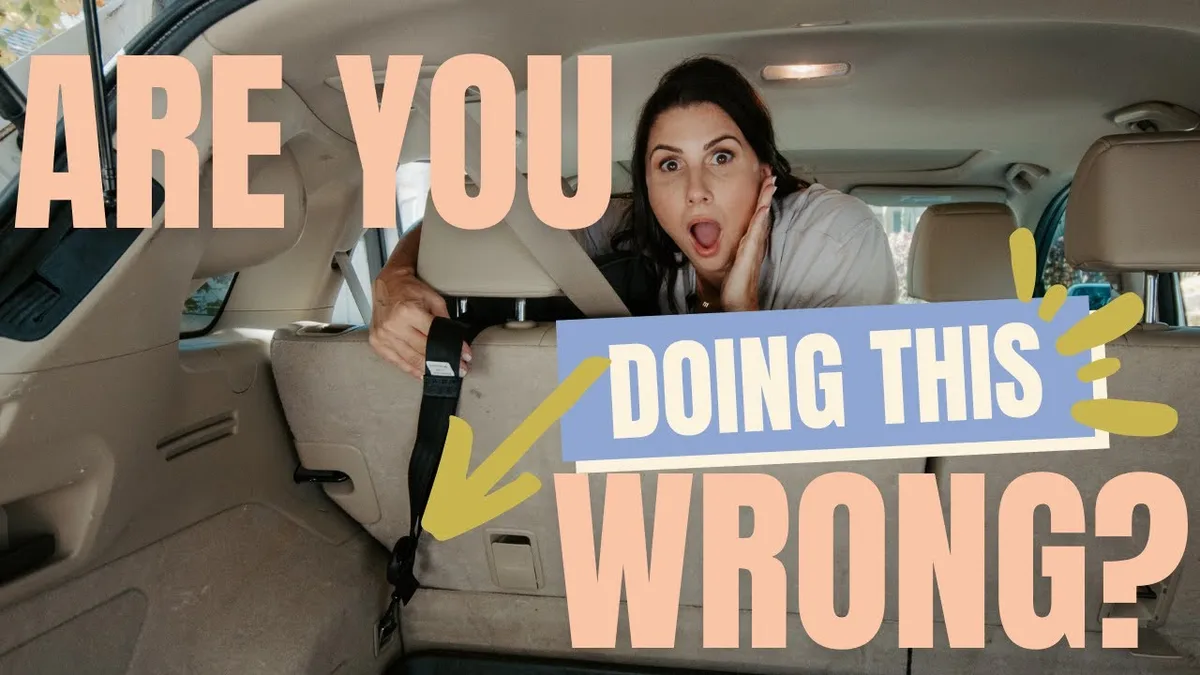
Attach the top tether. This is non-negotiable. The tether hooks to an anchor behind or above the seat. Pull the strap tight to eliminate slack.
The tether reduces forward head movement in a crash by 4 to 6 inches. Per NHTSA testing, that difference can mean the difference between a concussion and a safe landing.
Adjust the harness. Straps must be at or above your child’s shoulders. The chest clip should sit at armpit level. Tighten the harness until you cannot pinch any slack at the collarbone.
Perform the pinch test. If you can pinch the harness webbing at the shoulder, it’s too loose. Tighten more until the strap is snug against your child’s body. A properly tightened harness leaves no wrinkles.
If you’re ever unsure, a certified child passenger safety technician can check your installation for free at a local inspection event. Many fire stations and police departments offer this service.
Common Mistakes That Put Your Child at Risk
We’ve seen every mistake in the book. Here are the ones that show up most often in aggregate reviews and technician reports.
Turning too early. The biggest one. Parents turn at age 1 or 20 pounds because they think it’s the rule. It’s not.
The law says “minimum,” not “recommended.” Rear-facing is safer until the seat says stop.
Not tightening the top tether. Some parents skip it entirely. Others attach it but leave slack. A loose tether allows the seat to rotate forward.
In a moderate crash, that can mean serious head injury.
Misreading the harness height. Forward-facing requires the harness at or above the shoulders. Rear-facing uses below. If you leave the straps below the shoulders when facing forward, the child can submarine under the harness in a crash.
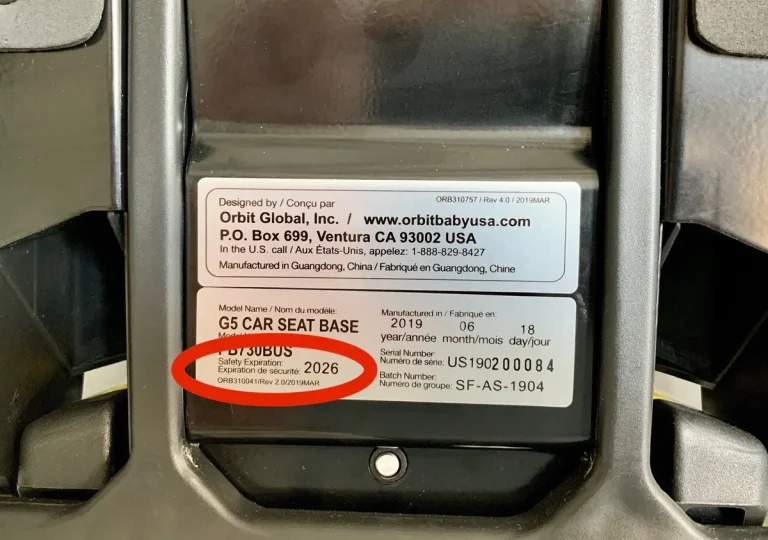
Forgetting the seat expiration date. Car seats expire because plastics degrade. Most seats last 6 to 10 years from manufacture. The date is printed on the seat shell.
Using an expired seat is like using an old bike helmet, it may still look fine, but it won’t perform.
Over-tightening the chest clip. It should sit at armpit level, not against the throat or down on the belly. Wrong placement can cause internal injury.
Ignoring the LATCH weight limit. Many parents keep using LATCH after the combined weight exceeds the limit. Switch to the seat belt once your child hits 40, 50 pounds (plus seat weight). Check your vehicle manual for the exact number.
Not registering for recalls. Manufacturer recall notices only go to registered owners. If you never filled out the card or did it online, you won’t know about a harness defect or buckle issue. You can still register your seat at any time.
Just look up the model and manufacture date.
If you’ve already made mistakes, don’t panic. Correct them now. Even after a spill or mess, you can safely clean most seats without damaging the harness.
Use only mild soap and water on the straps, no bleach, no bleach alternatives.
Legal vs. Best Practice – What the Law Says vs. What Experts Recommend
This is where many parents get confused. The law sets a floor. Expert recommendations set a ceiling.
State laws vary, but most require rear-facing until at least age 1 and 20 pounds. Some states, like California and New York, now require rear-facing until age 2. But after that, the law typically just says “properly restrained.” That’s it.
No specific forward-facing age mandate beyond age 1 or 2.
The American Academy of Pediatrics recommends rear-facing until the child reaches the highest weight or height allowed by the seat. For most convertible seats, that’s 40, 50 pounds and 44 inches tall. That’s usually around age 3 or 4.
Not 1. Not 2.
Why the gap? Lawmakers set minimums to cover the most common crash risks. They don’t want to mandate expensive seats for families who can’t afford them. But safety research keeps evolving.
The AAP and NHTSA update their guidelines based on crash data showing that rear-facing is 5 times safer through age 2.
What does this mean for you? If your state says “rear-facing until 1,” that is the legal minimum. You are not breaking the law by turning at 2 or 3. You are exceeding the minimum.
The choice is yours. But from a safety standpoint, waiting until your child maxes out the seat is the clear winner.
What about booster seats? Laws here are more specific. Most states require a booster until age 8 or 4’9″. That’s a separate topic, but the same principle applies: the law is the minimum.
Waiting longer is safer.
If you travel and need a temporary seat, rental car options vary widely. Some companies provide seats, but they may be expired or poorly maintained. Bringing your own is always best.
What Happens After Forward-Facing – The Next Stages
Forward-facing is not the end. It’s a middle stage. Here’s what comes next.
The 5-point harness stage. Your child stays in the forward-facing harness until they exceed the harness weight or height limit for that seat. For most combination seats, that’s around 40, 65 pounds and 49 inches tall. Some seats go to 90 pounds.
That’s typically age 4 to 6.
Transition to a booster. Once your child outgrows the harness, they move to a booster. The booster positions the vehicle seat belt correctly across the chest and hips. Most kids need a booster from age 4 to 8 at least.
The vehicle seat belt alone is not safe for most children under 4’9″.
What about all-in-one seats? They convert from rear to forward to booster. They work well, but the booster mode is often lower quality than a dedicated high-back booster. If you plan to use the booster stage, check reviews for fit and comfort.
The top tether stays important. Even in booster mode, some high-back boosters use the top tether to reduce head movement. Keep it attached if your booster has the option.
When can they sit without a booster? The 5-step test: (1) child sits with back against the seat, (2) knees bend at the edge of the seat, (3) lap belt rests on thighs (not stomach), (4) shoulder belt crosses the middle of the chest, (5) child stays like that the whole ride. Most kids pass this test around age 10, 12. Until then, keep the booster.
If you’re planning a trip and wondering about the cost of renting a car seat, it can be $10, 15 per day. For a week-long trip, buying a cheap seat might be cheaper. Just make sure it’s new, not expired.
Real Scenario: A Common Decision Point
Let’s make this practical. Here’s a typical situation.
Child: 2 years old, 28 pounds, 34 inches tall.
Seat: Graco Extend2Fit, rear-facing limit 50 pounds, 44 inches.
Vehicle: 2020 Honda CRV, top tether anchors available on all rear seats.
Question: Can you turn this child forward-facing?
Answer: Yes, technically. The child meets the forward-facing minimum (22 pounds, age 2). But should you?
No. The child has not reached the rear-facing limit of 50 pounds or 44 inches. Turning now would forfeit months of extra crash protection.
What if the child were 40 pounds and 43 inches? Then you are close. At 40 pounds, you still have 10 pounds of rear-facing capacity. At 43 inches, you have 1 inch of headroom.
You could wait until they hit either limit. Most experts would wait until the height limit is reached, the 1-inch rule, then turn.
What if the seat had a 40-pound rear-facing limit? Then at 40 pounds, you have maxed out that number. Time to turn. But if your child is only 35 pounds, keep waiting.
The rule of thumb: If your child is below both the weight and height limit for rear-facing, do not turn. Only turn when one of the two is exceeded. Age alone doesn’t matter if the size limits aren’t met.
If you need to clean the seat after the switch, remember that different materials need different care. Leather seats in your car are easier to wipe down, but your car seat’s fabric cover usually comes off for machine washing. Check the manual.
FAQ – Quick Answers to the Most Searched Questions
Can I turn my 1‑year‑old forward‑facing?
Legally, yes, in most states. But the AAP strongly recommends waiting until age 2 and until your child maxes out the seat’s rear‑facing limits. At 12 months, a child’s spine is still developing.
Rear‑facing is significantly safer.
What if my child is over the height limit but under the weight limit?
Then they have outgrown the seat for rear‑facing. The 1‑inch headroom rule is the height limit. If the top of their head reaches the top of the shell, they must turn forward.
Weight alone does not override height.
Do I need a new seat to switch from rear to forward?
Not if you own a convertible or all‑in‑one seat. Those are designed for both modes. But you may need to adjust the harness belt path and recline angle.
Always read the manual before switching.
How tight should the harness be?
Snug enough that you cannot pinch any webbing at the shoulder. The chest clip must sit at armpit level. A loose harness lets the child slide forward in a crash.
The pinch test is the gold standard.
Can I use a forward‑facing seat in the front seat?
Never in front of an active airbag. The back seat is the safest position. If you must use the front seat (no rear seat available), deactivate the airbag and push the vehicle seat as far back as possible.
Verified Summary – Your Takeaway Checklist
Here is the final checklist. Print it or save it. Use it every time you consider turning your child forward.
- Child has reached the seat’s maximum rear‑facing weight or height (check label).
- Child is at or above the seat’s minimum forward‑facing weight (usually 20, 22 lbs).
- Top of child’s head is at least 1 inch below the top of the seat shell.
- Harness straps will be at or above the shoulders in forward mode.
- Top tether anchor is available in your vehicle and used.
- Seat is installed with less than 1 inch of movement at the belt path.
- Seat is not expired (check manufacture date).
The one sentence to remember: max out the rear‑facing limits, then turn. Your child’s spine will thank you.
For specific numbers, grab your seat’s manual. Every model is different. If you ever doubt your installation, find a free car‑seat check event near you through NHTSA or Safe Kids Worldwide.