When Can You Turn Your Car Seat Forward? Age Guide
You open the back door of your car, look at your toddler strapped into their seat, and wonder: when can you do front facing car seat? It’s one of the most common questions new parents ask, and for good reason. Getting it wrong isn’t just a matter of convenience, it’s a matter of safety.
The short answer is that most children can legally switch around age one, but safest practice says wait much longer.
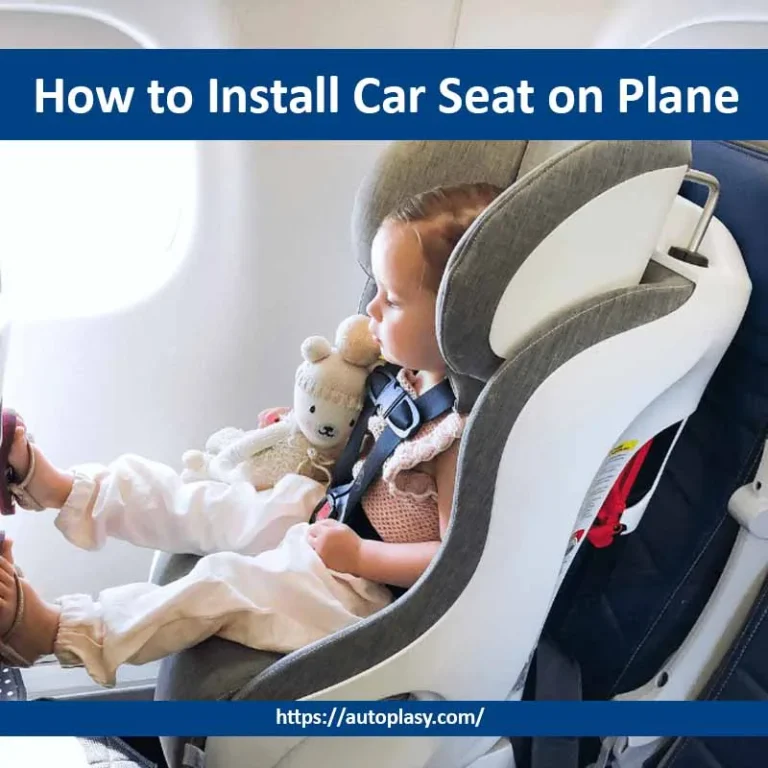
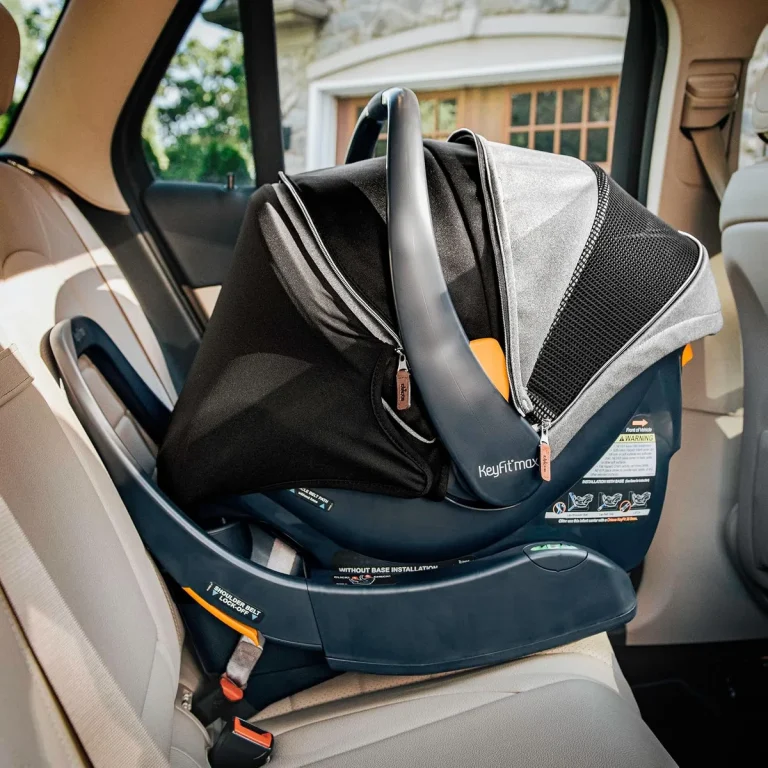
According to the American Academy of Pediatrics, children should remain rear-facing until at least age two, or until they outgrow the maximum height or weight limit of their specific car seat model. As of 2026, many convertible seats allow rear-facing up to 40 or even 50 pounds. That means most kids can safely stay rear-facing until age three, four, or even five.
Let’s walk through exactly what the rules say, what the research shows, and how to make the right call for your child.

Image source: YouTube / First Time Father (YouTube thumbnail (fair-use with source credit))
Quick Answer
You can turn your child forward-facing when they meet all three of these. Your child must be at least one year old and weigh at least 20 pounds. They must also have outgrown the rear-facing height or weight limit printed on their specific car seat.
Most convertible seats allow rear-facing until 40 to 50 pounds. The safest choice is to keep them rear-facing as long as your seat allows, even beyond age two.
Why the Minimum Age Isn’t the Safest Age
State laws set the floor, not the ceiling. Every state in the U.S. requires children to be at least one year old before turning forward-facing, but that is a bare minimum. The laws were written based on older research and outdated seat designs.
Modern car seats and crash data tell a different story.
The National Highway Traffic Safety Administration and the AAP both emphasize that rear-facing is five times safer for toddlers than forward-facing. That is not a small number. Rear-facing distributes crash forces evenly across the child’s back, head, and neck.
A toddler’s spine and neck bones are not fully hardened yet, they’re mostly cartilage. In a forward-facing crash, the harness holds the body while the head whips forward, putting immense strain on the neck.
Here is what the research actually shows:
- Children under two are 75 to 90 percent less likely to be seriously injured in a crash when rear-facing.
- The risk of injury drops further for every additional pound and inch a child gains before switching.
- Legs touching the back seat are normal and safe. Children are flexible and naturally fold their legs.
So why do so many parents switch at one year? Mostly because that’s what the law says, and it feels like a milestone. But the law exists as a minimum safety net, not a recommendation.
Think of it like a seatbelt, legal to drive without one in some places, but that doesn’t mean it’s smart.
The Real Requirements: Age, Weight, Height, and Maturity
Three numbers matter. Age is the easiest to remember, but it’s actually the least important. Weight and height are what determine whether your child physically fits the seat in rear-facing mode.
| Requirement | Minimum Legal | Safest Practice |
|---|---|---|
| Age | 12 months | 2 years or older |
| Weight | 20 pounds | Up to max rear-facing limit of seat (40–50 lbs) |
| Height | Varies by seat | Up to max rear-facing height limit |
| Maturity | Not considered | Child can sit still and follow directions |
Every car seat has a sticker on the side or back that lists the maximum rear-facing weight and height. That is your real target. If your child is 18 months old, 25 pounds, and 33 inches tall, but your seat allows rear-facing up to 40 pounds and 40 inches, they should stay rear-facing.
Period.
There is also a maturity factor that most guidelines don’t mention. A forward-facing child needs to sit upright without slouching or leaning out of position. If your toddler still falls asleep sideways or slumps forward, they are not ready to face forward.
Rear-facing keeps them safer when they sleep because the seat cradles them.
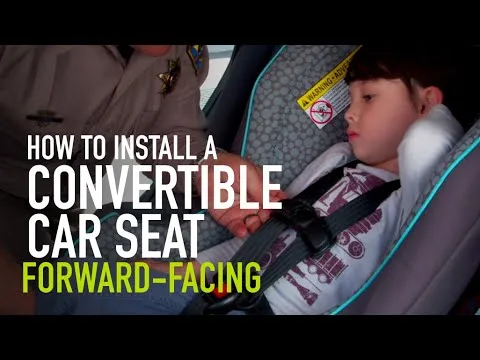
Image source: YouTube / BabyCenter (YouTube thumbnail (fair-use with source credit))
How to Check Your Specific Car Seat’s Limits
This is where most parents get tripped up. Every seat has different limits, and you cannot guess based on your friend’s seat or your older child’s seat. You must look at your own car seat’s labels and manual.
Start by finding the white or silver sticker on the side or back of your seat. It will list:
- Maximum rear-facing weight (usually 35, 40, or 50 pounds)
- Maximum rear-facing height (usually a specific number of inches)
- Minimum forward-facing weight (usually 20 or 22 pounds)
- Minimum forward-facing height (usually 29 to 32 inches)
Write those numbers down. Compare them to your child’s current weight and height. If your child has not reached the maximum rear-facing numbers, keep them rear-facing.
Check the manual for one more thing: the top tether requirement. Some seats require the top tether for forward-facing use, and not all vehicles have tether anchors in every seat position. The same goes for keeping the upholstery clean, you might want to know how to manage messes before they set in, like knowing how to clean a car seat after vomit step by step before it happens on a road trip.
If your child’s head is within one inch of the top of the seat shell when rear-facing, they have reached the maximum height limit. That is the hard stop. Even if they are under the weight limit, height is the deciding factor.
Step-by-Step: How to Make the Switch from Rear-Facing to Forward-Facing
When the time finally comes, the switch is not complicated, but it requires attention to detail. Missing one step can compromise the seat’s performance in a crash.
Step 1: Check the child’s measurements. Confirm that your child exceeds the minimum forward-facing weight and height for your specific seat. Then confirm they have reached the maximum rear-facing limit. Both conditions must be true.
Step 2: Read the manual again. The forward-facing installation path is different from rear-facing. The harness straps must be at or above your child’s shoulders, not below. The recline angle is more upright.
Step 3: Remove the seat or adjust it. If your seat is a convertible model, you may need to rethread the harness straps through the forward-facing slots. Some seats have a no-rethread system that adjusts with the headrest. Follow the manual exactly.
Step 4: Install the seat forward-facing. Route the LATCH connectors or seat belt through the forward-facing belt path. Tighten until the seat moves less than one inch side to side or front to back at the belt path.
Step 5: Attach the top tether. This is the single most important forward-facing step that gets skipped most often. Connect the top tether hook to your vehicle’s anchor point (usually on the back of the seat, ceiling, or floor of the trunk area). Tighten until the tether strap is snug.
A properly tightened top tether reduces head injury risk in a crash by up to 45 percent.
Step 6: Perform the pinch test. After buckling your child, try to pinch the harness strap at the collarbone between your thumb and forefinger. If you can pinch any webbing, the harness is too loose. Tighten until you cannot pinch any slack.

Image source: YouTube / Safe in the Seat (YouTube thumbnail (fair-use with source credit))
Step 7: Check the chest clip. The chest clip should sit at armpit level, not down on the belly or up at the neck. That keeps the harness positioned correctly on the shoulders.
Once installed, give the seat a firm shake. If it moves more than an inch in any direction, start over. A loose installation is dangerous no matter which direction the seat faces.
The Most Common Mistakes Parents Make When Switching
Switching to forward-facing seems simple. But the data on misinstallation tells a different story. Aggregate reviews and car seat technician reports show that over half of forward-facing seats are installed incorrectly in at least one way.
Skipping the top tether. This is the biggest and most dangerous mistake. Many parents don’t realize the top tether is required for forward-facing use, not optional. Without it, the seat can pivot forward in a crash, sending the child’s head into the vehicle seat in front of them.
That 45 percent reduction in head injury risk makes it a non-negotiable step.
Using LATCH past the weight limit. Every vehicle has a maximum LATCH weight limit, usually 65 pounds combined child and seat weight. Once your child hits that limit, you must switch to seat belt installation. Check your vehicle owner’s manual.
Many parents don’t know this rule exists.
Putting the harness in the wrong slots. Rear-facing requires harness straps at or below the shoulders. Forward-facing requires them at or above the shoulders. Forgetting to rethread the harness is a common error.
Your child could slip down or out of the seat in a crash.
Keeping the recline angle the same. Rear-facing seats need a 30 to 45 degree recline. Forward-facing seats sit more upright. Some seats have a built-in recline adjuster that must be changed.
If you leave the seat in the rear-facing recline position, the seat may not perform correctly in a crash.
Moving the chest clip too low. The chest clip must sit at armpit level. If it slides down to the belly, the harness straps can separate during a crash. That can allow your child to be ejected from the seat entirely.
State Laws vs. Best Practice: What You Actually Need to Know
State laws vary widely. Some states require rear-facing until age two. Others only require it until the child turns one.
A few states still have no specific age requirement at all, just a weight minimum of 20 pounds.
Here is a quick breakdown of what different states require as of 2026:
| State Category | Minimum Rear-Facing Requirement | Notes |
|---|---|---|
| Strictest states | Age 2 | California, New York, New Jersey, Pennsylvania, Connecticut |
| Moderate states | Age 1 with weight minimum | Most states fall here |
| Least restrictive | Age 1, no weight minimum | A handful of states |
The problem is that state laws are slow to update. The AAP updated its recommendation in 2018 to encourage rear-facing until age two or until the seat’s limits are outgrown. Many states have not caught up.
If you live in a state that only requires rear-facing until age one, the law will not stop you from turning your child around. But the law is not a safety recommendation. It is a bare minimum.
You will not get a ticket for keeping your child rear-facing longer. You will, however, get a ticket for turning them forward-facing too early.
The best practice is simple. Follow the seat manufacturer’s maximum rear-facing limits, not your state’s minimum age. That keeps your child safe regardless of where you live.
Extended Rear-Facing: Why Waiting Longer Is Safer
Extended rear-facing means keeping your child rear-facing past age two. It is not a fringe idea. It is the standard recommendation from every major safety organization in the country.
The reasoning is all about anatomy. A toddler’s spine does not fully ossify (turn from cartilage to bone) until around age three to six. The vertebrae are individual bones connected by soft cartilage.
In a forward-facing crash, the head whips forward while the body is held by the harness. That creates a leverage force that can stretch or tear the spinal cord.
Rear-facing eliminates that force. The crash energy spreads across the entire back of the seat, cradling the head, neck, and spine in a straight line. The head and body move together.
There is no whipping motion.
Manufacturer specifications confirm that most convertible seats now support rear-facing up to 40 or 50 pounds. That is a 95th percentile five-year-old. Your child’s legs touching the back seat are not a problem.
Children are flexible. They naturally fold their legs or prop them up on the seat. There is no evidence that rear-facing causes leg injuries in a crash.
If your child complains about being cramped, the answer is not to turn them forward-facing. The answer is to check their leg position. Most kids sit cross-legged, frog-style, or with their feet up on the seat back.
They are comfortable. The parent is usually the one who feels uncomfortable.
What If Your Child Is Tall or Heavy? Handling the Outgrow Scenarios
Some children hit the rear-facing limits early. A tall toddler can reach the maximum height limit at 18 months. A heavy child can hit the weight limit at two years.
In those cases, the decision is made for you.
If your child reaches the height limit first. This is the most common scenario. Measure from the top of your child’s head to the top of the car seat shell. If there is less than one inch of clearance, they have outgrown the rear-facing position.
You must switch to forward-facing, even if they are under the weight limit.
If your child reaches the weight limit first. This is less common but happens. Once your child hits the maximum rear-facing weight printed on the seat, they cannot safely ride rear-facing in that seat. You need to switch to forward-facing or buy a seat with a higher rear-facing weight limit.
If your child is between limits. This is where you have options. If your child is 30 pounds and your seat allows rear-facing to 40 pounds, keep them rear-facing. The height limit is usually the binding constraint for most kids.
Consider a seat with higher limits. Some convertible seats allow rear-facing up to 50 pounds and 49 inches. If you have a tall or heavy child, choosing a seat with higher limits at purchase time can buy you an extra year or two of rear-facing. The cost difference is small compared to the safety benefit.
Expert Tips for a Safe Forward-Facing Installation
Getting the installation right takes practice. Even experienced parents make mistakes. Here are the tips that certified child passenger safety technicians share most often.
Use the seat belt if you are near the LATCH limit. The LATCH system has a lower maximum weight limit than the seat belt. If your child weighs more than 40 pounds, switch to the seat belt. It is stronger and does not have a vehicle weight limit.
Tighten the top tether last. Install the seat first using the seat belt or LATCH. Tighten until the seat is secure. Then attach and tighten the top tether.
Doing it in that order prevents the tether from pulling the seat out of alignment.
Kneel in the seat while tightening. Put your full weight into the seat to compress the vehicle cushions. That lets you get the strap tighter than pulling from the side. A seat that moves less than one inch is the goal.
Check the harness every time you buckle. The retainer clip should be at armpit level. The harness should be snug enough that you cannot pinch any slack at the collarbone. A loose harness is the most common error found at car seat check events.
Register your seat for recalls. Manufacturers send recall notices to registered owners. You can also check the NHTSA website for recalls on your specific model. A recalled seat should be fixed or replaced immediately.
Replace the seat after a moderate or severe crash. Most manufacturers recommend replacing the seat after any crash that deployed the airbags, caused visible damage to the vehicle, or required the vehicle to be towed. Minor fender benders may not require replacement, but check the manual to be sure.
FAQs: When Can My Child Face Forward?
Can I turn my child forward-facing at 12 months exactly?
Technically, yes, if state law allows it and your child meets the minimum weight of 20 pounds. But the AAP strongly recommends waiting until age two or until your child outgrows the rear-facing limits on your seat. At 12 months, your child’s neck and spine are still developing.
Rear-facing is far safer.
What if my child’s legs touch the back seat rear-facing?
That is completely normal and safe. Children are flexible and naturally sit cross-legged, frog-style, or with feet up on the seat. There is no evidence that rear-facing causes leg injuries in a crash.
In fact, forward-facing legs dangle and can swing forward, which can cause injuries against the front seat.
How do I know if my child has outgrown the rear-facing seat?
Check the sticker on your car seat. If your child’s head is within one inch of the top of the seat shell, or if they exceed the maximum rear-facing weight (usually 40 to 50 pounds), they have outgrown it. Otherwise, keep them rear-facing.
Can I use a forward-facing only seat from the start?
No. Forward-facing only seats are for children who have already outgrown their rear-facing seat. You need a convertible seat that allows rear-facing first.
Buying a forward-facing only seat too early forces you to switch before it is safe.
Does the top tether really matter that much?
Yes, absolutely. The NHTSA reports that using the top tether reduces head injury risk by up to 45 percent in a frontal crash. It prevents the seat from pivoting forward.
Never skip it.
What if my car has no top tether anchor?
Older vehicles may lack top tether anchors. Check your owner’s manual. Some manufacturers offer retrofitting kits.
If you cannot install a top tether, your seat will still pass basic crash tests, but you lose significant head protection. Consider a different vehicle seating position that has an anchor.
Final Decision Guide: Is It Really Time to Turn the Seat Around?
Use this quick checklist before making the switch:
- My child is at least 1 year old (legal minimum met)
- My child has reached the maximum rear-facing weight or height on the seat label
- My child can sit upright without slouching for the whole ride
- I have read the manual for forward-facing installation
- I have a top tether anchor available in my vehicle
- I am ready to install the seat correctly (or get it checked)
If you checked every box, it is time to switch. If any box is unchecked, wait. There is no benefit to switching early and a major safety penalty.
Rear-facing is five times safer for toddlers.
The very best advice is simple. Max out your car seat’s limits. Do not settle for the minimum legal age.
Your child’s safety depends on it.