Leather Car Seats: The Honest Pros & Cons
You've been staring at that leather interior option for weeks. Maybe you're ordering a new car and it's a $2,000 checkbox. Maybe you're eyeing a used one with buttery seats and wondering if it's a smart buy or a future headache.
The question "should i get leather seats in my car" doesn't have one answer. It has your answer, and it depends on where you live, what you haul, and how you treat your stuff.
Here's the short version: leather seats win on resale value and cleaning ease, but they lose hard in extreme climates without ventilation. Per SAE International testing, surface temps on dark leather can hit 180°F in direct sun, that's hot enough to cause burns on bare skin. Let's walk through every angle so you know which camp you fall into.
Image source: Wikimedia Commons / Mr.choppers (CC BY-SA)
Quick Answer
Leather seats are worth it if you prioritize resale value and easy cleanup. Skip them if you park in full sun without shade, have kids who make daily messes, or live somewhere humid. Synthetic leather often gives you the look without the cracking risk.
Cloth seats stay cooler and cost less to maintain.
How Leather Seats Actually Behave Day to Day
Let's clear up the biggest myth first. Leather is not indestructible. It's a natural material that responds to heat, moisture, and friction in predictable ways.
Understanding those behaviors is how you decide if it fits your life.
Temperature is the main event. In summer, dark leather absorbs heat fast. Surface temps can hit 180°F within 20 minutes of parking in direct sunlight. That's not just uncomfortable, it's genuinely painful.
Ventilated seats help, but they're usually locked to higher trim levels. In winter, unheated leather feels like sitting on an ice pack until your body warms it up. Cloth seats in the same car stay bearable year-round.
Cleaning is where leather shines. Spills bead up on the surface instead of soaking in. A quick wipe and you're done. Coffee, juice, mud, it all wipes off without leaving a ghost stain.
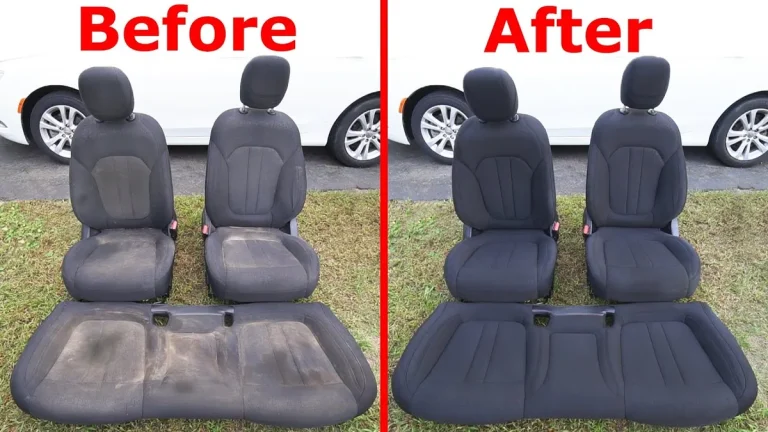
Compare that to cloth, where a spilled soda can leave a permanent mark if you don't catch it fast. Our guide on how to clean leather car seats at home without damage walks through the exact routine, but the short version is: mild soap, microfiber cloth, and conditioner every few months.
Wear patterns tell a story. The driver's seat bottom will develop a sheen over time. That's the topcoat wearing away. Left untreated, it leads to cracking.
The bolsters on the entry side of the seat get the most abuse as you slide in and out. Crew cab trucks and SUVs with high step-in heights actually preserve bolsters better because you don't drag across them.
Synthetic leather is a different animal. Modern leatherette, like Toyota's SofTex or Mercedes' MB-Tex, breathes less than real leather but resists cracking much longer. It's essentially a high-end vinyl with a leather grain embossed on top. The tradeoff is that it can feel sticky against bare skin in humid weather because it doesn't wick moisture at all.
The Three Questions That Decide for You
Forget the pros and cons list for a second. Three factors determine whether leather is smart for your situation. Answer these honestly, and the decision almost makes itself.
Where Do You Live and Park?
This is the single biggest variable. If you live in Phoenix, Tucson, Las Vegas, or anywhere in the Sun Belt and park outside, unventilated leather will punish you from May through October. You'll either burn your legs, buy a sunshade and crack the windows, or regret your choice every afternoon.
Garage parking changes everything. A car that lives in a garage or covered parking never sees the temperature extremes that destroy leather. The same goes for climates with mild summers.
Seattle, Portland, San Francisco, leather does much better there because the car rarely cooks.
Cold climates have a different problem. Unheated leather in a Minnesota winter hits freezing temps. Heated seats fix this, but not all leather cars come with them.
If you're looking at a base trim with leather but no heating, factor in the retrofit cost or skip it.
Who and What Ride in Your Car?
This one gets overlooked constantly. Leather is easy to clean, but it's not invincible.
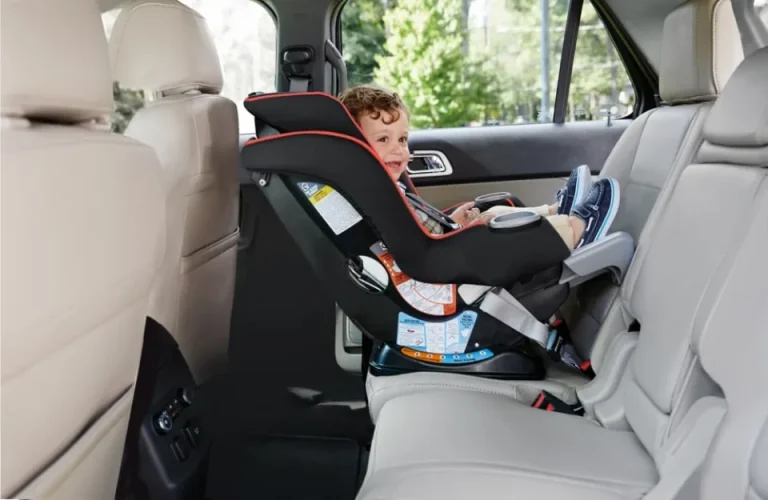
Kids are tough on leather. Car seats leave deep indentations in the foam and leather that sometimes never fully recover. Crumbs from snacks work their way into the seat creases and can cause abrasion over time. Spills happen, and while they wipe up, the constant cleaning and reconditioning adds up.
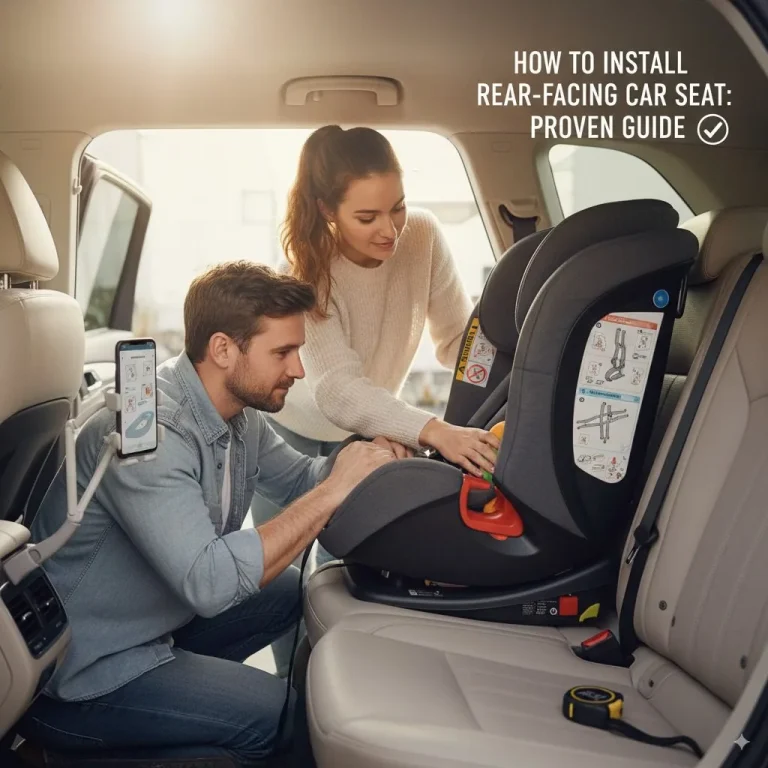
Parents with babies in convertible car seats should read through our 8 best convertible car seat safety ratings guide for tips on protecting the upholstery underneath.
Dogs are a different story. Claws can scratch leather, especially softer Nappa leathers. Fur sticks to leather less than cloth, but drool dries into a film that needs regular wiping. A seat cover solves most of this either way.
Daily commuters with one passenger are the ideal leather owner. Minimal entry and exit wear, no spill chaos, and the easy-clean factor matters most when you eat in the car.
How Long Do You Plan to Keep It?
This is where the math changes. If you trade cars every three to five years, leather almost always pays for itself in resale value. Dealers and private buyers consistently pay more for leather interiors.
The difference varies by market but typically runs $500 to $2,000 on trade-in.
If you keep cars for ten years or more, leather becomes a maintenance responsibility. You'll need to condition it regularly, repair cracks as they appear, and eventually re-dye or replace panels. Cloth seats from the same era will look worn but won't crack or peel.
They just look older instead of damaged.
Leasing? Get the leather. You won't own it long enough for wear to become your problem, and the residual value gets calculated with the option.
Decision Tree: Follow Your Situation to the Right Answer
Let's walk through the most common scenarios. Find yours and see the recommendation.
Branch 1: Hot Climate, No Garage, No Seat Heating
You park on the street or in an uncovered lot. Summer temps regularly hit 95°F or higher. The car doesn't have ventilated seats and you're not ready to pay for an aftermarket install.
Verdict: Skip leather. You'll be miserable for four months out of the year. The seats will crack prematurely from UV exposure and heat cycling. Synthetic leather or cloth will serve you better.
If you really want the look, consider aftermarket leatherette covers that stay cooler and cost a fraction of the factory option.
Branch 2: Kids, Pets, and Daily Messes
You have two kids under six, a golden retriever, or both. The car doubles as a snack zone, a mobile changing room, and occasionally a dirt hauler.
Verdict: Leather is worth it, with a catch. The easy-clean factor is huge. You can wipe down a juice spill in seconds. But you need to protect the seats.
Use seat covers under car seats, wipe spills immediately, and condition the leather quarterly. Waiting on stains is dangerous in our opinion, prevention matters more than repair. Check out our guide on how to clean white car seats for the technique that works on any light leather.
Branch 3: Resale-Focused Buyer
You trade cars every two to four years. You want the highest possible resale value and you don't stress about long-term maintenance.
Verdict: Get leather. It's one of the few options that consistently returns value at trade-in. Buyers associate leather with higher trim levels and luxury, even if your car is a mainstream model. Just keep the seats clean and avoid smoking in the car.
Smoke odor kills leather's resale advantage faster than any stain.
Branch 4: Comfort and Luxury Priority
You want a quiet, premium interior that feels special every time you get in. You're willing to maintain it. The cost doesn't bother you.
Verdict: Get leather, but choose wisely. Full-grain leather from a reputable manufacturer will age beautifully if cared for. Lower-tier bonded leather (think budget trim levels) can peel within three to five years. Pay attention to what you're actually getting.
Factory leather from German luxury brands tends to hold up better than budget-brand leather options. The difference is in the hide quality and the tanning process.
Leather Options: Not All Leather Is the Same
Here's where most people get confused. Car manufacturers slap "leather" on the window sticker for everything from genuine cowhide to plastic with a leather print. You need to know what you're buying.
Full-grain leather is the top of the pile. It uses the whole hide with the natural grain intact. It's durable, develops a rich patina over time, and breathes better than other leathers.
You'll find it on high-end luxury cars and some premium trim levels. It's expensive and requires regular conditioning.
Corrected-grain leather is more common. The manufacturer sands down the natural grain to remove imperfections, then embosses a new grain pattern on top. It's more uniform, cheaper, and still holds up well.
Most factory leather options in mainstream cars use corrected-grain leather. It's a solid choice for most buyers.
Bonded leather is the one to watch out for. It's made from shredded leather scraps mixed with polyurethane and pressed into sheets. It looks like leather at first but peels and cracks within a few years.
Some budget-friendly cars and aftermarket upholstery shops use bonded leather. Ask specifically if you're considering a lower-priced leather option.
Synthetic leather (leatherette, SofTex, MB-Tex, Vinyl) is not leather at all but performs better in some ways. It resists UV damage better, never dries out, and costs less to replace. The downsides are lower breathability and a plasticky feel on high-quality examples.
Toyota's SofTex is widely considered one of the best synthetic options. Mercedes has been using MB-Tex for decades with excellent durability.
Factory versus aftermarket is another big fork. Factory leather costs $1,000 to $3,500 as an option but integrates with heated seat elements, airbags, and trim panels perfectly. Aftermarket leather conversion runs $1,500 to $3,000 and can look just as good if done by a reputable shop.
The risk is quality variation. A bad aftermarket job leaves loose spots, mismatched grain, and premature wear.
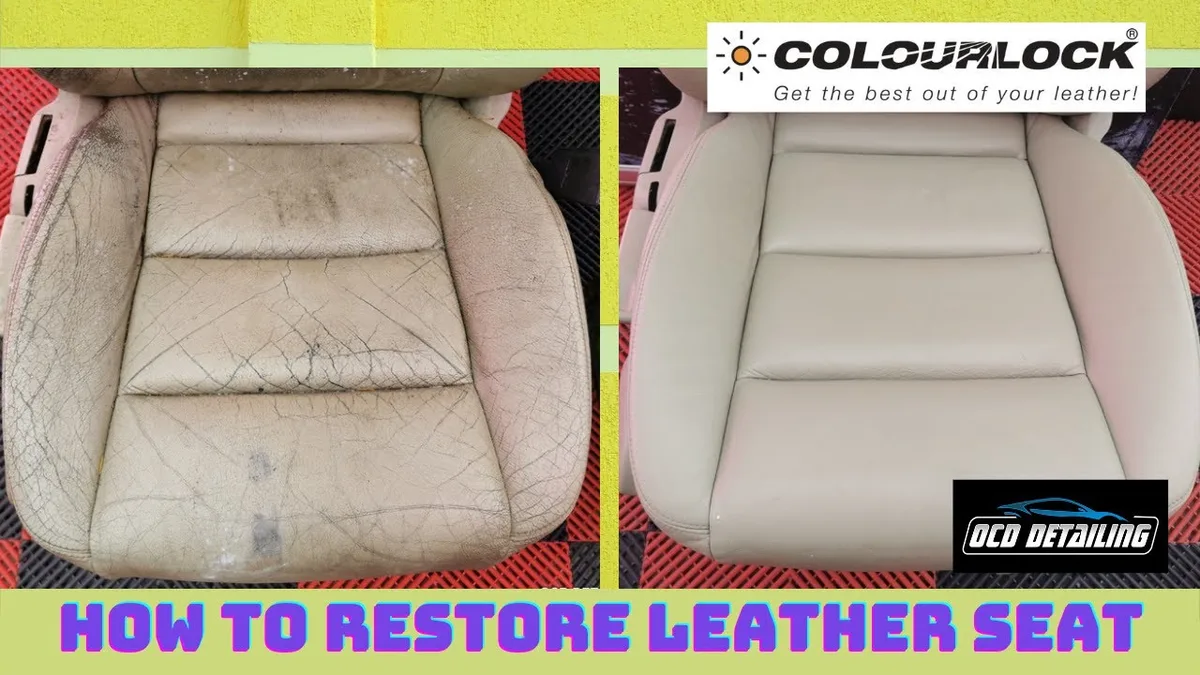
Image source: YouTube / OCD Detailing (YouTube thumbnail (fair-use with source credit))
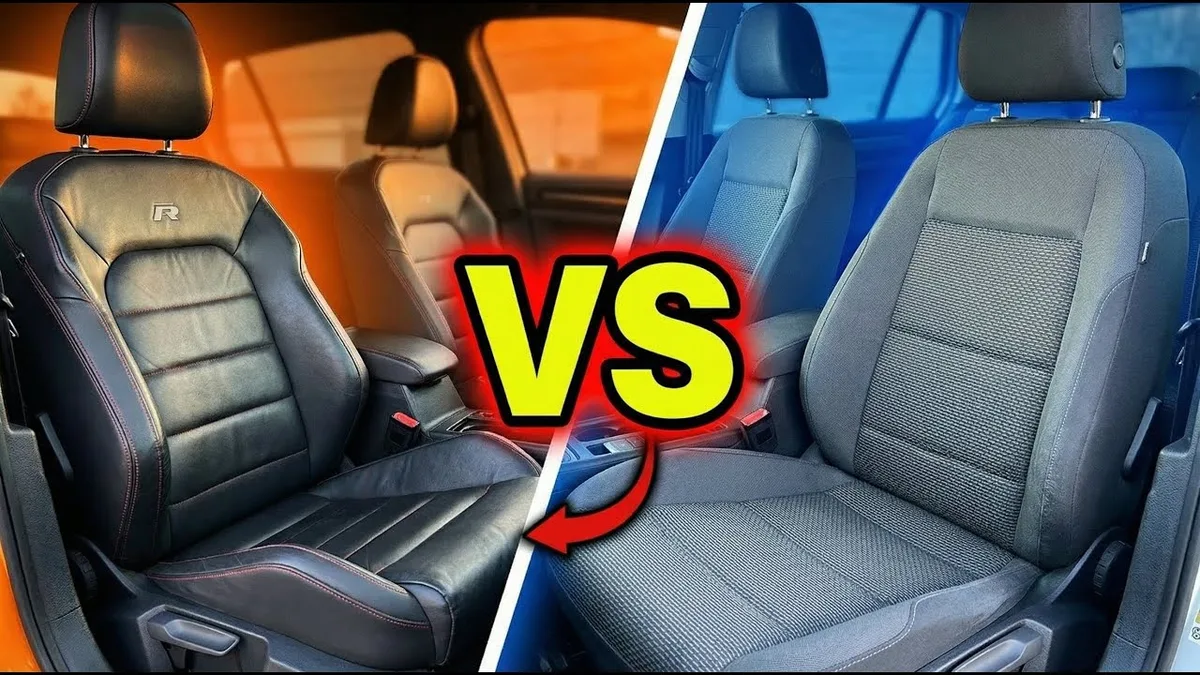
Image source: YouTube / Motor Matchups (YouTube thumbnail (fair-use with source credit))