When Does Safety 1st Car Seat Expire? What to Know
You’re staring at the white sticker on the side of your Safety 1st seat, squinting at numbers that don’t seem to make sense. Or maybe you just bought a used seat and the previous owner said “it’s fine, barely used.” Here’s the truth: when does safety first car seat expire isn’t a trick question, but the answer is more specific than most parents realize.
Manufacturer specifications indicate that Safety 1st seats are designed to last between 6 and 8 years from the date of manufacture, not from the day you bought them. As of 2026, Dorel Juvenile Group, the parent company, requires you to check the molded plastic shell itself for the exact cutoff date. The plastic degrades silently over time, and no amount of careful handling stops that clock.
Quick Answer
Safety 1st car seats expire 6 to 8 years after the manufacture date. The exact lifespan depends on the specific model. Look for the white certification label on the seat’s shell.
It lists both the manufacture date and the “Do Not Use After” date. Never use a seat past that printed date, regardless of condition.
Why trusting a random date is hurting parents
Here’s what happens when parents Google the question. They find a blog saying “6 years” and another saying “8 years.” Confused, they pick a number and move on with their day. That’s exactly how a seat expires without anyone noticing.
The problem isn’t laziness. It’s that most online advice treats all car seats like they’re the same. They’re not.
Safety 1st makes dozens of models with different lifespans. The Onboard 35 infant seat has a 7-year life. The Grow and Go All-in-One stretches to 8 years.
The Guide 65 only gets 6.
And that’s just Safety 1st. Graco, Evenflo, and Chicco all use different expiration windows for different seats.
What happens inside a car seat as it ages
Car seat shells are made from polypropylene plastic. It’s tough stuff, engineered to absorb crash energy. But like all plastics, it breaks down over time.
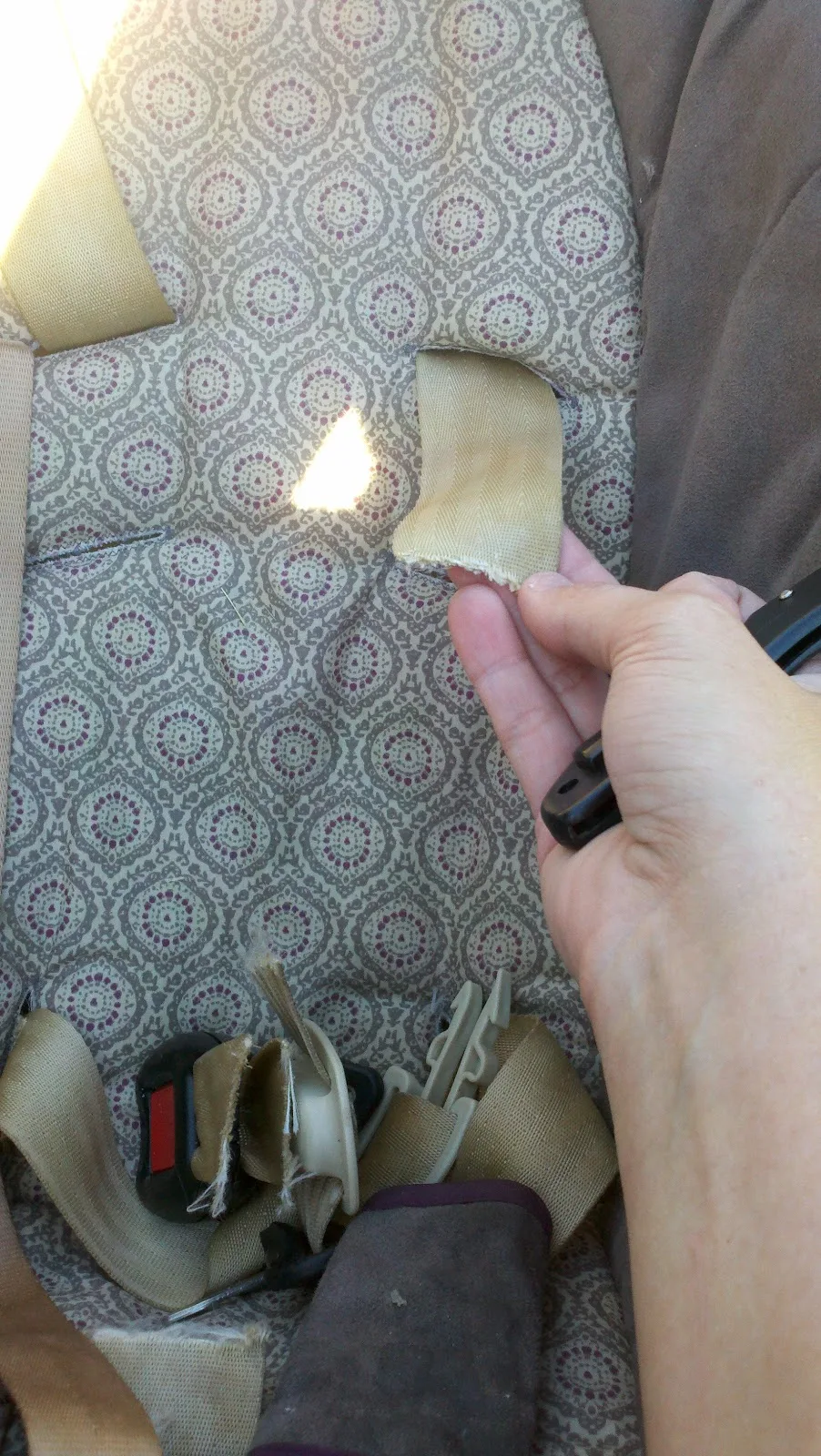
Heat cycles weaken the polymer bonds. UV light from leaving it in the car accelerates the damage. The harness webbing gets brittle too, though it holds up longer than the shell itself.
What you can’t see is the microscopic cracking inside the material. That’s what makes an expired seat dangerous. It looks fine to your eyes, but the structural integrity is already compromised.
The National Highway Traffic Safety Administration (NHTSA) doesn’t mandate expiration dates. That’s a manufacturer-driven safety guideline, and it exists because plastic chemistry doesn’t wait for you to remember.
The quick answer: where to look first
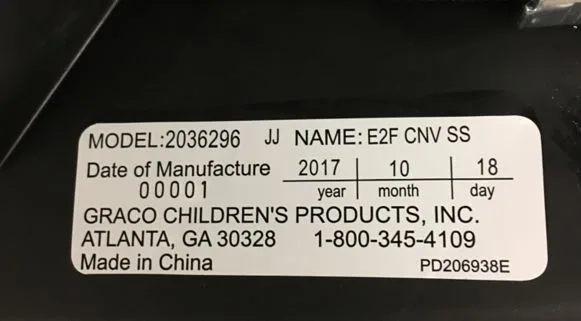
Short answer? Flip the seat over and find the white sticker permanently affixed to the plastic shell. That’s the certification label, and it’s the only legitimate source for your expiry date.
Don’t look for it on the fabric. Don’t dig through the manual that came in the box, although that’s a good backup. The label is pressed into the plastic or stuck right to it, so it can’t be removed or lost like a paper insert.
The sticker that settles everything
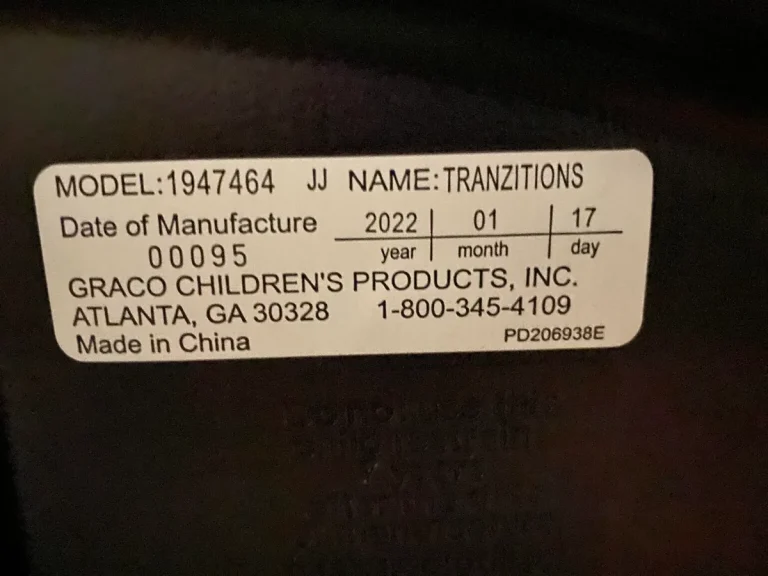
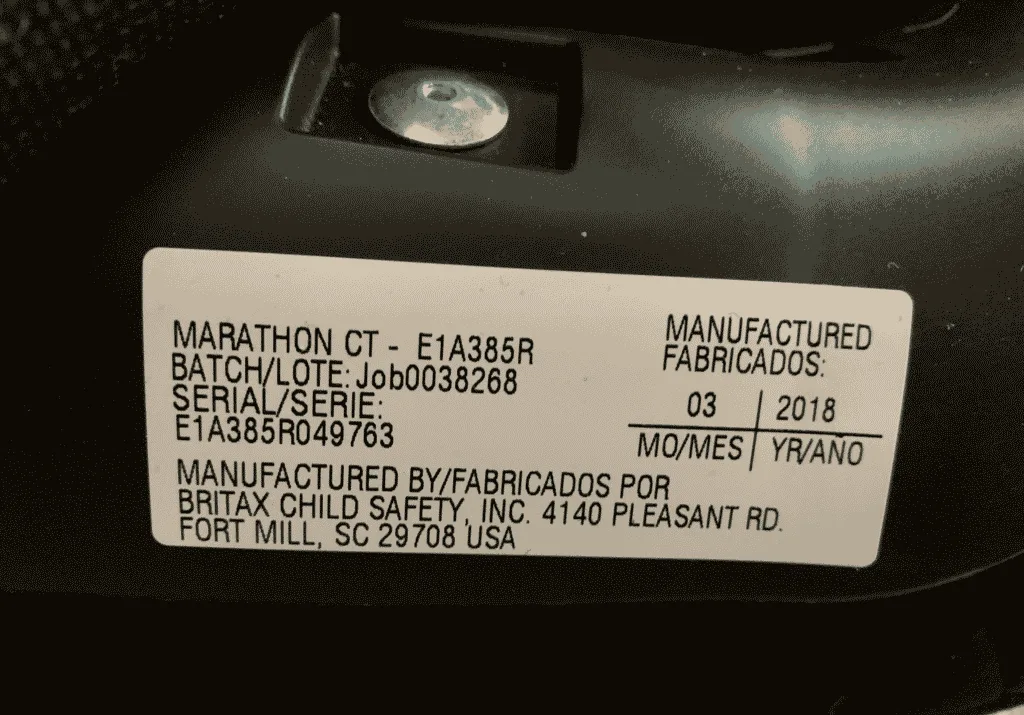
That sticker contains the critical data you need. It’s printed by Dorel Juvenile Group and includes the model name, model number, and a series of dates. The two you care about are the date of manufacture (DOM) and the “Do Not Use After” date.
The DOM is usually listed in plain month/day/year format, like 03/15/2020. The “Do Not Use After” date might say something like “Do not use after 03/15/2027.” Some labels use a simpler format showing both dates side by side.
Why “date of manufacture” matters more than purchase date
This is the biggest misunderstanding parents have. They think the clock starts when they bring the seat home from the store. That’s wrong.
The clock starts the day the seat is molded in the factory. If you buy a seat that sat in a warehouse for three years, you’ve already lost three years of usable life. Retailers sometimes move old stock at a discount.
That discount might not be worth the lost lifespan.
Manufacturer specifications indicate you should check the DOM before purchasing any new seat. It should be no more than 6 to 12 months old at the time of sale. Anything older is a deal you should walk away from.
What you’ll actually see on a Safety 1st label
Here’s a typical example of what the sticker lists:
- Model name (e.g., “Grow and Go All-in-One”)
- Model number (e.g., “DLX 3-in-1”)
- Date of manufacture (e.g., “04/12/2021”)
- “Do Not Use After” (e.g., “04/12/2029”)
- Weight limits for each mode
- Height limits for each mode
- Serial number
- FMVSS 213 compliance statement
Take a photo of that label with your phone right now. Store it in your photos app or a notes app dedicated to car seat records. You’ll thank yourself later.
How Safety 1st sets expiration dates (and why they differ)
Safety 1st, made by Dorel Juvenile Group, gives each model a specific lifespan based on the materials and design used. There’s no universal number across the brand.
The range for current model year seats as of 2026 is 6 to 8 years. The variability comes from engineering decisions, not marketing whims.
Dorel Juvenile Group’s official policy breakdown
Dorel says the expiration date is printed on the label and in the user manual. They also state that seats should be replaced after any crash, even a minor one, per NHTSA’s guidelines. Their official stance is that the printed date is the final word.
There are no extensions, no exceptions, no “it still looks good” loopholes.
Each seat’s manual includes a statement like this: “This child restraint system must not be used after the date printed on the label.” That’s not a suggestion. That’s the manufacturer telling you exactly when the seat has reached the end of its life.
Why some models get 6 years and others get 8
The science comes down to plastic composition and structural design. Seats with more moving parts or adjustable components, like all-in-ones with multiple modes, sometimes get longer lifespans because they’re built with different polymer blends.
Simpler seats with less plastic might get shorter spans. There’s no public engineering data that breaks down each model’s exact polymer recipe, but that’s not surprising. Manufacturers treat that as proprietary.
The point is that you cannot guess. The model-specific date is the only reliable metric you have. It’s right on the sticker, and it’s the number that matters.
| Model Line | Typical Lifespan | Common Modes |
|---|---|---|
| Onboard 35 | 7 years | Infant seat |
| Guide 65 | 6 years | Convertible |
| Grow and Go | 8 years | All-in-One |
| Sport Click Connect | 7 years | Infant seat / Convertible |
Step-by-step: checking your specific Safety 1st seat
Now let’s actually walk through this. You’ll need about five minutes and a bright light source because labels fade and mold can make them grimy.
Locating the certification label
Start by flipping the seat around. The label is usually on the bottom, but some models have it on the side edge or the back near the harness adjuster. Check every surface if you can’t find it right away.
The label is white or light gray. It has small text that can be hard to read in dim light. Use your phone’s flashlight for this.
Honestly, this step takes most people a few minutes because they look right past it.
Reading the DOM and “Do Not Use After” date
Once you find the label, look for a line that says “Date of Manufacture” or shows a stamped date. Then look for “Do Not Use After” or a similar phrase. Write both down somewhere permanent.
If the label is too faded to read, take a photo and zoom in. Sometimes the printed text is just faint but still legible in a digital image. That’s a trick that often saves the day.
Cross-referencing your model number with Dorel’s records
If the label is unreadable or missing entirely, check the user manual. It has a space where you can record the DOM and model number. If you bought the seat used and the manual is gone, you’re stuck playing detective.
You can try contacting Dorel Juvenile Group’s customer service with the model number and any other identifying marks. But honestly, if you can’t verify the manufacture date, treat the seat as expired. That’s the safe call.
Setting alerts so you never miss it again
Put a reminder in your calendar on the date the seat expires. Use the exact month and year. Set it six months before the expiry date too, so you have time to shop for a replacement without last-minute panic.
Add it to your phone’s calendar with a note like “Replace Isla’s car seat” and set it to repeat yearly until then. Future you will be glad you did. And if you plan to save the seat for a younger child, note the expiration date on a piece of masking tape stuck to the bottom.
Common mistakes that make parents think a seat is safe
Parents often trust the seat’s visual condition over the expiration date. That’s exactly the wrong instinct. Here are the most common errors people make.
Buying “new old stock” that’s already expired
You find a great deal on a clearance seat. The box is sealed. The plastic is pristine.
It has to be safe, right?
Not necessarily. Check the DOM before you pay. If the seat was manufactured four years ago and the lifespan is 6 years, you’re buying a seat with only two years of life left.
In those cases, thinking about proper car seat safety rules might save you from a bad purchase.
Faded labels you can’t read
Sun exposure does a number on that sticker. Over time, it fades to white on white. You can’t make out the dates.
Most parents shrug and decide the seat still works fine.
That’s dangerous. If you can’t read the label, you can’t verify the seat’s age. Treat it as expired and replace it.
When it comes to car seat safety guidelines, guessing isn’t an option.
The “it’s been in the garage a few years” trap
A relative hands you their old seat. They took care of it. It sat in a cool, dry garage after their youngest outgrew it.
They assure you it’s barely been used.
The problem is that plastic degrades even with minimal use. The clock never stops. That seat might have been manufactured eight years ago, and the plastic is already weak, even if the straps look new.
Should you buy a used car seat at all? The answer is complicated, and the safest route is usually to pass on the offer.
Assuming a gentle fender bender is fine
NHTSA’s official rule states that car seats should be replaced after any moderate or severe crash. A minor fender bender, where the car is drivable and the door nearest the seat wasn’t damaged, might be okay. But that’s a thin gray line.
Play it safe. If you’re unsure about the crash severity, replace the seat. It’s not worth the risk.
And if the seat is approaching its expiration date anyway, don’t even question it. Replace it.
Cleaning with harsh chemicals that accelerate breakdown
Some parents use strong solvents to clean the plastic shell. Things like bleach spray, acetone, or automotive degreasers.
Those chemicals eat into the plastic and weaken it faster than time alone would. Stick to mild soap and water for the shell, and only use the manufacturer’s recommended cleaning products on the harness straps. Harsh chemicals can compromise the materials’ strength, and that damage might not show up as a visible defect until it’s too late.
When you do replace an expired seat, make sure you cut the straps and mark the shell with permanent marker. That way, nobody else can pick it up and assume it’s safe to use. Check out what happens when car seats get recycled for proper disposal routes in your area.
What to do if your Safety 1st seat is expired
First, cut the harness straps completely. Then use a permanent marker to write “EXPIRED DO NOT USE” across the plastic shell. That keeps anyone from grabbing it out of your trash and using it later.
Cutting the straps and marking the shell
You want to make the seat physically useless. Scissors work fine on the harness webbing. For the plastic shell, a box cutter or utility knife can scratch deep marks into the surface.
The goal is to make it obvious the seat isn’t safe for a child.
Where to recycle or dispose of it responsibly
Check with your local waste management department. Some municipalities have specific car seat recycling programs. Target’s annual car seat trade-in event accepts old seats and gives you a coupon toward a new one.
Walmart runs similar events in some regions.
If no recycling program exists near you, regular trash disposal is acceptable after you’ve made the seat unusable. That’s what the manufacturer recommends.
Picking a replacement without panic-buying
Look for a seat that fits your child’s current weight and height. Don’t buy the cheapest option just because you’re in a hurry. Check the DOM on the new box before you pay.
You want a seat that was manufactured within the last six months.
Need guidance on when your little one is ready to face forward? Read our forward-facing age guidelines before you commit to a convertible model.
Comparing Safety 1st lifespans to other major brands
Safety 1st isn’t alone in setting expiration dates. Every major manufacturer does it. The windows differ, but the principle is the same.
| Brand | Typical Lifespan | Policy Source |
|---|---|---|
| Safety 1st | 6 to 8 years | Label on shell |
| Graco | 7 years (most models) | Manual and label |
| Evenflo | 6 to 8 years | Manual and label |
| Chicco | 6 years (most models) | Label on shell |
| Britax | 6 to 9 years | Manual and label |
Who’s longer, who’s shorter, and why it matters
Britax tends to give some models a 9-year life. Chicco is stricter, often stopping at 6. Neither is “better.” They just use different plastic formulations and testing protocols.
What matters for you is the date on your specific seat. Don’t assume your Safety 1st seat lasts 8 years because a friend’s Britax does. Read your label.
When brand loyalty shouldn’t trump the sticker date
Parents sometimes stretch the dates because they love a seat that worked well. “It’s only two months past,” they tell themselves. That’s exactly how plastic fatigue becomes a real hazard.
The manufacturer set that date for a reason, and none of them benefit from telling you to buy a new seat early.
The used car seat dilemma
You found a great deal on a marketplace app. The seat looks clean, the seller seems nice, and the price is unbeatable. Should you buy it?
The honest answer: probably not, unless you can verify every detail on the label and the seat’s full history.
What to check before accepting a hand-me-down
The first thing is the expiration date. If the seat is anywhere near the cutoff, say no. The second is the crash history.
No crash? The seller needs to confirm that in writing, ideally via a message you can screenshot. Third, inspect the shell for cracks, warping, or stress marks.
Check the harness for fraying or signs of mildew.
The 5 questions to ask the previous owner
- What’s the model number and date of manufacture?
- Has the seat ever been in a crash, even a minor one?
- Was it ever cleaned with harsh chemicals or bleach?
- Has it been stored in a garage, attic, or trunk where temperatures swing?
- Does the seat come with the original manual and registration card?
If the answer to any question is “I don’t know” or “I can’t remember,” walk away. A used seat with an unknown history is a gamble you shouldn’t take. Our research team reviewed the risks in our guide to buying used car seats, and the conclusion is always the same: verify or skip.
Real scenarios: three parents, three different answers
Here are three realistic situations that show how the same question leads to different outcomes.
The second-hand seat from a neighbor
The neighbor’s kid outgrew the seat. They say it’s barely used. The label shows a DOM of 05/2019 and a “Do Not Use After” date of 05/2026.
As of 2026, the seat is still valid, but it expires in a matter of months. If your child is a fast grower, you might get a year of use. But you’ll be shopping for another seat soon after.
The warehouse “deal” that was already 3 years old
You found a clearance seat that was manufactured in 2022. The lifespan is 7 years, so it’s good until 2029. That seems fine until you realize half the seat’s life is gone.
The discount needs to be steep to make up for the lost years.
The perfectly stored seat that hit 7 years
Your sister stored her seat in a climate-controlled closet for years. It’s spotless. The DOM says 2019, and the “Do Not Use After” date passed last month.
No matter how good it looks, it’s done. The plastic has degraded past the manufacturer’s safety threshold. Replace it.
Don’t pass it down.
Legal and safety standards you should know
The legal landscape around car seats is broader than just expiration dates. Federal standards set the baseline for crash performance, but they don’t mandate an expiry window.
FMVSS 213 and what it actually covers
Federal Motor Vehicle Safety Standard 213 sets minimum crash performance requirements for child restraint systems sold in the US. It tests things like head excursion, chest acceleration, and belt positioning. But it doesn’t dictate how long a seat can be used after manufacture.
The expiration date is purely a manufacturer decision. It’s based on their engineering data about material degradation, not government mandate.
NHTSA’s crash replacement rule
The NHTSA advises replacing any car seat after a moderate or severe crash. Their definition of “minor” is specific: the vehicle was drivable, the door nearest the seat was undamaged, and no airbags deployed. If any of those conditions fail, replace the seat, even if it’s brand new.
You can find full details on the official NHTSA car seat page. It’s worth bookmarking for your own reference.
Transport Canada guidelines if you’re north of the border
Canada follows Transport Canada regulations. They’re similar to FMVSS 213 but with some differences in testing and labeling rules. Canadian seats always have bilingual labels in English and French.
The expiration rules work the same way. The manufacturer prints the date, and you follow it. Transport Canada also recommends registering your seat for recall notices through their website.
When to involve a certified CPST
A Child Passenger Safety Technician can check your installation and verify your seat’s status. They’re certified through Safe Kids Worldwide and offer free or low-cost inspections at community events. If you’re ever unsure about whether your seat is still safe, a CPST is the person to ask.
Search for a local inspection event through Safe Kids Worldwide.
FAQs parents actually ask about Safety 1st expirations
Does the warranty reset if I buy it from a store? No. The clock starts at manufacture, not purchase. A seat that sat in a warehouse for three years still expires on the original schedule.
Do boosters expire too? Yes. High-back boosters follow the same rules as other car seats. Backless boosters often have shorter lifespans, sometimes 6 years.
Check the label on the base.
Can I extend the life by storing it indoors? Cool, dry storage helps slow degradation, but it doesn’t stop the clock. The manufacturer’s date is still the final word. No storage method resets it.
What if my model isn’t listed online? Contact Dorel Juvenile Group directly with the model number. They can confirm the lifespan. If you can’t get an answer, treat the seat as expired at 6 years to be safe.
Is it safe to use a seat one month past the date? No. The date exists because plastic fatigue is unpredictable at that point. One month is already too long.
Replace it immediately.
The final check: a verified 60-second routine
Do this today. Grab your phone and walk to the car. Find the white label on your Safety 1st seat and read the dates.
If the seat is past its “Do Not Use After” date, cut the straps and mark the shell. Then order a replacement and check the DOM on the new box while you’re still in the store. Store a photo of the new label in your phone.
You’ll never wonder again.