When Can Babies Safely Face Forward in a Car Seat
So you’re wondering what age babies can face forward in a car seat. It’s one of the most common questions new parents ask, and the answer isn’t as simple as a single number. Get it wrong, and the consequences can be serious.
The good news? The research is clear, and so are the guidelines from organizations like the American Academy of Pediatrics (AAP) and the National Highway Traffic Safety Administration (NHTSA). In our research, the safest approach is to keep children rear-facing until at least age two, and ideally until they outgrow the height or weight limit of their convertible seat.
That often means well past their second birthday.
When Does Your Baby Actually Need to Face Forward? (Quick Answer)
Keep your child rear-facing until at least age two. That’s the safest guideline from experts. The legal minimum is one year and twenty pounds.
But safety research shows waiting longer is better. Check your car seat’s height and weight limits too. Rear-facing protects the head and spine.
Forward-facing too early raises injury risk. Always follow both the law and the seat instructions.
Why the Answer Isn’t Just “Turn Them at 1 Year Old”
A lot of parents hear “one year” and think the switch is safe. And legally, in most states, it is. But the legal minimum and the safest practice are two very different things.
Here’s the thing: a one-year-old’s skeleton is still developing. Their neck muscles are weak. Their vertebrae haven’t fully ossified.
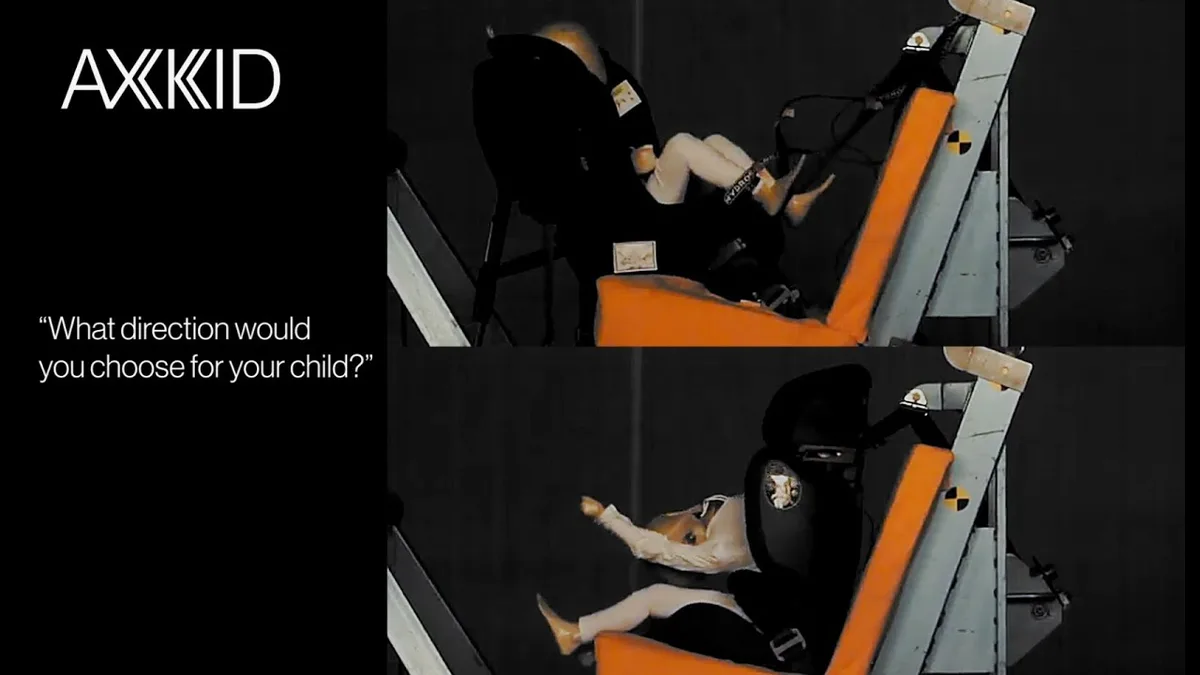
In a frontal crash, the most common type, a forward-facing child’s head is thrown forward, putting enormous strain on the neck and spinal cord. Rear-facing, the whole car seat cradles the head, neck, and torso, spreading crash forces across the shell.
Research shows that children under two are about 70 to 80 percent less likely to be seriously injured when riding rear-facing compared to forward-facing. That’s not a small margin. It’s a massive safety advantage.
So why do some parents turn early? Sometimes it’s pressure from a toddler who hates the recline. Sometimes it’s a well-meaning grandparent saying “my kids were fine.” And sometimes it’s simply not knowing the data.
But the data is overwhelming: wait as long as you can. The one-year rule is a floor, not a ceiling.
If you’re looking for a seat that makes extended rear-facing easier, our guide to top-rated convertible car seats can help you find one with higher height and weight limits.
The Science: What Happens to a Toddler’s Body in a Crash
Let’s get concrete about what happens inside the body during a collision.
Imagine a crash at just thirty miles per hour. The vehicle stops almost instantly. But the child’s body keeps moving forward at thirty miles per hour.
In a forward-facing seat, the harness holds the torso, but the head, which is heavy relative to the rest of the body, whips forward. The neck has to absorb that force. In a toddler, the spinal bones are still mostly cartilage.
The ligaments are loose. The spinal cord is not yet fully protected by the bony column.
That combination can lead to a condition called “internal decapitation”, the skull separates from the spine. It sounds graphic because it is. It’s rare, but it’s devastating.
Now, in a rear-facing seat, that same thirty-mph crash pushes the child back into the seat shell. The head, neck, and torso move together as one unit. The seat absorbs the force.
The neck barely stretches at all. That’s why rear-facing is so effective.
According to the AAP’s policy statement on child passenger safety, children should remain rear-facing until they reach the highest weight or height allowed by their car seat’s manufacturer. For many convertible seats, that’s 35, 40, or even 50 pounds. That can mean rear-facing until age three or four.
Per NHTSA testing standards, rear-facing is the safest position for infants and toddlers in all vehicle types, including SUVs and trucks.
The Real Minimums: What the Law Says vs. What’s Safest
It’s easy to confuse legal requirements with best practice. Let’s break down the difference.
Legal minimums (as of 2026):
- All 50 states and DC require children to ride rear-facing until at least age one AND at least 20 pounds.
- Some states (like California and New York) have stronger laws: rear-facing until age two.
- Penalties for violating vary, but the real cost is your child’s safety.
Best practice (AAP and NHTSA):
- Rear-facing until at least age two.
- But ideally until the child outgrows the seat’s rear-facing height or weight limit.
- That often means age three or four for many children.
Example: A child who weighs 30 pounds at 18 months is legally allowed to face forward in most states. But if their convertible seat has a 40-pound rear-facing limit, the safest choice is to keep them rear-facing for another year.
You can check your car seat’s label for exact numbers. It will list a maximum rear-facing weight and a maximum rear-facing height. The child must be under both.
Once they exceed either, it’s time to move forward-facing.
One more thing: when you travel, laws can differ. If you’re renting a car and need a seat, our guide to car seat rental costs covers what to expect. But no matter where you go, the safest practice stays the same.
How to Know Your Child Is Ready for Forward-Facing (It’s Not Just Age)
Age is a starting point, not the only factor. You need to check three things before turning that seat around.
1. The child meets the minimum age and weight. That’s one year and 20 pounds as a legal bare minimum. But we recommend waiting past two.
2. The child has outgrown the rear-facing limits of the seat. This means:
- Their head is within one inch of the top of the seat shell (or the top of the headrest, depending on the model).
- OR they’ve exceeded the maximum rear-facing weight listed on the seat.
3. The forward-facing weight and height minimums are met. Most seats require at least 22 pounds and the child to be able to sit upright unassisted.
Here’s a simple checklist:
- Child is at least 2 years old (preferred) or 1 year old (legal minimum)
- Child’s weight is below the rear-facing weight limit
- Child’s height is below the rear-facing height limit (or within 1 inch of the top)
- Child can sit upright steady without slumping
- Seat has a forward-facing installation mode (check manual)
If all of these are true, it may be time. But if the child still has several pounds or inches of room rear-facing, there’s no rush. Our guide to how to install a car seat safely covers both rear and forward-facing setups in detail.
One common worry: “My child’s legs are bent against the seat.” That’s normal and safe. More on that in a later section. For now, know that leg position is not a reason to turn early.
Rear-facing is safer even with cramped legs.
Finally, if you’re traveling and need a rental seat, you might wonder whether rental cars offer car seats and if they meet safety standards. That’s worth checking ahead of time.
External reference: For the most current AAP recommendations, see the official policy statement on child passenger safety at AAP.org.
Step-by-Step: How to Switch from Rear-Facing to Forward-Facing Safely
Once you’ve confirmed your child meets the rear-facing height and weight limits, the actual switch is straightforward. But it’s easy to make a mistake during installation. Here’s the process.
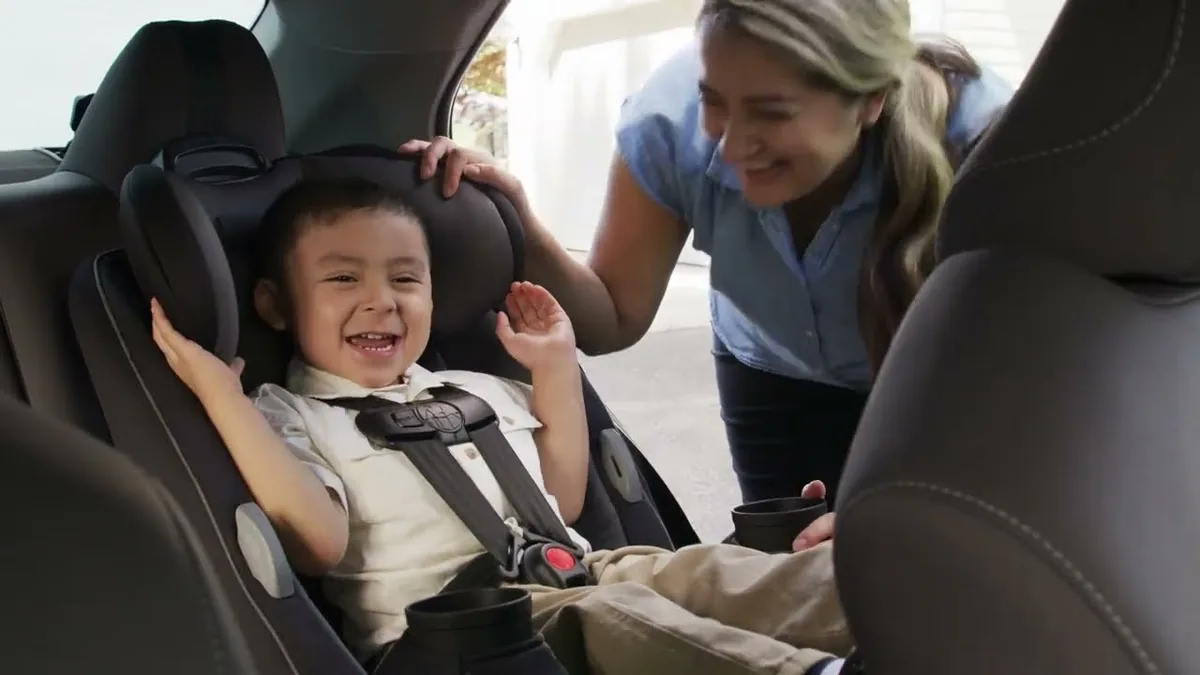
1. Read the car seat manual. Every seat is a little different. Some require you to rethread the harness.
Others have a no-rethread system. The manual will also tell you the correct belt path for forward-facing.
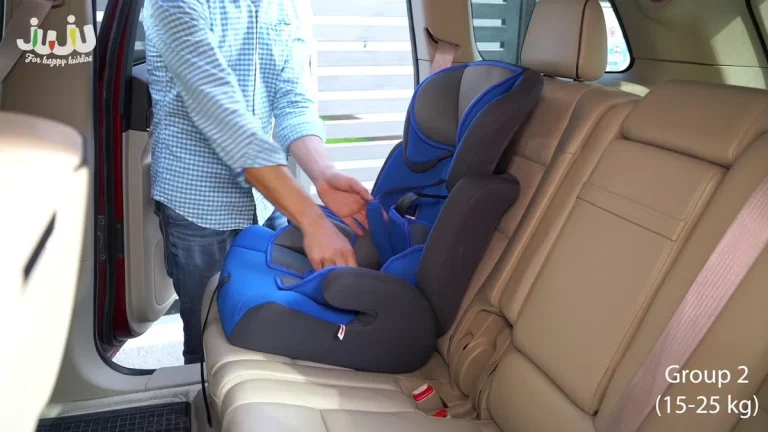
2. Remove the seat from the vehicle. Uninstall the rear-facing base if you have an infant seat that converts. For convertible seats, you’ll reinstall in the forward-facing position.
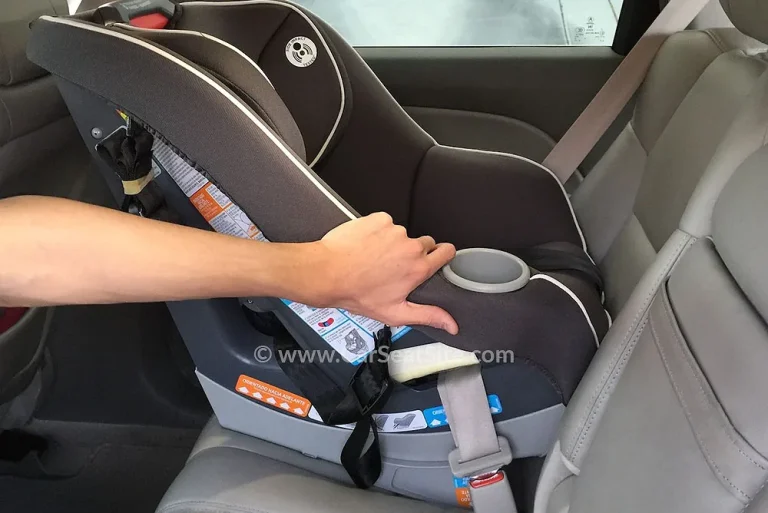
3. Change the recline angle. Rear-facing seats are installed at a 30 to 45 degree recline. Forward-facing, the seat needs to be more upright.
Most seats have a built-in angle indicator. Check yours.
4. Route the seat belt or LATCH through the forward-facing belt path. This is almost always a different slot than the rear-facing path. The manual will show you exactly where.
5. Buckle and tighten. Push your weight into the seat while pulling the belt tight. The seat should not move more than one inch side to side or front to back.
6. Attach the top tether. This is a critical step for forward-facing. The tether strap hooks to an anchor point in your vehicle.
It prevents the seat from pitching forward in a crash. Many parents skip this part. Don’t.
According to NHTSA, using the top tether reduces head injury risk significantly.
7. Adjust the harness. The harness straps should be at or just above the child’s shoulders. The chest clip goes at armpit level.
The harness should be snug. You shouldn’t be able to pinch any slack at the shoulder.
8. Do the final check. Grab the seat at the belt path. If it moves more than an inch, start over.
Then buckle your child in and check the fit.
If you’re switching seats between vehicles or renting one while traveling, our guide on car seat rental options can help you find a properly maintained seat.
Common Mistakes Parents Make When Turning the Seat Around
Even careful parents slip up. Here are the most frequent errors we see in our research.
Turning too early. This is the big one. We’ve covered the data above, but it’s worth repeating: most convertible seats allow rear-facing up to 40 or 50 pounds. Even a tall two-year-old rarely hits that.
Don’t rush.
Forgetting the top tether. The tether isn’t optional. It’s a primary safety feature for forward-facing seats. Without it, the seat can rotate forward in a crash, throwing the child’s head into the vehicle seat in front.
Check your vehicle’s manual to locate the anchor points. They’re usually on the back of the rear seat or on the ceiling.
Using the wrong belt path. Some seats have a different color indicator for rear vs forward. Others don’t. If you use the rear-facing belt path for forward-facing, the seat won’t be secure.
Check the manual.
Leaving the harness too loose. The pinch test saves lives. If you can pinch any webbing at the collarbone, it’s too loose. Tighten until a straight line of webbing runs from the shoulder to the buckle.
Not adjusting the harness height. As your child grows, the harness needs to move up. For forward-facing, the straps should be at or just above the shoulders. Too low, and the child can submarine under the straps.
Ignoring expiration dates. Car seats expire. Most last six to ten years. If you’re using a hand-me-down, check the date.
Old plastic can become brittle and fail in a crash. Our guide to checking if a used seat is safe covers what to look for.
What About Their Legs? (The Question Every Parent Asks)

This is probably the number one reason parents flip early. They see their toddler’s legs bent against the vehicle seat and worry it’s uncomfortable or even dangerous.
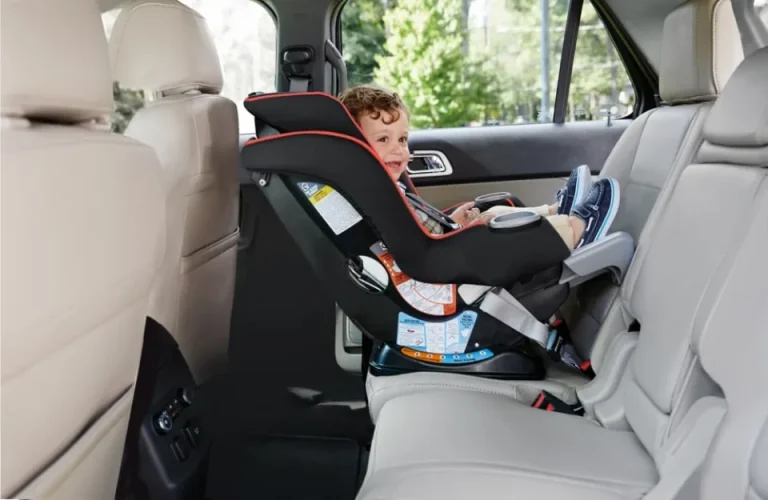
Let’s be clear: bent legs are not a problem. Children are incredibly flexible. They don’t have the same discomfort adults would feel with their knees bent. Toddlers sit cross-legged, with their feet up on the seat back, or dangling to the side.
They adapt fast.
Is there any risk of leg injury? In a crash, a rear-facing child’s legs might hit the seat in front. But the alternative, facing forward, carries a much higher risk of head and spine injury.
Leg fractures are almost always treatable. Spinal cord injuries often aren’t.
The AAP is explicit on this point: “There is no evidence that rear-facing children are more likely to suffer leg injuries.” The data from real-world crashes supports it. The femur, the big thigh bone, is strong. It takes a lot of force to break it.
Meanwhile, the cervical spine in a toddler is fragile.
So let your child sit with their legs bent. They won’t complain. And if they do, remember it’s a temporary phase.
They’ll have years of forward-facing riding ahead. Protect the neck and brain today.
When You Actually Should Turn Earlier (These Are Rare)
There are very few situations where forward-facing before age two makes sense. But they do exist.
The child exceeds the rear-facing height or weight limit. If your child hits the maximum for their seat, you have no choice. You must turn them forward-facing. Check the seat’s label.
Some seats have a 35-pound rear-facing limit. A heavy 18-month-old could reach that.
The child has a medical condition that requires forward-facing. Certain orthopedic issues or corrective braces might make rear-facing impossible. Your pediatrician or a child passenger safety technician can advise on this.
The seat has been in a crash and needs replacement, and no rear-facing seat is immediately available. This is extremely rare but can happen during travel. In that case, use any properly installed forward-facing seat as a temporary solution. But treat it as a stopgap.
No rear-facing seat fits your vehicle. Tiny two-door cars or certain pickup trucks may not have enough space for a rear-facing convertible seat. In that case, you may need to use a forward-facing seat sooner. But first, try different seats.
There are compact convertible seats designed for tight spaces. Our list of best seats for small vehicles can help you find one.
In every other situation, delay the switch. Peer pressure from other parents, a crying toddler, or a grandparent’s opinion are not valid reasons. Safety data overrides all of them.
Should You Buy a Different Seat for Forward-Facing?
If you already own a convertible seat, probably not. Most convertible seats work for both rear and forward-facing. You just adjust the belt path and recline angle.
But there are cases where a new seat makes sense.
Your current seat is an infant-only carrier. Those come with a detachable base and are rear-facing only. Once your child outgrows it, you need a new seat for forward-facing. That new seat is typically a convertible or a combination seat.
Your convertible seat has low forward-facing height limits. Some convertibles have short shells. If your child is tall, they might outgrow the harness height quickly when forward-facing. In that case, a combination seat with a higher harness might be a better long-term choice.
You need a second seat for another vehicle. If you have two cars, buying a dedicated forward-facing seat can save you from moving the convertible back and forth.
You want a seat with extra features. Some forward-facing seats have built-in cup holders, adjustable recline, or easier harness adjustments. Others have a built-in booster mode for later use. That’s a convenience, not a safety requirement.
But here’s the key: You don’t need to buy a new seat just because you switch from rear to forward. Your current convertible is designed for both. Save your money unless there’s a clear functional reason.
If you do buy a new seat, make sure it has a top tether and a five-point harness for forward-facing. Some cheaper seats use a shield system instead. Avoid those.
The five-point harness distributes crash forces across the strongest parts of the body.
How State Laws and Car Seat Instructions Overlap (or Don’t)
State laws set the bare minimum. Your car seat’s manual sets the actual safety limits. The two don’t always match.
Most state laws say “one year and 20 pounds.” That’s the floor. Your convertible seat likely says “rear-face up to 40 pounds.” That’s a much higher ceiling. The law lets you turn at one.
The manufacturer’s instructions keep your child safer longer.
In our research, 38 states still allow forward-facing at age one. Only 12 states plus DC require rear-facing until age two. Check your state at the Governor’s Highway Safety Association website.
But even if your state says one is fine, the manual overrides. Follow what the seat says. Not the bare legal minimum.
One more layer: federal standards (FMVSS 213) set crash test requirements. States enforce usage. Manufacturers design the limits.
The safest path is to ignore the law’s minimum and follow the seat’s maximum. That’s where the real safety lives.
Your Next Steps: A Simple Decision Guide
Here’s a clear set of steps to know when it’s time.
Step 1: Check your seat’s rear-facing weight and height limit. It’s printed on the label. Write it down.
Step 2: Weigh and measure your child. Do this today. Don’t guess.
Step 3: Compare. Is your child below both limits? If yes, keep them rear-facing. If they’ve exceeded either limit, move to step 4.
Step 4: Confirm forward-facing readiness. Your child is at least two years old (preferred). They weigh at least 20 pounds. They sit upright steadily.
Step 5: Reinstall the seat forward-facing. Use the correct belt path. Attach the top tether. Adjust the harness to shoulder level or above.
Step 6: Do the inch test and the pinch test. The seat shouldn’t move more than an inch at the belt path. The harness shouldn’t have any slack you can pinch at the collarbone.
Step 7: Register your seat for recalls. Go to the NHTSA recall site and add your email. You’ll get alerts if a safety issue comes up.
That’s it. You’re done. Your child is now as safe as possible for their size and age.
Frequently Asked Questions
When can I legally turn my baby forward-facing?
All states allow forward-facing at one year and 20 pounds as a legal minimum. But the safest practice is to wait until at least two years old. Check your specific state law for exact numbers.
The manual limits are more important than the legal floor.
Is it safe to turn my baby at 12 months?
Legally, yes. Safely, no. A 12-month-old’s neck and spine are still developing.
Crash forces put them at much higher risk forward-facing. The data shows rear-facing is 70 to 80 percent safer for children under two. Wait as long as you can.
What if my child’s legs touch the seat when rear-facing?
That’s normal and safe. Toddlers are flexible. They sit cross-legged, feet up, or bent.
Leg injuries in rear-facing crashes are rare and almost never serious. Spinal injuries in forward-facing crashes are worse. Let their legs bend.
How do I know when my child has outgrown the rear-facing seat?
Check the seat’s label for two numbers: a maximum rear-facing weight and a maximum rear-facing height. If your child weighs more than the weight limit, or their head is within one inch of the top of the seat shell, they’ve outgrown it. Time to turn.
What happens if I skip the top tether when installing forward-facing?
The top tether prevents the seat from pitching forward in a crash. Without it, your child’s head can strike the vehicle seat in front. NHTSA testing shows it reduces head injury risk significantly.
Never skip it. It’s not optional.
Can I use a forward-facing seat for a child under one year?
No. Forward-facing is not designed for children under one. Their skeletons cannot handle the crash forces.
Every state law and every manufacturer prohibits it. Keep them rear-facing until at least age one, and preferably much longer.