When Do You Switch Car Seat to Front Facing? Safety Tips
You’re probably wondering when do you switch car seat to front facing. It’s a question every parent hits eventually, and the answer matters more than most people realize. Turn your child too soon and you’re missing out on the single most protective phase of their car seat life.
Turn them when they’re ready and you’ve given them the best possible crash protection for their size.
The American Academy of Pediatrics recommends keeping kids rear-facing through at least age 2, but that’s just the starting line. As of 2026, the safest guidance is to max out the rear-facing weight and height limits built into your specific seat. For most convertible car seats, that means keeping kids rear-facing until they hit 30 to 50 pounds.
Let’s walk through exactly how to know when that moment arrives.
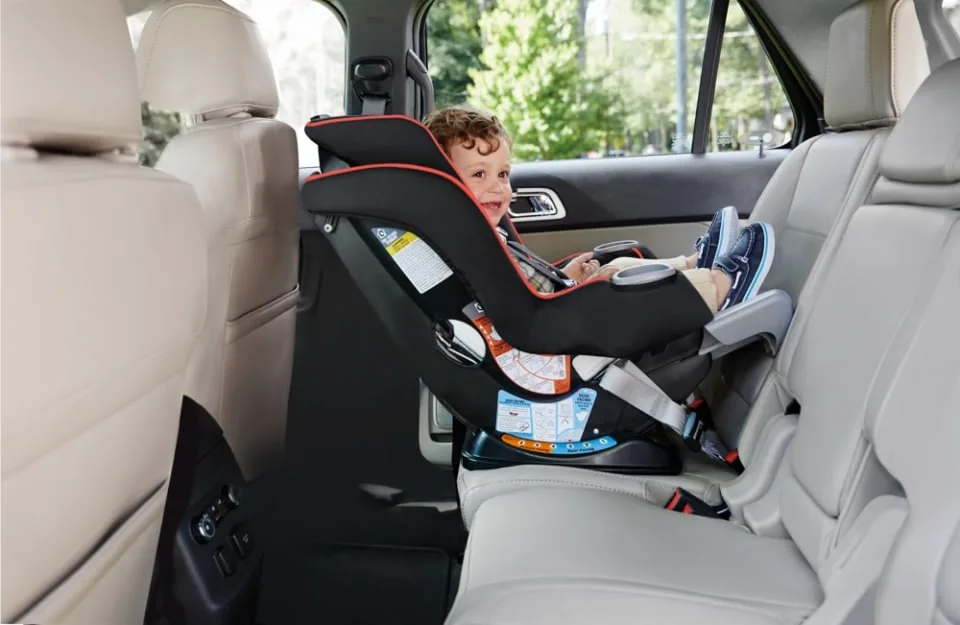
Image source: Bing (Web (fair-use with source credit))
The Short Answer: Max Out That Rear-Facing Seat First
Switch your child to forward-facing only when they outgrow the rear-facing limits of their seat. That means reaching the maximum height or weight printed in the manual. The AAP minimum is age 2.
The safest target is the seat’s highest rear-facing limit.
Check your manual and don’t guess. Most convertible seats rear-face to 30 to 50 pounds. Every extra month rear-facing adds measurable protection.
If you’re still unsure about the flip timing, that guide walks through the age factor in detail.
Why Rear-Facing Is So Much Safer (The Crash Physics, Minus the Jargon)
Here’s the thing about frontal crashes. They’re the most common and the most violent type of collision. When a car stops suddenly, the occupant keeps moving forward at the car’s original speed.
For a rear-facing child, that force spreads across the entire back, head, and neck in one straight line.
A forward-facing child’s head snaps forward, and the harness straps catch the torso while the head keeps going. That’s called head excursion, and it’s brutal on an underdeveloped spine. The neck bones, or cervical vertebrae, don’t fully ossify until somewhere between ages 3 and 6.
Before that, they’re mostly cartilage.
In a rear-facing seat, the head, neck, and spine move together as a unit. The seat shell absorbs the crash energy and rides with the child. That’s why the crash data is so lopsided.
We’re talking about a 75% reduction in the risk of serious injury compared to forward-facing for children under 2, per AAP guidelines.
The scariest risk is something called “seat belt syndrome.” It happens when the harness straps act like the shoulder belt on an adult, concentrating force on the abdomen and spine. Rear-facing eliminates that entirely because the crash force never hits the straps directly. The forward-facing requirements are worth reviewing before you commit to the switch.
The Real Numbers: Age, Weight, and Height Limits That Matter
Every car seat has two sets of limits: the minimums and the maximums. The minimums tell you when it’s legally acceptable to turn the seat. The maximums tell you when it’s no longer safe rear-facing.
Too many parents flip the seat the moment they hit the minimum.
Here are the numbers that matter for most convertible seats on the market:
| Limit | Typical Range | What It Means |
|---|---|---|
| Rear-facing weight max | 30 to 50 lbs | The seat can’t protect once this is exceeded |
| Rear-facing height max | 36 to 49 inches | The shell must sit above the head |
| Forward-facing minimum age | 2 years (AAP) | Absolute earliest by recommendation |
| Forward-facing minimum weight | 20 to 22 lbs | Legal floor for most seats |
| Forward-facing harness max | 40 to 65 lbs | When the harness itself is outgrown |
The weird part is that the legal minimums are lower than the safest practice. Federal standard FMVSS 213 sets the baseline for seat performance, but it doesn’t require any specific flip age. State laws vary, and most states only require rear-facing until age 1 or 2.
The AAP and NHTSA both push for extended rear-facing well beyond the legal floor.
The takeaway is simple. Use the minimums as a floor, not a target. The real target is the maximum rear-facing limit printed on your seat’s label and in the manual.
The booster transition is a separate step entirely, so don’t rush this one either.
How to Tell If Your Child Has Actually Outgrown the Rear-Facing Seat
Outgrowing a rear-facing seat isn’t about age. It’s about physical fit. There are exactly three ways a child outgrows it, and you need to know all three.
First, the weight limit. If your child hits the rear-facing weight maximum printed on the seat label, they can no longer ride rear-facing in that seat. Second, the height limit.
Most seats say the top of the child’s head must stay at least one inch below the top of the shell. Once their head reaches that line, the seat is outgrown. Third, the harness slots.
When the harness straps are at or above the child’s shoulders, you’ve also hit the ceiling.
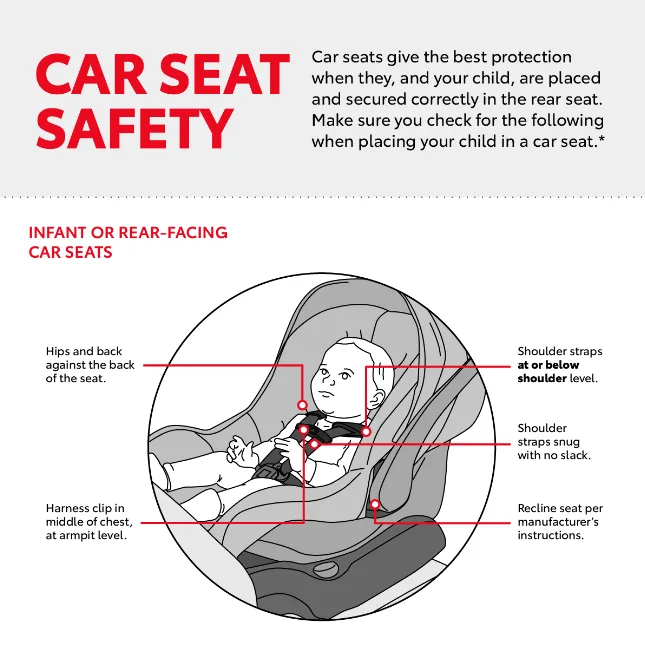
Image source: Bing (Web (fair-use with source credit))
Here’s what doesn’t count as outgrowing. Feet touching the vehicle seat back. Legs bent at the knees.
Complaints about being cramped. Kids are flexible, and their legs fold naturally in a crash. The femur is one of the strongest bones in the body, and it’s designed to absorb those forces.
Cramped legs are a comfort issue, not a safety issue.
If your child is above the weight limit, that’s a hard stop. If they’re under it, keep them rear-facing even if their legs look scrunched. Understanding the rear-facing limits takes the guesswork out of this decision.
How to Switch to Forward-Facing the Right Way
Once your child genuinely outgrows the rear-facing limits, the switch still matters. A badly installed forward-facing seat is a dangerous seat. Here’s the right way to do it.
First, read the manual. I know it sounds obvious, but the steps differ from seat to seat. Your seat’s manual has seat-specific instructions for the conversion.
Follow those, not a generic guide.
Second, move the harness straps. Rear-facing seats need straps at or below the shoulders. Forward-facing seats need them at or above the shoulders.
Most convertible seats require rethreading the harness through different slots. Some newer seats have a no-rethread headrest that moves with the headrest instead.
Third, switch the belt path. Most convertible seats use a different belt path for each direction. Rear-facing usually uses the lower slots.
Forward-facing uses the upper slots, or sometimes a completely different path entirely. Check the manual.
Fourth, attach the top tether. This is the step people skip, and it’s a big deal. The tether strap hooks to an anchor behind the seat and reduces forward head movement by several inches in a crash.
The NHTSA calls the top tether a critical safety component for every forward-facing installation.
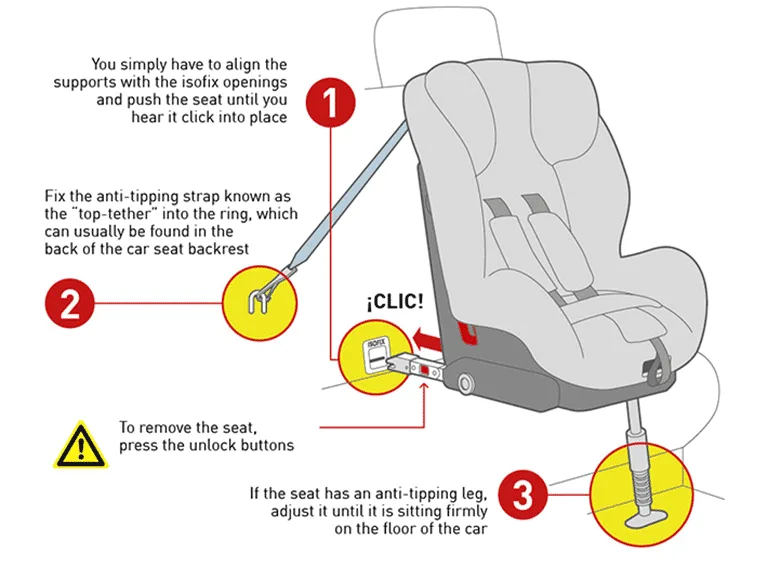
Image source: Bing (Web (fair-use with source credit))
Fifth, do the pinch test. After tightening the harness, try to pinch the webbing at the child’s shoulder. If you can pinch any slack, it’s too loose.
The harness should be snug enough that you can’t pinch any fabric.
Finally, check the one-inch rule. Grab the seat at the belt path and push. If it moves more than one inch in any direction, the installation is too loose.
Reinstall and try again. The conversion process depends on your specific seat model, so give yourself time to get it right.
Common Mistakes Parents Make When Turning the Car Seat Around
Turning Too Early Because the Law Says It’s Okay
State laws are minimums. They’re not safety recommendations. Most states only require rear-facing until age 1 or 2.
The AAP recommends holding out until at least age 2, and ideally maxing out the seat’s limits. Use the law as a floor, not a finish line.
Skipping the Top Tether
The top tether is not optional. It’s the single most important piece of a forward-facing installation. The tether anchors to the vehicle and reduces head excursion by up to 4 to 6 inches in a crash.
Without it, your child’s head travels dangerously far forward.
Leaving the Harness Too Loose
A loose harness is one of the most common installation errors our research flagged. If you can pinch any webbing at the shoulder, it’s too loose. The harness should be snug enough that you can’t grab any fabric.
This one’s easy to fix and easy to skip.
Buying Aftermarket Accessories
That cute head strap or comfort insert? It’s not crash-tested with your seat. Aftermarket products can interfere with the harness system or change the seat’s geometry.
Manufacturers don’t test their seats with third-party add-ons. Use what came in the box.
Using a Hand-Me-Down Seat
Seats expire, typically 6 to 10 years after manufacture. They also lose their integrity after a moderate or severe crash. If you’re inheriting a seat, check the expiration date and its crash history.
A seat you know nothing about isn’t worth the risk. The truth about used car seats might surprise you.
“But My Toddler Hates Rear-Facing”: Handling the Real-Life Grumbles
“Their Legs Are Cramped”
This is the number one complaint parents have. The reality is that children’s bones are flexible, and their femurs can handle the folded position in a crash. Cramped legs are a comfort issue, not a safety issue.
Kids naturally find positions that work, including crossing their legs or bracing them against the seat back.
“They Cry the Whole Ride”
Yes, some toddlers hate being rear-facing. But crying in the car isn’t a safety concern. It’s a development stage.
Try mirrors, toys, or another adult sitting in the back. Some kids genuinely experience motion sickness in any orientation, so a flip won’t fix that anyway.
“I Can’t See Them”
Rear-facing makes it harder to check on your child. That’s true. But a quick mirror fixes that problem.
Get a dedicated car seat mirror that straps to the headrest. Check on your child through the rearview mirror, and keep the AC vent blowing toward them to keep air circulating.
“They Want to See What I See”
Kids want to be part of the action. That’s natural. But their desire to face you doesn’t outweigh the crash physics.
Hold firm. Explain it simply. Remember that every extra mile rear-facing is miles you’ll never regret.
What Comes Next: Forward-Facing Harness vs. Booster Seat
The forward-facing harness isn’t the last stop. It’s a bridge. Once your child outgrows the forward-facing harness, usually between 40 and 65 pounds, it’s time for a booster seat.
The timing depends on the seat’s limits and your child’s development.
Here’s the key distinction. A forward-facing harness distributes crash forces across the strongest parts of the body. A booster positions the vehicle’s seat belt across the child’s chest and lap, which is only safe when they’re developmentally ready.
That usually happens between ages 4 and 8.
The five-step test tells you when a booster is ready. The child must sit with their back flat against the seat, knees bent over the edge, feet flat on the floor, and the lap belt across the upper thighs with the shoulder belt centered on the collarbone. If any of those fail, they’re staying in the harness.
The transition from car seat to booster deserves its own careful look.
State Laws, AAP Guidelines, and the Legal Minimum
What the Law Actually Requires
Federal law doesn’t specify any minimum age or weight for forward-facing. Instead, FMVSS 213 sets the crash-test standards for seats. State laws fill the gap.
Most states require rear-facing until age 1 or 2, but the exact rules vary significantly.
What the AAP Recommends
The AAP’s 2018 policy statement, reaffirmed multiple times, recommends rear-facing until at least age 2. They’re careful to say this is a minimum. Most children will benefit from staying rear-facing longer, until they hit the seat’s height or weight maximum.
What the NHTSA Says
The NHTSA echoes that guidance. They recommend keeping children rear-facing until they outgrow the rear-facing limit of their car seat. They also strongly emphasize the top tether for forward-facing installations.
The Gap Between Law and Best Practice
Here’s the thing. The law tells you what’s legally acceptable. Best practice tells you what’s safest.
They’re not the same number. Follow the law, sure. But aim for the higher standard.
The specific age requirements for other car seat stages are just as nuanced.
Real-Life Scenarios: Wait, Turn, or Somewhere In-Between
The Tall 2-Year-Old
Emily is 2 and a half and already 36 inches tall. Her seat’s rear-facing height limit is 36 inches. She hasn’t hit the weight limit, but the height is the deciding factor.
Once her head comes within one inch of the shell top, she’s outgrown it. Time to turn.
The Heavy 3-Year-Old
Jayden is 3 years old and weighs 48 pounds. His convertible seat rear-faces to 50 pounds. He’s under the height limit and under the weight limit.
He stays rear-facing until he hits either number. His parents might get another few months out of the seat.
The Tiny 4-Year-Old
Maya is 4 years old but only weighs 32 pounds and is 38 inches tall. Her seat rear-faces to 40 pounds and 43 inches. She’s got room to spare.
She stays rear-facing. There’s no age at which rear-facing stops being safe, and Maya’s size proves it.
The Seat That Can’t Do It
Some seats just don’t have high rear-facing limits. An infant bucket seat often maxes out around 30 pounds. If that’s all you have, a convertible seat with higher limits is the next step.
The front-facing seat rules depend heavily on your specific seat’s published specs.
FAQs: Quick Answers to the Questions Every Parent Asks
Is it okay to turn the car seat at 12 months?
Legally, maybe. State laws typically allow forward-facing at age 1. But the AAP recommends waiting until at least age 2.
The extra year of rear-facing significantly reduces the risk of head, neck, and spinal injuries in a crash. Hold off if you can.
What if my child’s legs touch the seat back?
That’s completely normal and safe. Children are flexible, and their femurs can handle the folded position during a crash. Feet touching the vehicle seat doesn’t mean the seat is outgrown.
It means your kid has normal, growing legs. The height and weight limits are what matter.
Can I skip the top tether if my car doesn’t have one?
No. The top tether is a critical safety component for forward-facing seats. It reduces head excursion by several inches.
Most vehicles manufactured since 2001 have tether anchors in rear seating positions. Check your vehicle manual to locate them. If your car lacks anchors, get a retrofit kit or use a different seat position.
When should I move my child to a booster seat?
Move them when they outgrow the forward-facing harness, usually between 40 and 65 pounds. That’s typically between ages 4 and 8. The five-step test confirms readiness: back flat, knees bent, feet flat, lap belt on thighs, shoulder belt on collarbone.
Rushing the booster transition is risky. The front seat age rules apply differently than booster readiness.
The Bottom Line: When Should You Switch?
Here’s the simple version. Keep your child rear-facing until they hit the maximum height or weight limit printed on their specific car seat. Ignore the minimums.
Ignore what other parents are doing. Ignore the cranky toddler.
The AAP sets the floor at age 2. The real goal is maxing out the seat’s rear-facing capacity. That could mean age 3, age 4, or even older for smaller kids.
The numbers on your seat’s label are the final word.
If your child is under the rear-facing height and weight limits, they stay rear-facing. Period. If they’ve exceeded either limit, it’s time to turn.
Then install forward-facing with the top tether attached, the harness snug, and the seat locked tight.
Every child is different. Every seat is different. The one universal rule is to follow your seat’s manual and the safest turning age for your specific situation.
Your child’s spine will thank you for every extra month you keep them rear-facing.